

North Korean leader Kim Jong-un put his second naval destroyer into service and called for building a more reliable nuclear deterrent, state media reported yesterday, as the US, South Korea and Japan began a trilateral military exercise he views as a security threat.
The ship’s commissioning comes as North Korea is dialing up pressure on Washington after rebuffing US President Donald Trump’s decision to scale back a major military drill with South Korea in a conciliatory step toward Kim. Observers say North Korea wants to wrest bigger US concessions.
The destroyer Kang Kon was commissioned into North Korea’s navy in the eastern port city of Wonsan on Sunday at a ceremony attended by Kim and his teenage daughter, whom South Korea’s spy service calls his likely heir. North Korean state media photos showed the girl in a white dress and blazer walking alongside her father on a red carpet, touring the warship and posing with sailors.
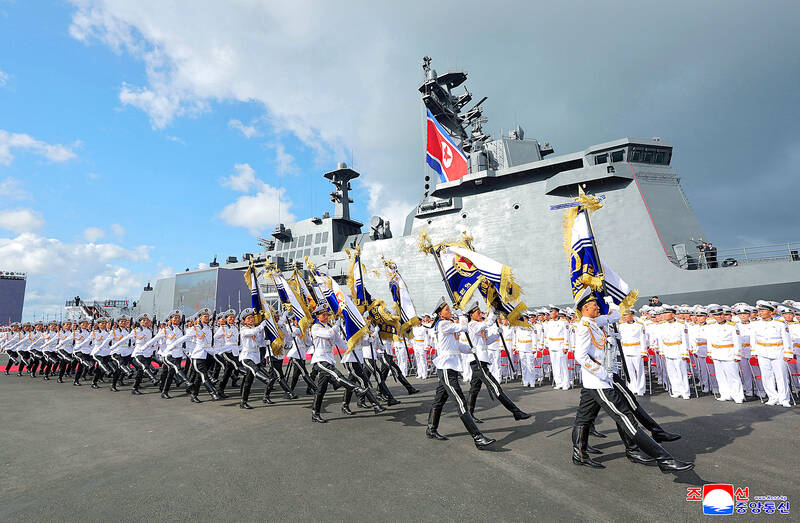
Photo: KCNA / KCNA VIA KNS / AFP
The ship and the Choe Hyon, which was put into service in June, are both 5,000-tonne destroyers that state media said can carry various conventional and nuclear weapons. Considered North Korea’s biggest and most advanced warships, the two destroyers were likely built with Russian assistance, experts say.
In July, North Korea said it test-fired nuclear-capable cruise missiles from the Kang Kon.
In a speech at the ceremony, Kim said the back-to-back warship additions instilled fear in the enemies as the nuclear armament of North Korea’s navy made it possible to exercise its nuclear deterrent in a more diversified, practical manner.
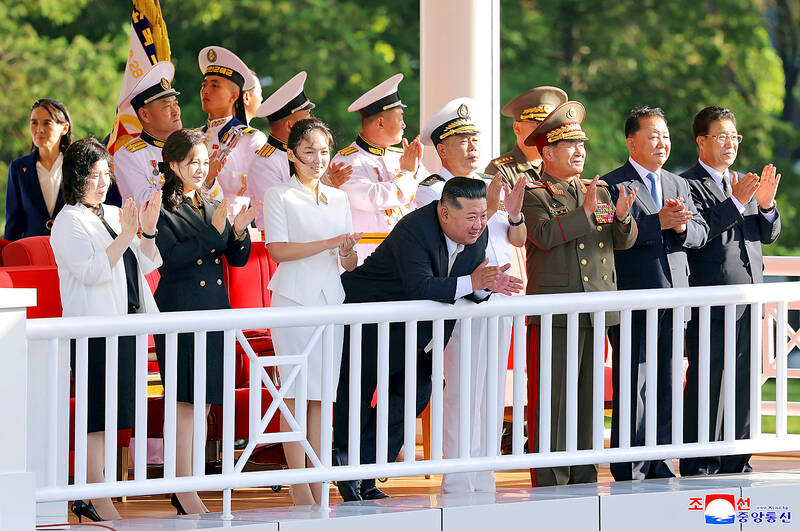
Photo: Korean Central News Agency/Korea News Service via AP
“The enemies’ concerns will surely be deepened,” Kim said. “We must establish more clearly a powerful and reliable nuclear war deterrent, to put into practice the diverse and effective operation of our nuclear combat systems and further strengthen our military activities for maritime defense and war deterrence.”
Meanwhile, the US, South Korea and Japan yesterday began their five-day Freedom Edge exercise near the Korean Peninsula.
South Korea’s military said the exercise is defensive in nature and meant to enhance a joint response capability against North Korean nuclear threats, and that it involves key maritime and aerial military assets from the three countries.
At the exercise’s opening ceremony at Yokota Air Base in western Tokyo, the US Pacific Command quoted Lieutenant General Stephen Jost, commander of the US forces in Japan, as saying that Washington, Tokyo and Seoul “stand together on common interests, ready to preserve the peace and security we have built and defended for more than eight decades.”

Taiwan, which accounts for more than half of the global outsourced semiconductor assembly and testing market, is well-positioned to develop copackaged optics (CPO) and manufacture precision silicon photonics chips, the Ministry of Economic Affairs said yesterday. Silicon photonics are emerging as a mainstream optical communications technology and is seen as key to overcoming bottlenecks in AI computing power. The technology is a key project under the government’s New 10 Major AI Infrastructure Projects, with industry, government, academia and research institutions working to overcome critical technological hurdles and build a self-reliant silicon photonics supply chain, the ministry said. Nvidia Corp in March invested US$4
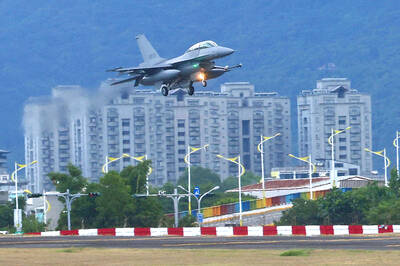
The air force plans to build 26 more hardened aircraft shelters as the number of F-16Vs stationed along Taiwan’s east coast is expected to reach 120 when the final shipment of 66 jets procured from the US arrives. The incoming jets would be stationed at Chihhang Air Base in Taitung County, augmenting the F-16V Block 20s operated by the 5th Tactical Fighter Wing in Hualien County, officials said yesterday. The air force plans to allocate more than NT$6.88 billion (US$218.1 million) from next year to 2031 to build the shelters in Hualien and Taitung as part of the implementation of a “one
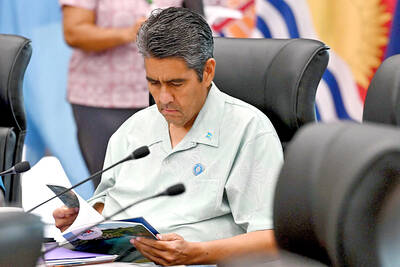
Palau’s president yesterday called for a “unified” Pacific response to a missile test by China in July, while Taiwan and its Pacific allies a day earlier at the Pacific Islands Forum (PIF) reaffirmed their commitment to peace, stability and prosperity. China gave only a handful of nations short notice before test-firing an intercontinental ballistic missile in July, sparking condemnation from several Pacific leaders. The 18-member PIF being held in Palau was expected to release a communique after press time last night, with a formal response to the test possibly included. Palau, which invited Taiwan to attend sideline events as an aid partner, urged
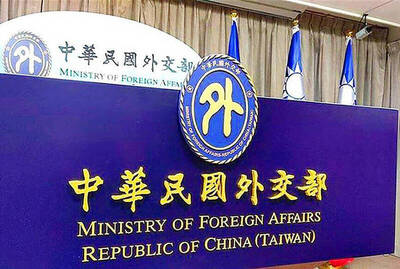
China’s continued efforts to inject geopolitical rivalry into the region and disrupt Pacific nations’ discussions of regional issues warrant greater international attention, a foreign affairs official said yesterday. Minister of Foreign Affairs Lin Chia-lung (林佳龍) last week led a delegation to diplomatic ally Palau to attend events related to the 55th Pacific Islands Forum (PIF) summit. However, the absence of some member-state leaders has been interpreted by some people as a sign of fracturing in Pacific unity. Thirteen PIF members were represented by their heads of state or government, while Fiji, New Caledonia, Vanuatu and Samoa sent ministerial-level representatives, a diplomatic official


 RSS
RSS