


The World Organisation for Animal Health (WOAH) again classified Taiwan as free from African swine fever (ASF), returning Taiwan to its status as the only country in Asia to be free of all three major swine diseases, the Ministry of Agriculture said today.
A case of African swine fever broke out on a farm in Wuci District (梧棲), Taichung, on Oct. 21 last year.
Authorities implemented intensive containment efforts, banning the transport and slaughter of pigs for 15 days to confine the outbreak to a single site and completing disinfection and cleanup within one month.
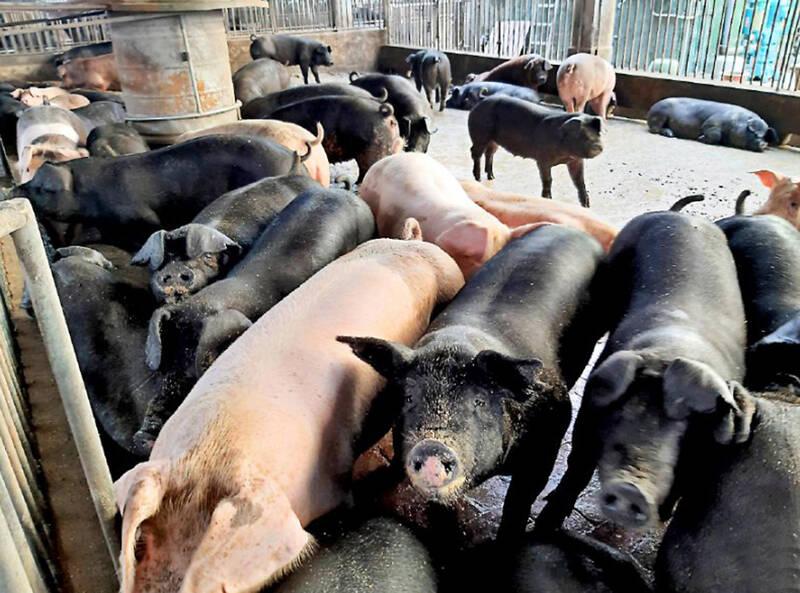
Photo: Yang Yuan-ting, Taipei Times
Taiwan reapplied to the WOAH for its ASF-free status on Feb. 21.
Although the review process was estimated to take six months, approval was granted after a little more than one month, the Animal and Plant Health Inspection Agency said.
Taiwan thoroughly reviewed all application documents, and the WOAH only requested additional documents once, hastening the process, agency Deputy Director Fu Hsueh-li (傅學理)
Taiwan’s representative office in France also played a key role, Fu said.
The achievement marks Taiwan as the only country in the world to regain ASF-free status after an outbreak in domestic pigs, he said.
The nation also regained its status as the only country in Asia to be free of all three major swine diseases: ASF, classical swine fever and foot-and-mouth disease, he added.
With Taiwan’s return to disease-free status, pork exports to countries that previously imported Taiwanese pork such as Singapore and the Philippines are expected to resume within the latter half of the year, Fu said.
Negotiations with these countries, as well as Japan and Malaysia regarding pork exports would continue, he added.

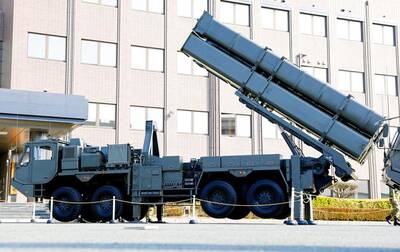
Japan has deployed long-range missiles in a southwestern region near China, the Japanese defense minister said yesterday, at a time when ties with Beijing are at their lowest in recent years. The missiles were installed in Kumamoto in the southern region of Kyushu, as Japan is attempting to shore up its military capacity as China steps up naval activity in the East China Sea. “Standoff defense capabilities enable us to counter the threat of enemy forces attempting to invade our country ... while ensuring the safety of our personnel,” Japanese Minister of Defense Shinjiro Koizumi said. “This is an extremely important initiative for

MORE POPULAR: Taiwan Pass sales increased by 59 percent during the first quarter compared with the same period last year, the Tourism Administration said The Tourism Administration yesterday said that it has streamlined the Taiwan Pass, with two versions available for purchase beginning today. The tourism agency has made the pass available to international tourists since 2024, allowing them to access the high-speed rail, Taiwan Railway Corp services, four MRT systems and four Taiwan Tourist Shuttles. Previously, five types of Taiwan Pass were available, but some tourists have said that the offerings were too complicated. The agency said only two types of Taiwan Pass would be available, starting from a three-day pass with the high-speed rail and a three-day pass with Taiwan Railway Corp. The former costs NT$2,800

NEW LOW: The council in 2024 based predictions on a pessimistic estimate for the nation’s total fertility rate of 0.84, but last year that rate was 0.69, 17 percent lower An expected National Development Council (NDC) report expects the nation’s population to drop below 12 million by 2065, with the old-age dependency ratio to top 100 percent sooner than 2070, sources said yesterday. The council is slated to release its latest population projections in August, using an ultra-low fertility model, the sources said. The previous report projected that Taiwan’s population would fall to 14.37 million by 2070, but based on a new estimate of the total fertility rate (TFR) — the average number of children born to a woman over her lifetime — the population is expected to reach 12 million by

COUNTERING HOSTILITY: The draft bill would require the US to increase diplomatic pressure on China and would impose sanctions on those who sabotage undersea cable networks US lawmakers on Thursday introduced a bipartisan bill to bolster the resilience of Taiwan’s submarine cables to counter China’s hostile activities. The proposal, titled the critical undersea infrastructure resilience initiative act, was cosponsored by Republican representatives Mike Lawler and Greg Stanton, and Democratic Representative Dave Min. US Senators John Curtis and Jacky Rosen also introduced a companion bill in the US Senate, which has passed markup at the chamber’s Committee on Foreign Relations. The House’s version of the bill would prioritize the deployment of sensors to detect disruptions or potential sabotage in real-time and enhance early warning capabilities through global intelligence sharing frameworks,


 RSS
RSS