


US President Donald Trump yesterday threatened widespread destruction of Iran’s energy resources and other vital infrastructure, including desalination plants, if a deal to end the war with Tehran is not reached “shortly.”
On the ground, the conflict showed no sign of letting up: Tehran struck a key water and electrical plant in Kuwait, and an oil refinery in Israel came under attack. Israel and the US launched a new wave of strikes on Iran.
Trump’s new threat in a social media post and earlier comments in an interview with the Financial Times that suggested US troops could seize the Iran’s Kharg Island oil export hub highlighted a frequent tactic. On the one hand, he has repeatedly said that talks with Iran are going well — although Tehran denies negotiating directly. On the other hand, he has continually ramped up his threats and sent thousands more Marines and other US troops to the Middle East.
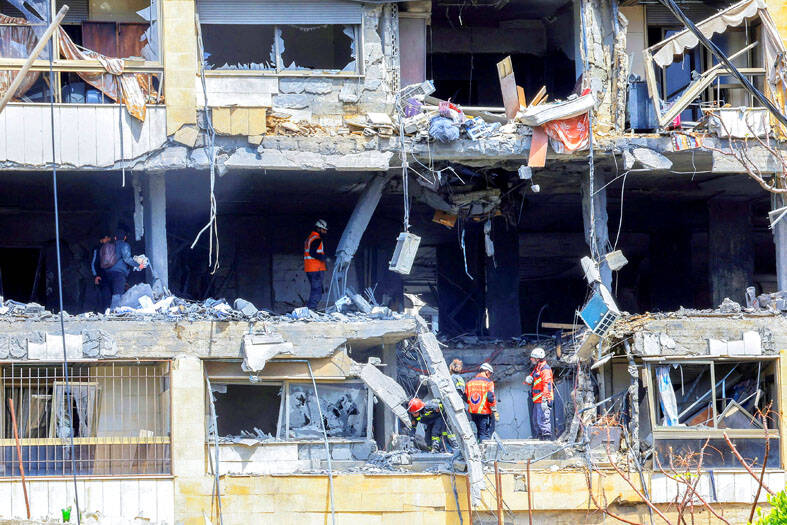
Photo: Reuters
It remains unclear where the diplomatic effort facilitated by Pakistan stands. Iran’s attacks on its Gulf neighbors could further complicate any talks. The United Arab Emirates — which has long billed itself as a beacon of safety and stability in a volatile region — has been hard hit in the war, and is signaling it wants Iran disarmed in any ceasefire. Iran’s theocracy likely would not accept that.
Trump says diplomacy is going well, but says military expansion is possible.
Trump on social media said that “great progress is being made” in talks with Iran to end military operations, but he bristled that if a deal is not reached “shortly” and if the Strait of Hormuz is not immediately reopened, the US would broaden its offensive by “completely obliterating” power plants, oil wells, Kharg Island and possibly even targeting desalination plants that supply drinking water.
The strait is a crucial waterway through which one-fifth of the world’s oil is shipped in peacetime.
In the Financial Times interview, Trump said that his preference would be to “take the oil in Iran” — a move that would require seizing Kharg Island, the terminal through which nearly all of Iran’s oil exports pass.
“Maybe we take Kharg Island, maybe we don’t,” he added.
Iran has threatened to launch its own ground invasion of Gulf Arab countries and mine the Persian Gulf if US troops set foot on its territory.
Iranian Ministry of Foreign Affairs spokesman Esmail Baghaei yesterday acknowledged that Tehran had received a 15-point proposal from the Trump administration, but said there had been no direct negotiations with Washington.
Meanwhile, sirens sounded at dawn near Israel’s main nuclear research center, a part of the country that has been targeted repeatedly. Israel’s military also said it had taken out two drones launched from Yemen, where the Iranian-backed Houthi rebels entered the war on Saturday with their first missile attack.
Iran kept up the pressure on its Gulf Arab neighbors: Saudi Arabia intercepted five missiles targeting its oil-rich Eastern province; a fireball erupted over Dubai, United Arab Emirates, as a missile was intercepted; and in Kuwait, an Iranian attack hit a power and desalination plant, killing one worker and wounding 10 soldiers, state-run KUNA news agency reported.
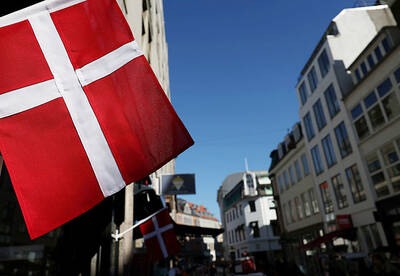
‘UNFRIENDLY’: Changing the nationality listing of Taiwanese residents to ‘China’ goes against EU foreign policy as well as democratic and human rights principles, MOFA said Taiwan yesterday called on Denmark to correct its designation of the nationality of Taiwanese residents as “China” or face retaliatory measures. The Danish government in 2024 changed the nationality of Taiwanese citizens on their residence permits from “Taiwan” to “China.” The decision goes against EU foreign policy and contravenes democratic and human rights principles, Ministry of Foreign Affairs (MOFA) spokesman Hsiao Kuang-wei (蕭光偉) said. Denmark should present a solution acceptable to Taiwan as soon as possible and correct the erroneous designation to preserve the longstanding friendship between the two nations, Hsiao said. The issue could damage Denmark’s image and business reputation in Taiwan,
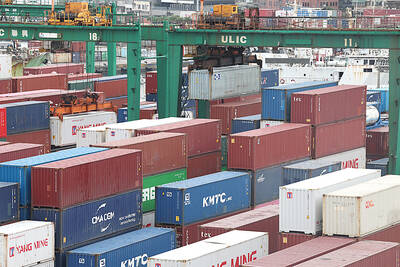
Taiwan climbed to its highest position in global export rankings in more than three decades last year, buoyed by demand linked to artificial intelligence (AI) that lifted shipments of semiconductors and technology products, Ministry of Finance data released yesterday showed. Taiwan accounted for 2.4 percent of global exports last year, or about US$640 billion, ranking 12th worldwide, the data showed. That was up four places from a year earlier and marked the nation’s best ranking since 1994, the ministry said. Taiwan’s share of global exports rose by 0.5 percentage points from the previous year, the largest increase among major economies, reflecting the nation’s
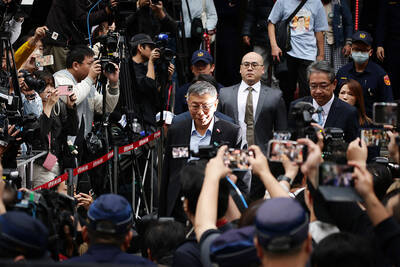
FIRST TRIAL: Ko’s lawyers sought reduced bail and other concessions, as did other defendants, but the bail judge denied their requests, citing the severity of the sentences Former Taipei mayor Ko Wen-je (柯文哲) was yesterday sentenced to 17 years in prison and had his civil rights suspended for six years over corruption, embezzlement and other charges. Taipei prosecutors in December last year asked the Taipei District Court for a combined 28-year, six-month sentence for the four cases against Ko, who founded the Taiwan People’s Party (TPP). The cases were linked to the Core Pacific City (京華城購物中心) redevelopment project and the mismanagement of political donations. Other defendants convicted on separate charges included Chinese Nationalist Party (KMT) Taipei City Councilor Angela Ying (應曉薇), who was handed a 15-year, six-month sentence; Core Pacific
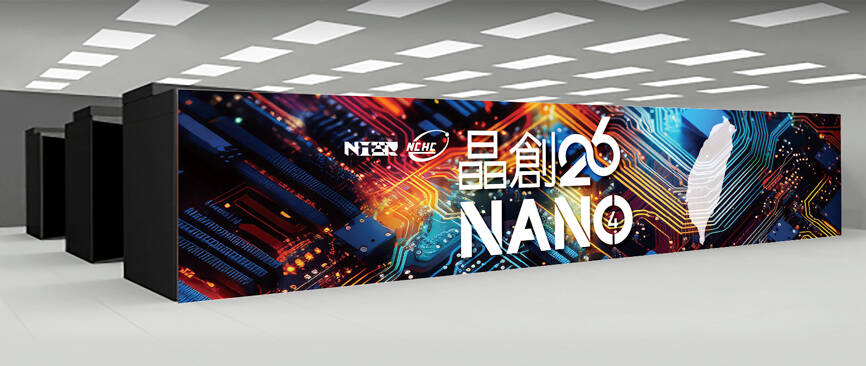
The nation’s fastest supercomputer, Nano 4 (晶創26), is scheduled to be launched in the third quarter, and would be used to train large language models in finance and national defense sectors, the National Center for High-Performance Computing (NCHC) said. The supercomputer, which would operate at about 86.05 petaflops, is being tested at a new cloud computing center in the Southern Taiwan Science Park in Tainan. The exterior of the server cabinet features chip circuitry patterns overlaid with a map of Taiwan, highlighting the nation’s central position in the semiconductor industry. The center also houses Taiwania 2, Taiwania 3, Forerunner 1 and


 RSS
RSS