


The Afghan government yesterday said that about 400 people were killed in a Pakistani airstrike on a drug rehabilitation center in the capital, Kabul, in the deadliest attack in months of violence between the two neighbors.
Hundreds more were said to have been wounded at the facility, which was hit on Monday night, flattening buildings used to treat people from across the country for addictions to marijuana, amphetamines and other narcotics.
There was no immediate independent verification of the toll, but reporters saw at least 30 bodies taken from the site in the chaotic and smoldering aftermath of the attack on Monday night.
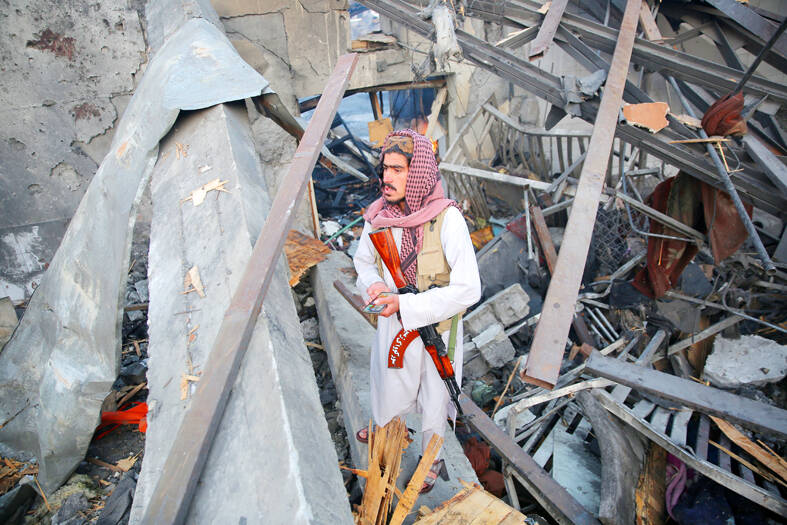
Photo: EPA
They then saw more than 65 removed yesterday as rescuers picked through the rubble in the search for victims and survivors.
“The toll is not final as the rescue operation is still going on, but we have around 400 martyrs and more than 200 wounded,” Afghan Ministry of Public Health spokesman Sharafat Zaman said, calling the strike “against the Geneva Convention and all international laws.”
Afghan Ministry of Interior Affairs spokesman Abdul Mateen Qani gave a toll of “408 killed and 265 wounded” at the same briefing.
The Italian non-governmental organization Emergency soon after the strike said that it received three bodies at its hospital in Kabul and was treating 27 wounded, but expected the toll to be much higher.
In Geneva, Switzerland, UN rights office spokesman Thameen al-Kheetan called for a swift, independent and transparent investigation into the strike, with those responsible “held to account in line with international standards.”
However, Pakistani Minister for Information and Broadcasting Attaullah Tarar said Taliban government claims that Pakistan deliberately targeted the clinic were “entirely baseless.”
“No hospital, no drug rehabilitation centre, and no civilian facility was targeted,” he wrote on social media. “The targets were military and terrorist infrastructure, including ammunition and technical equipment storage sites and other installations linked to hostile activity against Pakistan.”
The two sides have been in conflict for months, with Islamabad accusing its neighbor of harboring Islamist extremists who have mounted deadly cross-border attacks on its territory.
Chairs, blankets, pieces of hospital beds and human remains could be seen in the blackened ruins of the rehabilitation center as dawn broke.
Crowds gathered outside as family members sought news of their loved ones, as rescuers picked through the rubble nearby.
Habibullah Kabulbai, 55, arrived at the center on Monday night hoping to find his brother, Nawroz, who was admitted five days ago.
“I can’t find him,” he said, weeping. “What should we do? I have no words... We are helpless. This has not only happened to me, but the whole of Afghanistan.”
Monday evening’s attack triggered panic in Kabul, sending people running for cover as anti-aircraft guns fired back.
“I heard the sound of the jet patrolling,” Omid Stanikzai, 31, a security guard at the drug treatment center said. “There were military units all around us. When these military units fired on the jet, the jet dropped bombs and a fire broke out.”
All of the dead and injured were civilians, he added.

RECOGNITION: Former Fijian prime minister Mahendra Chaudhry said that Taiwan’s New Southbound Policy serves as a stabilizing force in the Indo-Pacific region Taiwan can lead the unification of the Chinese people, Nobel Peace Prize laureate and former Polish president Lech Walesa said in Taipei yesterday, adding that as the world order is changing, peaceful discussion would find good solutions, and that the use of force and coercion would always fail. Walesa made the remarks during his keynote address at a luncheon of the Yushan Forum in Taipei, titled “Indo-Pacific Partnership Prospects: Taiwan’s Values, Technology and Resilience,” organized by the Taiwan-Asia Exchange Foundation with the Ministry of Foreign Affairs. Walesa said that he had been at the forefront of a big peaceful revolution and “if
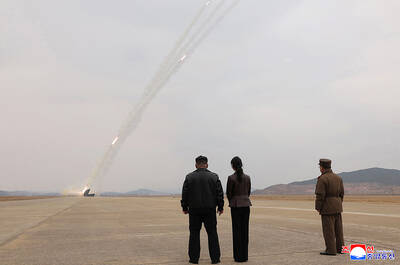
North Korea tested nuclear-capable rocket launchers, state media reported yesterday, a day after Seoul detected the launch of about 10 ballistic missiles. The test comes after South Korean and US forces launched their springtime military drills, due to run until Thursday. North Korean leader Kim Jong-un on Saturday oversaw the testing of the multiple rocket launcher system (MRLS), the Korean Central News Agency (KCNA) said. The test involved 12 600mm-caliber ultra-precision multiple rocket launchers and two artillery companies, it said. Kim said the drill gave Pyongyang’s enemies, within the 420km striking range, a sense of “uneasiness” and “a deep understanding
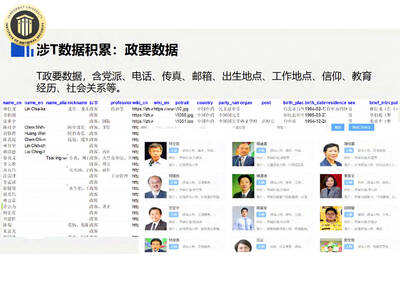
NETWORK-MAPPING PROJECT: The database contains 170 detailed files of Taiwanese politicians and about 23 million records of household registration data in Taiwan China has developed a network-mapping project targeting political figures and parties in Taiwan to monitor public opinion during elections and to craft tailored influence campaigns aimed at dividing Taiwanese society, according to documents leaked by Chinese technology firm GoLaxy (中科天璣). The documents, collected by Taipei-based Doublethink Lab, showed a database was specifically created to gather detailed information on Taiwanese political figures, including their political affiliations, job histories, birthplaces, residences, education, religion and a brief biography about them. Several notable Taiwanese politicians are in the database, including President William Lai (賴清德), former president Tsai Ing-wen (蔡英文), Minister of Foreign Affairs Lin Chia-lung (林佳龍),
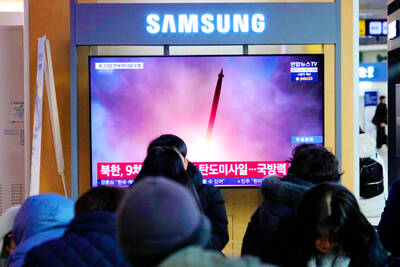
North Korea yesterday fired about 10 ballistic missiles to the sea toward Japan, the South Korean Joint Chiefs of Staff (JCS) said, days after Pyongyang warned of “terrible consequences” over ongoing South Korea-US military drills. Pyongyang recently dashed hopes of a diplomatic thaw with Seoul, Washington’s security ally, describing its latest peace efforts as a “clumsy, deceptive farce.” Seoul’s military detected “around 10 ballistic missiles launched from the Sunan area in North Korea toward the East Sea [Sea of Japan] at around 1:20pm,” JCS said in a statement, referring to South Korea’s name for the body of water. The missiles


 RSS
RSS