


Taiwan would not have to ration power due to a shortage of natural gas, Minister of Economic Affairs Kung Ming-hsin (龔明鑫) said yesterday, after reports that the Strait of Hormuz was closed amid the conflict in the Middle East.
The government has secured liquefied natural gas (LNG) supplies for this month and contingency measures are in place if the conflict extends into next month, Kung told lawmakers.
Saying that 25 percent of Taiwan’s natural gas supplies are from Qatar, Chinese Nationalist Party (KMT) caucus secretary-general Lin Pei-hsiang (林沛祥) asked about the situation in light of the conflict.
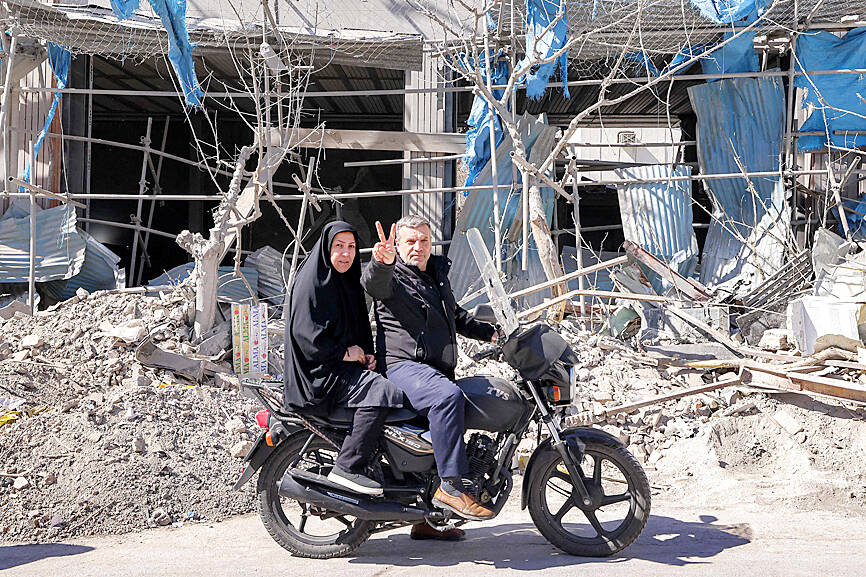
Photo: AFP
There would be “no problems” with LNG supplies for the first half of this month, as shipments have already cleared the Strait of Hormuz, Kung said.
Supplies for the latter half of the month have been secured from other markets, while non-gas backup generating units are also available and can be activated at any time, he said.
There would be absolutely no power rationing due to an LNG shortage, Kung said.
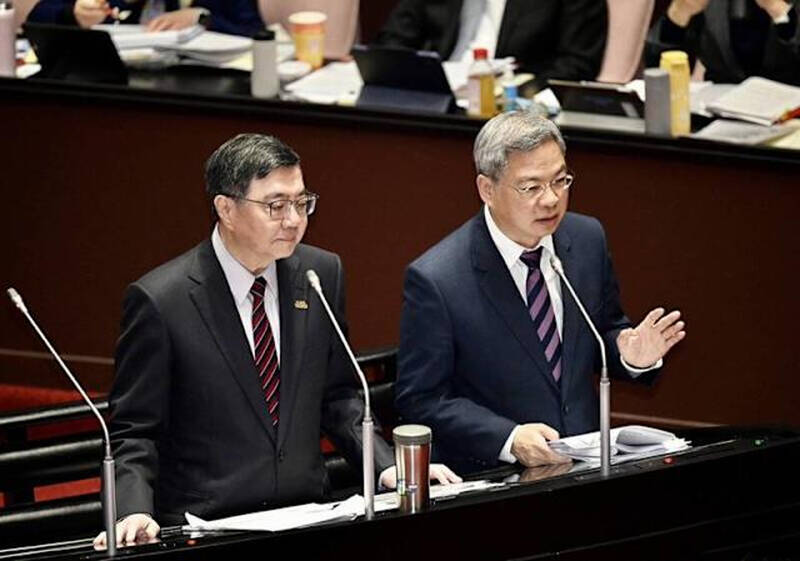
Photo: Peter Lo, Taipei Times
In the case of a prolonged blockade by Iran, Taiwan would look to sources outside the Middle East, including Australia and the US, the Ministry of Economic Affairs said in a statement.
Taiwan could also discuss mutual assistance with other LNG buyers, including Japan and South Korea, the ministry said.
The nation is also increasing LNG procurement from the US to strengthen energy resilience, it said.
CPC Corp, Taiwan (台灣中油) signed a roughly 25-year purchase agreement with US-based Cheniere Energy on Feb. 10, with deliveries set to begin in June and annual purchases of up to 1.2 million tonnes starting next year, the ministry said.
Asked if the situation could lead to higher electricity rates or the reactivation of coal-fired power plants, Kung said that any adjustment to electricity prices would be subject to review by the electricity price review committee.
If the conflict proves short-lived or limited in scope, it is less likely to affect rates, he said, adding that restarting coal-fired power plants would be a last resort.
Last year, crude oil from the Middle East accounted for 34.9 percent of total imports, down from 45 percent in 2022, while imports from the US rose to 61.8 percent from 44 percent over the same period, CPC said on Sunday.
Meanwhile, three major shipping firms have stopped accepting cargo for delivery to the Middle East or through the Red Sea, the Maritime and Port Bureau said yesterday.
Evergreen Marine Group (長榮海運), Yang Ming Marine Transport Corp (陽明海運) and Wan Hai Lines Ltd (萬海航運) have stopped shipping cargo to countries in the Middle East, including the United Arab Emirates, Saudi Arabia, Bahrain, Iran, Kuwait, Oman and Qatar, bureau Deputy Director-General Liu Chih-hung (劉志鴻) told a news conference in Taipei.
Container ships currently operating in the Persian Gulf have been told to comply with measures issued by local port authorities to ensure swift and efficient completion of cargo operations, Liu said.
Bulk shipping operators, including U-Ming Marine Transport Corp (裕民航運), Kuang Ming Shipping Corp (光明海運) and Wisdom Marine Group (慧洋海運), said that the closure of the Strait has yet to affect their businesses, as Taiwan handles only a limited volume of bulk cargo in the Persian Gulf region, Liu said.
The Strait of Hormuz is mainly navigated by natural gas and oil tankers, he said.
The bureau is authorized to activate a coordination mechanism with shipping companies to safeguard the stability of import and export operations, he added.
Customs Administration data showed that Taiwan mainly imported crude oil from three countries last year — Saudi Arabia (28.9 percent), the US (28.3 percent) and Kuwait (13.6 percent).
Also yesterday, the Bureau of Consular Affairs issued a Level 3 “orange” travel warning for Egypt and Jordan, advising citizens to avoid traveling there.
The day before it issued “orange” alerts for Bahrain, Oman, Kuwait, the United Arab Emirates, Saudi Arabia and Qatar.
According to US assessments, the airspace in Jordan and Egypt might continue to experience missile, drone or rocket attacks over the coming days, it said.
Additional reporting by Lee I-chia

‘NO SECURITY RISK’: The Railway Bureau reassured the public that the technicians’ activities were limited to technical guidance and did not involve sensitive systems The Railway Bureau yesterday said it had invited eight Chinese technicians to assist with an airport MRT construction project. The bureau issued the confirmation after an Internet user said Chinese nationals had entered the construction zone of Taiwan Taoyuan International Airport’s Terminal 3 project. They asked why “individuals from an enemy state” were allowed access to such a major national infrastructure project, which raised serious concerns over Taiwan’s industrial safety, sensitive systems and information security. The bureau’s Northern Region Engineering Branch Office said subcontractor Taiwan Handle Industrial Co (台灣手把工業) of the Taoyuan airport MRT’s “Contract No. CU05 Project A14 Station Civil, MEP &

The National Chungshan Institute of Science and Technology yesterday showcased its locally developed variants of the Vision 60 robotic patrol dog, which it plans to deploy on the nation’s outlying territories in the South China Sea. The variants were produced under the Joint Lab project — created by the institute and domestic companies — and assembled with domestically produced motors, lenses and artificial intelligence (AI) systems alongside licensed tech from the US, Missile and Rocket Systems Research Division deputy director Jen Kuo-kang (任國光) told the media event at a military base in Taipei’s Dazhi (大直) area. Taiwan has built up its strengths

NOT IMMEDIATE: Taiwan has a chance to appeal the proposed 10 percent tariff before it starts, while other countries face a 12.5 percent tariff from the trade office Taiwan is among 60 economies determined by the US to have failed to impose or enforce a ban on the importation of goods produced with forced labor, according to a notice released on Tuesday by the Office of the US Trade Representative (USTR), which proposed imposing an additional 10 percent or more tariff on them. The USTR in a statement said that following an investigation, it had determined under Section 301 of the Trade Act of 1974 that the failure of the 60 economies to impose and effectively enforce a prohibition on the importation of goods produced with forced labor is
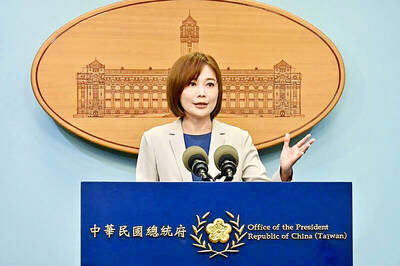
TIT-FOR-TAT: The US allegedly revoked the visa of a Chinese national working at Xinhua News Agency in the US in response to Beijing’s expulsion of Vivian Wang The Presidential Office yesterday condemned China for expelling a New York Times correspondent from Beijing following the newspaper’s interview with President William Lai (賴清德), saying the move highlighted Beijing’s suppression of press freedom and its threat to international news media. Taiwan has noted a series of recent incidents in which Beijing used similar tactics to “threaten and pressure international media outlets and journalists,” Presidential Office spokeswoman Karen Kuo (郭雅慧) said in a statement. “This concerns not only press freedom and freedom of expression, but also the safety of journalists, and Taiwan and relevant partners are paying close attention to the situation,” she


 RSS
RSS