


President William Lai (賴清德) yesterday approved a special pardon exempting a woman in her 80s convicted of killing her disabled son from imprisonment.
After carefully reviewing the case, Lai pardoned Lin Liu Lung-tzu (林劉龍子) from the prison sentence while acknowledging her conviction, citing the extreme circumstances she faced, Presidential Office spokeswoman Karen Kuo (郭雅慧) said in a statement.
Under Article 3 of the Amnesty Act (赦免法), the two kinds of pardons are exempting an offender from the execution of a punishment or declaring the punishment to be invalid.

Photo: CNA
Kuo said Lin Liu had spent more than 50 years caring for her son, before contracting COVID-19 in April 2023, causing her physical and mental health to deteriorate rapidly.
Facing the intense pressure of dealing with her own health and age problems and being unable to care for her severely disabled son, Lin Liu in May 2023 suffocated her son by covering his mouth and nose with tape, police said.
The Taipei District Court sentenced her to two years, six months imprisonment. The case was finalized on Jan. 16.
The case had drawn significant public attention and widespread sympathy, with the court and several legislators recommending that the president consider a pardon, Kuo said.
The Ministry of Justice concluded that, given the circumstances, there was no practical need to carry out the sentence, and Lai approved the pardon, she said.
Article 40 of the Constitution gives the president the power to grant amnesties, pardons, remissions of sentences and restitution of civil rights.
Lin Liu’s pardon is the ninth special presidential pardon ever issued.
Former president Tsai Ing-wen (蔡英文) in 2021 pardoned Tama Talum, a Bunun man who had been sentenced to three-and-a-half years on charges of using a rifle to kill protected species without permission.
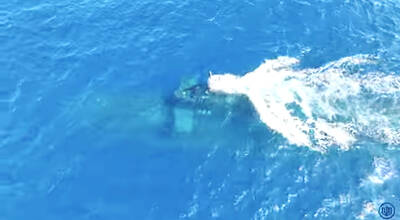
CSBC Corp, Taiwan (台灣國際造船) yesterday released the first video documenting the submerged sea trials of Taiwan’s indigenous defense submarine prototype, the Hai Kun (海鯤), or Narwhal, showing underwater navigation and the launch of countermeasures. The footage shows the vessel’s first dive, steering and control system tests, and the raising and lowering of the periscope and antenna masts. It offered a rare look at the progress in the submarine’s sea acceptance tests. The Hai Kun carried out its first shallow-water diving trial late last month and has since completed four submerged tests, CSBC said. The newly released video compiles images recorded from Jan. 29 to
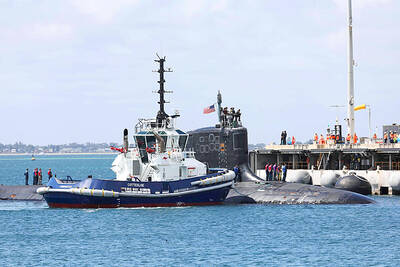
DETERRENCE EFFORTS: Washington and partners hope demonstrations of force would convince Beijing that military action against Taiwan would carry high costs The US is considering using HMAS Stirling in Western Australia as a forward base to strengthen its naval posture in a potential conflict with China, particularly over Taiwan, the Wall Street Journal reported on Saturday. As part of its Indo-Pacific strategy, Washington plans to deploy up to four nuclear-powered submarines at Stirling starting in 2027, providing a base near potential hot spots such as Taiwan and the South China Sea. The move also aims to enhance military integration with Pacific allies under the Australia-UK-US trilateral security partnership, the report said. Currently, US submarines operate from Guam, but the island could
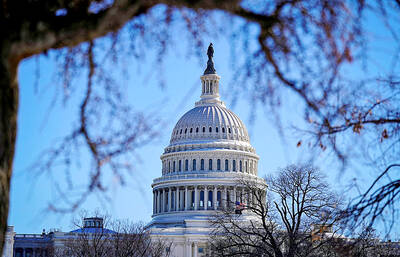
RESTRAINTS: Should China’s actions pose any threat to Taiwan’s security, economic or social systems, China would be excluded from major financial institutions, the bill says The US House of Representatives on Monday passed the PROTECT Taiwan Act, which states that Washington would exclude China from participating in major global financial organizations if its actions directly threaten Taiwan’s security. The bill, proposed by Republican Representative Frank Lucas, passed with 395 votes in favor and two against. It stipulates that if China’s actions pose any threat to Taiwan’s security, economic or social systems, the US would, “to the maximum extent practicable,” exclude Beijing from international financial institutions, including the G20, the Bank for International Settlements and the Financial Stability Board. The bill makes it clear that China must be prepared
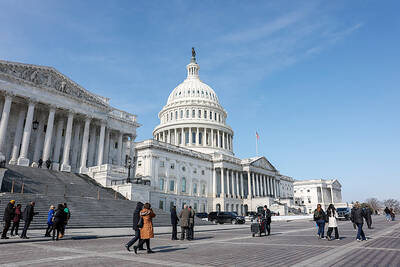
The partisan standoff over President William Lai’s (賴清德) proposed defense budget has raised questions about the nation’s ability to adequately fund its own defense, the US Congressional Research Service (CRS) said in a report released on Tuesday. The report, titled Taiwan: Defense and Military Issues, said the government has increased its defense budget at an average annual rate of 5 percent from 2019 to 2023, with about 2.5 percent of its GDP spent on defense in 2024. Lai in November last year proposed a special budget of about US$40 billion over eight years, and said he intends to increase defense spending to


 RSS
RSS