


The US has agreed to lower tariffs on Taiwanese goods from 20 percent to 15 percent, without stacking them on existing most-favored-nation (MFN) rates, the Executive Yuan said in a statement today.
The agreement, reached in trade negotiations that concluded yesterday in Washington, also grants semiconductors and related products the most favorable treatment under Section 232 of the Trade Expansion Act, the Cabinet said.
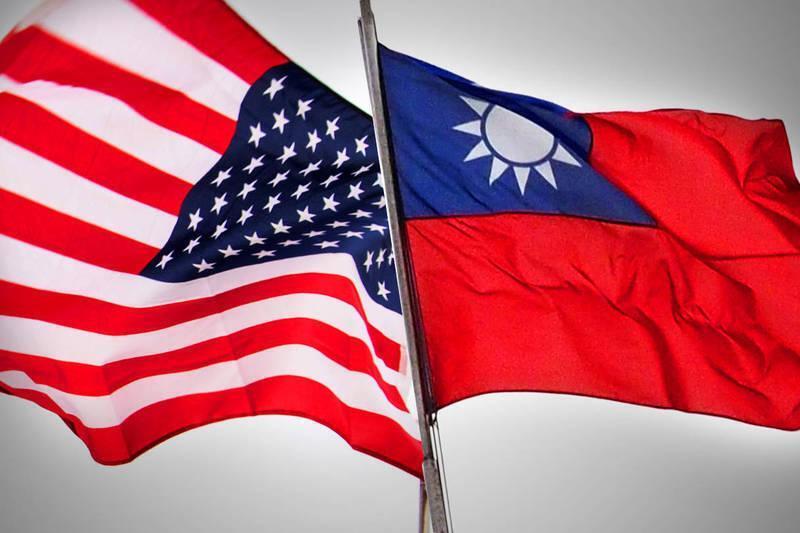
Photo: AFP
It also includes commitments to expand supply chain investment cooperation and deepen Taiwan-US strategic collaboration on artificial intelligence, according to the statement.
The new tariff rate of 15 percent matches US rates on goods from major trade partners such as Japan, South Korea and the EU.
As part of the agreement, Taiwanese semiconductor, electronics manufacturing service (EMS), artificial intelligence and energy companies would invest US$250 billion in the US based on their own plans, the Cabinet statement said, although no timetable was given.
At the same time, Taiwan's government has also agreed to provide up to US$250 billion in credit guarantees for financial institutions to support investments in the US market by the semiconductor and information and communication technology sectors, the statement said.
On Monday, the New York Times reported that Taiwan Semiconductor Manufacturing Co (TSMC, 台積電) would commit to building at least five more fabs in exchange for a possible reduction in . tariffs on Taiwanese goods.
TSMC chairman and CEO C.C. Wei (魏哲家) did not directly respond to the report at an investor conference yesterday, but he said his company was "speeding up" its capacity expansion in the US to satisfy client needs.
With the deal, Taiwan has become the first country in the world to secure the most favorable treatment for its semiconductor and related product suppliers, which should significantly ease uncertainties for the local semiconductor industry, the Cabinet statement said.
The US has also pledged to grant most favorable status to Taiwanese semiconductor firms when they import raw materials, equipment and electronics components for their US operations, the statement said, without elaborating.
According to the Cabinet, Washington has recognized and accepted a "Taiwan model" that Taipei proposed to allow Taiwanese companies to follow their own plans for investing in the US and moving closer geographically to their US clients.
The "Taiwan model" is expected to encourage Taiwanese companies to enter the supply chain in the US market and build industrial clusters there, the Cabinet said.
Taiwan has the sixth-biggest trade surplus with the US of any country in the world, and about 90 percent of that is from sales of semiconductors, information and communications products, and electronic components, the statement said.
In a separate statement, the US Department of Commerce described the arrangement as "a historic trade deal that will drive a massive reshoring of America's semiconductor sector" and "strengthen US economic resilience, create high-paying jobs and bolster national security."
Beyond the tech sector, the reduction of the import duty on Taiwanese goods imported to the US to 15 percent without stacking them on existing MFN rates should help make Taiwan's non-tech sectors more competitive, as they would now be on an equal footing with Japan, South Korea and the EU, the Cabinet said.
Taiwan has also secured the most favorable treatment for other items such as auto parts, wooden furniture and aircraft components under Section 232, and Taipei and Washington have agreed to set up a negotiation mechanism under Section 232.

PREPAREDNESS: Given the difficulty of importing ammunition during wartime, the Ministry of National Defense said it would prioritize ‘coproduction’ partnerships A newly formed unit of the Marine Corps tasked with land-based security operations has recently replaced its aging, domestically produced rifles with more advanced, US-made M4A1 rifles, a source said yesterday. The unnamed source familiar with the matter said the First Security Battalion of the Marine Corps’ Air Defense and Base Guard Group has replaced its older T65K2 rifles, which have been in service since the late 1980s, with the newly received M4A1s. The source did not say exactly when the upgrade took place or how many M4A1s were issued to the battalion. The confirmation came after Chinese-language media reported
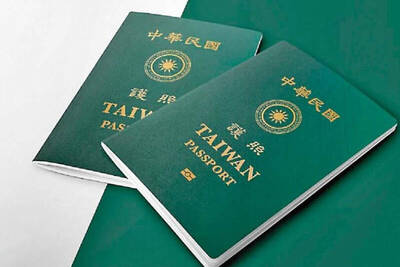
The Taiwanese passport ranked 33rd in a global listing of passports by convenience this month, rising three places from last month’s ranking, but matching its position in January last year. The Henley Passport Index, an international ranking of passports by the number of designations its holder can travel to without a visa, showed that the Taiwan passport enables holders to travel to 139 countries and territories without a visa. Singapore’s passport was ranked the most powerful with visa-free access to 192 destinations out of 227, according to the index published on Tuesday by UK-based migration investment consultancy firm Henley and Partners. Japan’s and
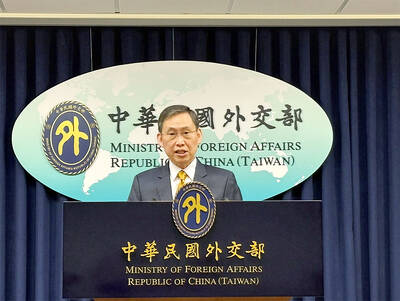
A Ministry of Foreign Affairs official yesterday said that a delegation that visited China for an APEC meeting did not receive any kind of treatment that downgraded Taiwan’s sovereignty. Department of International Organizations Director-General Jonathan Sun (孫儉元) said that he and a group of ministry officials visited Shenzhen, China, to attend the APEC Informal Senior Officials’ Meeting last month. The trip went “smoothly and safely” for all Taiwanese delegates, as the Chinese side arranged the trip in accordance with long-standing practices, Sun said at the ministry’s weekly briefing. The Taiwanese group did not encounter any political suppression, he said. Sun made the remarks when
BROAD AGREEMENT: The two are nearing a trade deal to reduce Taiwan’s tariff to 15% and a commitment for TSMC to build five more fabs, a ‘New York Times’ report said Taiwan and the US have reached a broad consensus on a trade deal, the Executive Yuan’s Office of Trade Negotiations said yesterday, after a report said that Washington is set to reduce Taiwan’s tariff rate to 15 percent. The New York Times on Monday reported that the two nations are nearing a trade deal to reduce Taiwan’s tariff rate to 15 percent and commit Taiwan Semiconductor Manufacturing Co (TSMC, 台積電) to building at least five more facilities in the US. “The agreement, which has been under negotiation for months, is being legally scrubbed and could be announced this month,” the paper said,


 RSS
RSS