


The US has sanctioned six Chinese and Hong Kong officials who it alleged were involved in “transnational repression” and acts that threaten to further erode the territory’s autonomy, with Beijing threatening to take countermeasures.
The six officials included Hong Kong Secretary for Justice Paul Lam (林定國), Director of the Office for Safeguarding National Security in Hong Kong Dong Jingwei (董經緯) and Police Commissioner Raymond Siu Chak-yee (蕭澤頤).
“Beijing and Hong Kong officials have used Hong Kong national security laws extraterritorially to intimidate, silence and harass 19 pro-democracy activists who were forced to flee overseas, including a US citizen and four other US residents,” the US Department of State said.
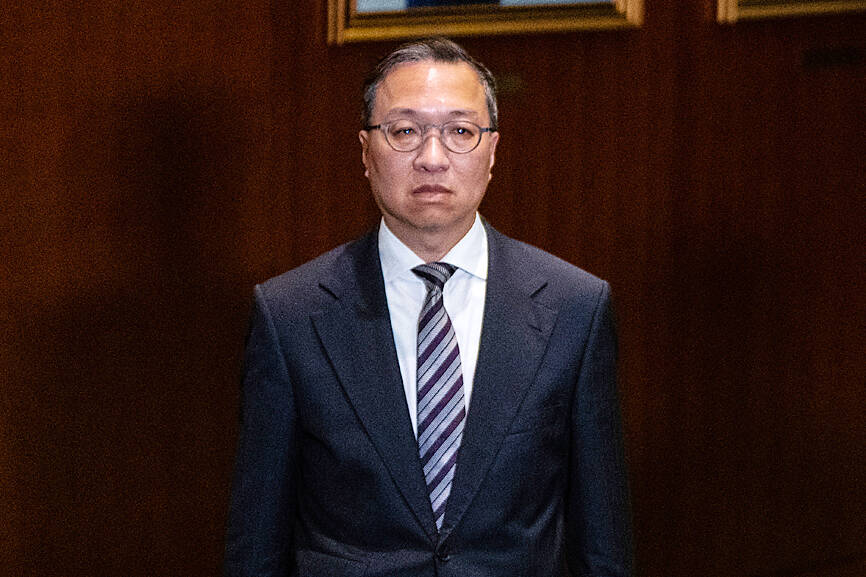
Photo: AP
The statement dated Monday said the six officials sanctioned were linked to entities or actions that engaged in coercing, arresting, detaining or imprisoning individuals under the authority of Hong Kong’s National Security Law, or implementing the law.
The other three officials were Sonny Au (區志光), secretary-general of the Committee for Safeguarding National Security in Hong Kong, and assistant police commissioners Dick Wong (王忠巡)and Margaret Chiu (趙詠蘭).
Since Beijing imposed a national security law in 2020 to quell the 2019 massive anti-government protests, Hong Kong authorities have prosecuted many leading activists in the former British colony, which returned to Chinese rule in 1997.
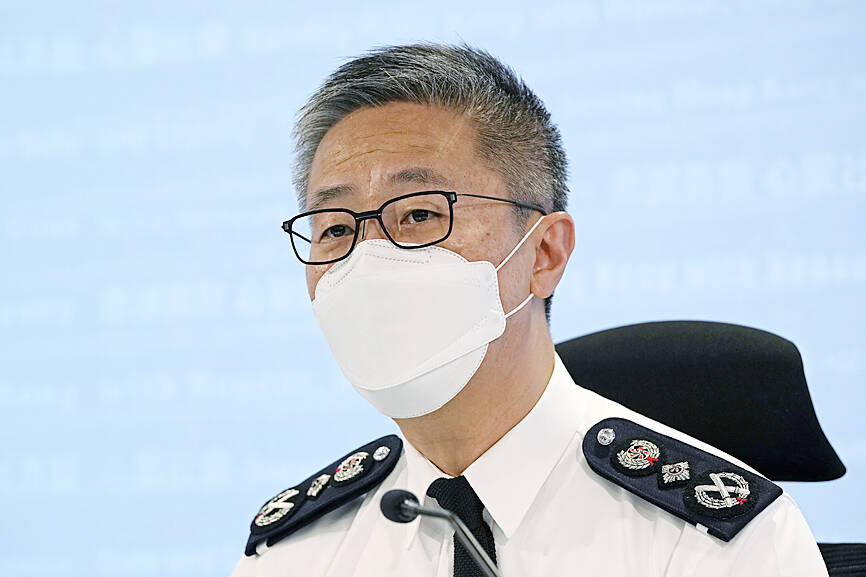
Photo: AP
The Hong Kong office of the Chinese Ministry of Foreign Affairs condemned the sanctions, saying they again exposed the ill-intention of the US to undermine Hong Kong’s prosperity and contain China’s development.
It urged Washington to stop interfering in Hong Kong’s affairs.
“China will surely take effective countermeasures against these despicable acts by the US!” it said in a statement.
In Beijing, Chinese Ministry of Foreign Affairs spokesman Guo Jiakun (郭嘉昆) said China would take resolute countermeasures for any wrong actions by the US.
He said the actions taken by Hong Kong police against “anti-China elements” who fled abroad were carried out according to the law and that the US has no right to interfere with the territory’s national security cases.
Condemning the US over the sanctions, the Hong Kong government said it despises them and is not intimidated by them.
“It, once again, clearly exposed the US’ barbarity under its hegemony, which is exactly the same as its recent tactics in bullying and coercing various countries and regions,” it said in a statement.
It said the “absconders” mentioned by the US government are wanted for arrest, because they continued to blatantly engage in activities endangering national security overseas.
It said the US has given cover for those “who have committed these evil deeds,” and therefore it was necessary for Hong Kong to take lawful measures to combat the acts.
“The imposition of the so-called ‘sanctions’ in the guise of defending human rights and democracy indeed constitute a demonstration of shameless hypocrisy with double standards on the part of the US,” it said.
Lam said the sanctions” do not affect my work; they do not affect my life.”
He said the sanctions represented “blatant tyrannical bullying intended to deter people from participating in safeguarding national security” in a statement.
However, Frances Hui (許穎婷), one of the overseas-based activists targeted by the authorities, wrote on X that it was a critical step in addressing the territory’s worsening crackdown.
She said they hoped it marked the beginning of a sustained effort to hold perpetrators accountable.

Right-wing political scientist Laura Fernandez on Sunday won Costa Rica’s presidential election by a landslide, after promising to crack down on rising violence linked to the cocaine trade. Fernandez’s nearest rival, economist Alvaro Ramos, conceded defeat as results showed the ruling party far exceeding the threshold of 40 percent needed to avoid a runoff. With 94 percent of polling stations counted, the political heir of outgoing Costa Rican President Rodrigo Chaves had captured 48.3 percent of the vote compared with Ramos’ 33.4 percent, the Supreme Electoral Tribunal said. As soon as the first results were announced, members of Fernandez’s Sovereign People’s Party
EMERGING FIELDS: The Chinese president said that the two countries would explore cooperation in green technology, the digital economy and artificial intelligence Chinese President Xi Jinping (習近平) yesterday called for an “equal and orderly multipolar world” in the face of “unilateral bullying,” in an apparent jab at the US. Xi was speaking during talks in Beijing with Uruguayan President Yamandu Orsi, the first South American leader to visit China since US special forces captured then-Venezuelan president Nicolas Maduro last month — an operation that Beijing condemned as a violation of sovereignty. Orsi follows a slew of leaders to have visited China seeking to boost ties with the world’s second-largest economy to hedge against US President Donald Trump’s increasingly unpredictable administration. “The international situation is fraught
Taiwan Semiconductor Manufacturing Co (TSMC, 台積電) plans to make advanced 3-nanometer chips in Japan, stepping up its semiconductor manufacturing roadmap in the country in a triumph for Japanese Prime Minister Sanae Takaichi’s technology ambitions. TSMC is to adopt cutting-edge technology for its second wafer fab in Kumamoto, company chairman C.C. Wei (魏哲家) said yesterday. That is an upgrade from an original blueprint to produce 7-nanometer chips by late next year, people familiar with the matter said. TSMC began mass production at its first plant in Japan’s Kumamoto in late 2024. Its second fab, which is still under construction, was originally focused on
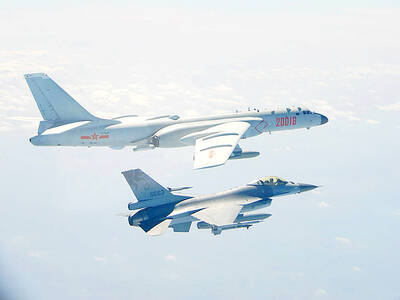
GROWING AMBITIONS: The scale and tempo of the operations show that the Strait has become the core theater for China to expand its security interests, the report said Chinese military aircraft incursions around Taiwan have surged nearly 15-fold over the past five years, according to a report released yesterday by the Democratic Progressive Party’s (DPP) Department of China Affairs. Sorties in the Taiwan Strait were previously irregular, totaling 380 in 2020, but have since evolved into routine operations, the report showed. “This demonstrates that the Taiwan Strait has become both the starting point and testing ground for Beijing’s expansionist ambitions,” it said. Driven by military expansionism, China is systematically pursuing actions aimed at altering the regional “status quo,” the department said, adding that Taiwan represents the most critical link in China’s


 RSS
RSS