


China would attempt to disrupt elections in the US, South Korea and India this year with artificial intelligence (AI)-generated content after making a dry run with the presidential poll in Taiwan, Microsoft Corp has said.
The US tech firm expects Chinese state-backed cybergroups to target high-profile elections this year, with North Korea also involved, a report published on Friday by the company’s threat intelligence team showed.
“As populations in India, South Korea and the United States head to the polls, we are likely to see Chinese cyber and influence actors, and to some extent North Korean cyberactors, work toward targeting these elections,” the report reads.
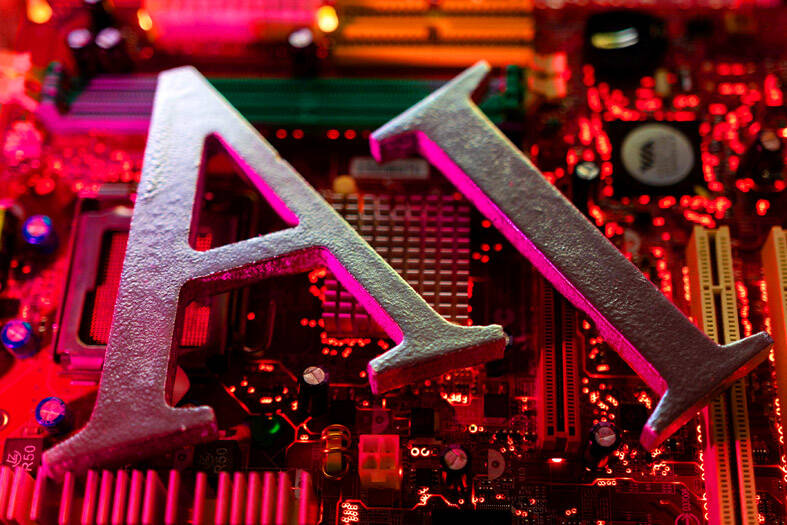
Photo: Reuters
“At a minimum,” China would create and distribute through social media AI-generated content that “benefits their positions in these high-profile elections,” Microsoft said.
The company added that the impact of AI-made content was minor, but warned that could change.
“While the impact of such content in swaying audiences remains low, China’s increasing experimentation in augmenting memes, videos and audio will continue — and may prove effective down the line,” Microsoft said.
China had already attempted an AI-generated disinformation campaign in the Taiwanese presidential and legislative elections in January, the report said.
That was the first time it had seen a state-backed entity using AI-made content in a bid to influence a foreign election, it added.
A Beijing-backed group called Storm 1376, also known as Spamouflage or Dragonbridge, was highly active during the Taiwanese election, the report said.
Its attempts to influence the outcome included posting fake audio on YouTube of presidential candidate Terry Gou (郭台銘) — the Hon Hai Precision Industry Co founder who bowed out in November last year — endorsing another candidate, it said.
That clip was “likely AI generated,” Microsoft said.
YouTube removed the content before it reached many users.
The Beijing-backed group pushed a series of AI-generated memes about now-president-elect William Lai — a pro-sovereignty candidate opposed by Beijing — that leveled baseless claims against the vice president accusing him of embezzling state funds.
There was also an increased use of AI-generated TV news anchors, a tactic that has also been used by Iran, with an “anchor” making unsubstantiated claims about Lai’s private life including fathering illegitimate children, the report said.
The news anchors were created by the CapCut tool, developed by the Chinese company ByteDance Ltd (字節跳動), the owner of TikTok, Microsoft said.
Chinese groups continue to mount influence campaigns in the US, with Beijing-backed actors using social media accounts to pose “divisive questions” and attempt to understand issues dividing US voters, it said.
“This could be to gather intelligence and precision on key voting demographics ahead of the US presidential election,” Microsoft wrote in a blog post accompanying the report.
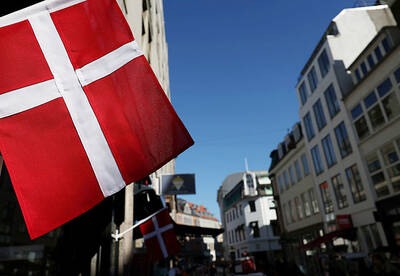
‘UNFRIENDLY’: Changing the nationality listing of Taiwanese residents to ‘China’ goes against EU foreign policy as well as democratic and human rights principles, MOFA said Taiwan yesterday called on Denmark to correct its designation of the nationality of Taiwanese residents as “China” or face retaliatory measures. The Danish government in 2024 changed the nationality of Taiwanese citizens on their residence permits from “Taiwan” to “China.” The decision goes against EU foreign policy and contravenes democratic and human rights principles, Ministry of Foreign Affairs (MOFA) spokesman Hsiao Kuang-wei (蕭光偉) said. Denmark should present a solution acceptable to Taiwan as soon as possible and correct the erroneous designation to preserve the longstanding friendship between the two nations, Hsiao said. The issue could damage Denmark’s image and business reputation in Taiwan,

KEY INDUSTRY: The vice premier discussed a plan to create a non-red drone supply chain by next year, which has been allocated a budget of more than NT$7.2 billion The government has budgeted NT$44.2 billion (US$1.38 billion) to cultivate Taiwan’s uncrewed aerial vehicle (UAV) industry over the next five years, which would make the nation a major player in the industry’s democratic supply chain in the Asia-Pacific region, Premier Cho Jung-tai (卓榮泰) said yesterday. Cho made the remarks during a visit to the facilities of Cub Elecparts Inc (為升電裝). Democratic Progressive Party (DPP) Legislator Chen Su-yueh (陳素月) and Chinese Nationalist Party (KMT) Legislator Hsieh Yi-fong (謝依鳳) also participated in the trip. Cub Elecparts has transitioned from the automotive industry to the defense industry, which is the top priority among the nation’s
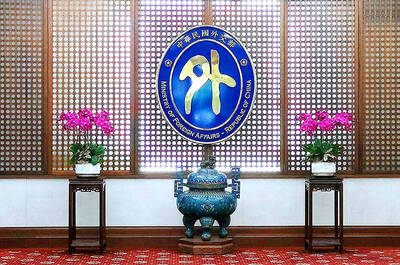
SOUTH KOREA DISPUTE: If Seoul continues to ignore its request, Taiwan would change South Korea’s designation on its arrival cards, the foreign ministry said If South Korea does not reply appropriately to a request to correct Taiwan’s name on its e-Arrival card system before March 31, the government would take corresponding measures to change how South Korea is labeled on the online Taiwan Arrival Card system, the Ministry of Foreign Affairs said yesterday. South Korea’s e-Arrival card system lists Taiwan as “China (Taiwan)” in the “point of departure” and “next destination” fields. Taipei has asked Seoul to change the wording. Since March 1, South Koreans who hold government-issued Alien Resident Certificates (ARC) have been identified as from “South Korea” rather than the “Republic of Korea,” the
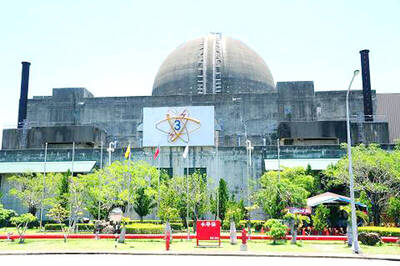
SUFFICIENT: The president said Taiwan has enough oil for next month, with reserves covering more than 100 days and natural gas enough for 12 to 14 days A restart plan for the Guosheng Nuclear Power Plant in New Taipei City’s Wanli District (萬里) and the Ma-anshan Nuclear Power Plant in Pingtung County’s Hengchun Township (恆春) would be submitted to the Nuclear Safety Commission by the end of the month, President William Lai (賴清德) said yesterday, reversing the government’s policy to abolish nuclear energy. On May 17 last year, Taiwan shut down its last nuclear reactor and became the first non-nuclear nation in East Asia, fulfilling the Democratic Progressive Party (DPP) government’s pledge of a “nuclear-free homeland.” Even without nuclear power, Taiwan can maintain a stable electricity supply until 2032,


 RSS
RSS