


Schools would be allowed to conduct inspections of “students of interest” as soon as next month, while extra measures are under way, Minister of Education Pan Wen-chung (潘文忠) said yesterday.
The measures are to be enacted in light of a stabbing at a New Taipei City junior high school on Monday last week, which left a student dead.
The Ministry of Education yesterday morning convened a meeting with local government, school, teacher and parent representatives to discuss measures to improve campus safety.
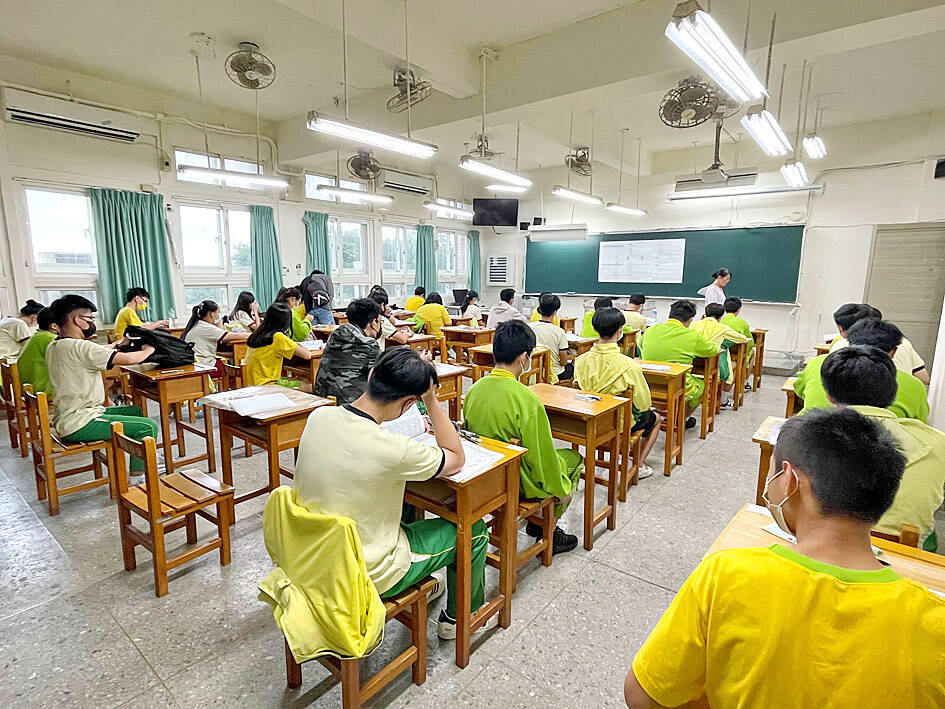
Photo courtesy of Tamsui Vocational High School via CNA
During the meeting, they agreed to empower schools’ student affairs departments to conduct routine inspections to guarantee student privacy, Pan said.
He said the ministry was considering two main proposals concerning bag searches to improve campus safety.
The first involves making a distinction between routine and emergency searches, with the latter allowing for immediate searches to be conducted in cases where a student is reported to be carrying a dangerous object, Pan said.
The other proposal would set a separate standard for searching the belongings of students of interest, he said.
“Students of interest” are defined as those who have a juvenile criminal record, are on trial, have been placed under custody by a juvenile court, have been arrested for errant behavior or have a record of substance abuse, the ministry said.
The ministry said that students would be informed of their rights and the search would be recorded.
Any contraband would be temporarily confiscated by the department, with searches being recorded on camera, the ministry said, adding that any legal wrongdoing would be reported to local police.
The ministry is still debating whether videos would have a sunset clause or should be archived, it said, adding that it is still discussing the type of staff to run such inspections, the number of personnel and whether routine inspections in classes should be allowed.
The ministry is still mulling whether students who have been in custody or on probation before would be considered “students of interest.”
The ministry expects to complete its goal of increasing schools’ student affairs department personnel and security staff for junior high schools by the end of next year and achieve its goals to increase personnel at elementary schools by the end of 2026, Pan said.
National Federation of Teachers’ Unions chairman Hou Chun-liang (侯俊良) said that the initial reaction of the ministry and the New Taipei City Government was to criticize teachers, showing a lack of confidence in educators.
Teachers face difficulties brought about by the system, and limiting their ability to discipline students by amending the Teacher’s Act (教師法) over the acts of a few did not help, Hou said.
Hou said that the ministry should establish a task force to handle incidents of violence by students.
Additional reporting by CNA
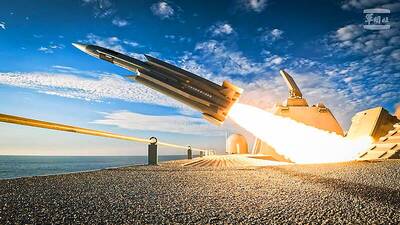
DETERRENCE: With 1,000 indigenous Hsiung Feng II and III missiles and 400 Harpoon missiles, the nation would boast the highest anti-ship missile density in the world With Taiwan wrapping up mass production of Hsiung Feng II and III missiles by December and an influx of Harpoon missiles from the US, Taiwan would have the highest density of anti-ship missiles in the world, a source said yesterday. Taiwan is to wrap up mass production of the indigenous anti-ship missiles by the end of year, as the Chungshan Institute of Science and Technology has been meeting production targets ahead of schedule, a defense official with knowledge of the matter said. Combined with the 400 Harpoon anti-ship missiles Taiwan expects to receive from the US by 2028, the nation would have
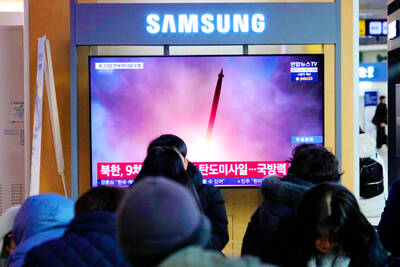
North Korea yesterday fired about 10 ballistic missiles to the sea toward Japan, the South Korean Joint Chiefs of Staff (JCS) said, days after Pyongyang warned of “terrible consequences” over ongoing South Korea-US military drills. Pyongyang recently dashed hopes of a diplomatic thaw with Seoul, Washington’s security ally, describing its latest peace efforts as a “clumsy, deceptive farce.” Seoul’s military detected “around 10 ballistic missiles launched from the Sunan area in North Korea toward the East Sea [Sea of Japan] at around 1:20pm,” JCS said in a statement, referring to South Korea’s name for the body of water. The missiles

‘UNWAVERING FRIENDSHIP’: A representative of a Japanese group that co-organized a memorial, said he hopes Japanese never forget Taiwan’s kindness President William Lai (賴清德) yesterday marked the 15th anniversary of the Tohoku earthquake and tsunami, urging continued cooperation between Taiwan and Japan on disaster prevention and humanitarian assistance. Lai wrote on social media that Taiwan and Japan have always helped each other in the aftermath of major disasters. The magnitude 9 earthquake struck northeastern Japan on March 11, 2011, triggering a massive tsunami that claimed more than 19,000 lives, according to data from Japanese authorities. Following the disaster, Taiwan donated more than US$240 million in aid, making it one of the largest contributors of financial assistance to Japan. In addition to cash donations and
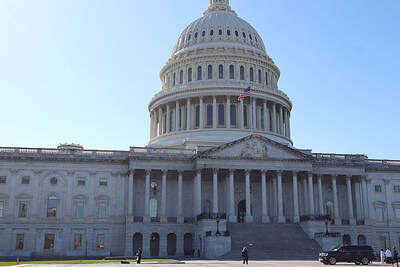
MORE OPTIONS: The bill seeks to ‘harden a critical weak point’ in the Indo-Pacific region by finding ways to diversify and protect Taiwan’s energy infrastructure US Representative Pat Harrigan yesterday introduced the Taiwan Energy Security and Anti-Embargo Act of 2026, saying it would ensure “Taiwan isn’t left vulnerable to supply shocks, coercion by the Chinese Communist Party [CCP], or external geopolitical turmoil.” “Energy is leverage,” Harrigan, a Republican, was quoted as saying in a statement from his office. “Beijing knows exactly where Taiwan is weakest — and global events today, from strikes in the Middle East to threats at chokepoints like the Strait of Hormuz, underscore that energy vulnerability is national security vulnerability.” The bill would authorize the creation of a joint Taiwan-US energy security center to


 RSS
RSS