


Israeli troops yesterday entered Gaza’s biggest hospital and were searching its rooms and basement, witnesses said, culminating a days-long siege that caused global alarm over the fate of thousands of civilians trapped inside.
Al-Shifa Hospital in Gaza City has become the main target of the ground operation by Israeli forces, who say Hamas fighters have the “beating heart” of their operations in a headquarters in tunnels beneath it, which Hamas denies.
Israel said its troops uncovered unspecified weapons and “terror infrastructure” inside the hospital compound after killing fighters in a clash outside.
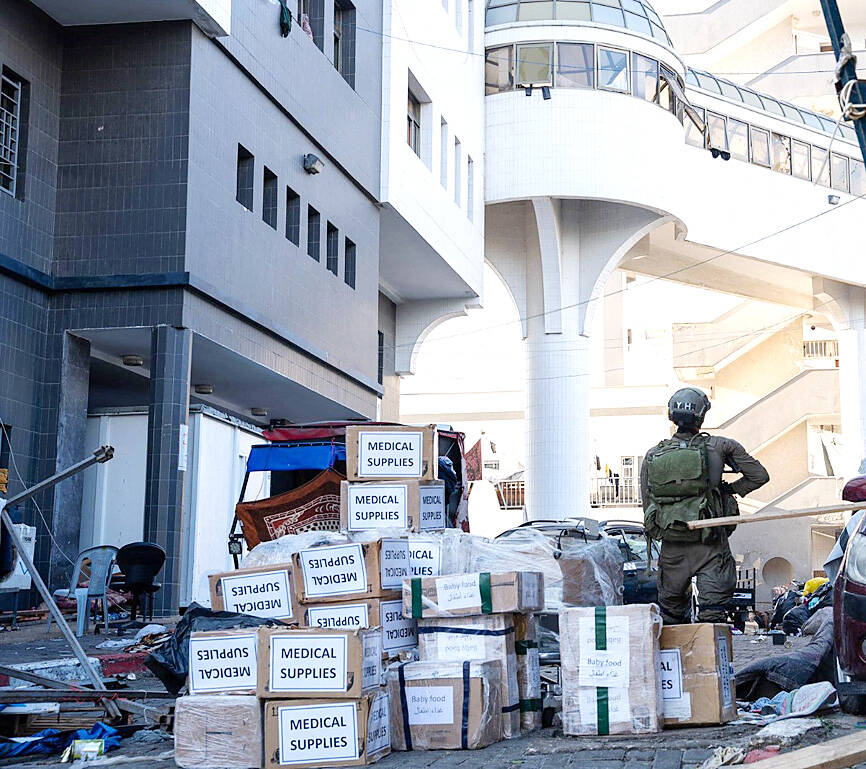
Photo: AFP / Israel Defense Forces
Once inside, they said there had been no fighting and no friction with civilians, patients or staff.
The military released photographs of a soldier standing beside cardboard boxes marked “medical supplies” and “baby food” in English, at a location Reuters verified was inside the grounds.
Other photos showed Israeli troops in tactical formation walking past makeshift tents and mattresses.
Attention has been focused on the fate of hundreds of patients trapped inside without power to operate basic medical equipment, and thousands of displaced civilians who had sought shelter there.
Gaza officials say that many patients, including three newborn babies, had died in recent days as a result of Israel’s encirclement of the facility.
“Before entering the hospital our forces were confronted by explosive devices and terrorist squads, fighting ensued in which terrorists were killed,” the Israel Defense Forces (IDF) said.
“We can confirm that incubators, baby food and medical supplies brought by IDF tanks from Israel have successfully reached the Shifa hospital. Our medical teams and Arabic-speaking soldiers are on the ground to ensure that these supplies reach those in need,” the IDF said.
Ahmed El-Mohallalati, a surgeon, said by telephone yesterday morning that staff were in hiding as the fighting unfolded around the hospital overnight.
The sound of what he described as “continuous shooting from the tanks” could be heard in the background as he spoke.
After “horrible” sounds of clashes, “one of the big tanks entered within the hospital from the eastern main gate, and they were, they were they just parked in the front of the hospital emergency department,” he said.
The Israelis had told the hospital administration in advance that they planned to enter, he said. Troops had yet to enter the main building where he was sheltering.
He said that after five days during which the hospital had come under repeated Israeli attack, it was a relief at least to have reached an “end point,” with troops now inside the grounds instead of outside shooting in.
He was worried about the fate of his patients, including from any hasty evacuation, but unconcerned about potential clashes in the compound, saying Israeli claims that there were fighters inside was a “big lie.”
The IDF said the raid was essential: “Based on intelligence information and an operational necessity, IDF forces are carrying out a precise and targeted operation against Hamas in a specified area in the Shifa hospital.”
Israel had given Hamas a 12-hour deadline to cease military activity at the hospital, but “unfortunately, it did not,” it said.
The US on Tuesday said that its own intelligence supported Israel’s conclusions about the presence of a Hamas headquarters at al-Shifa.
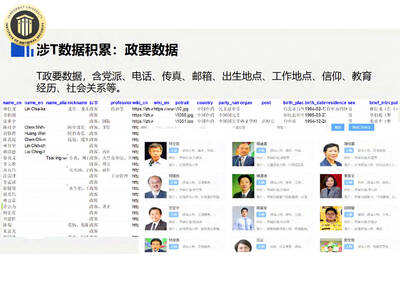
NETWORK-MAPPING PROJECT: The database contains 170 detailed files of Taiwanese politicians and about 23 million records of household registration data in Taiwan China has developed a network-mapping project targeting political figures and parties in Taiwan to monitor public opinion during elections and to craft tailored influence campaigns aimed at dividing Taiwanese society, according to documents leaked by Chinese technology firm GoLaxy (中科天璣). The documents, collected by Taipei-based Doublethink Lab, showed a database was specifically created to gather detailed information on Taiwanese political figures, including their political affiliations, job histories, birthplaces, residences, education, religion and a brief biography about them. Several notable Taiwanese politicians are in the database, including President William Lai (賴清德), former president Tsai Ing-wen (蔡英文), Minister of Foreign Affairs Lin Chia-lung (林佳龍),
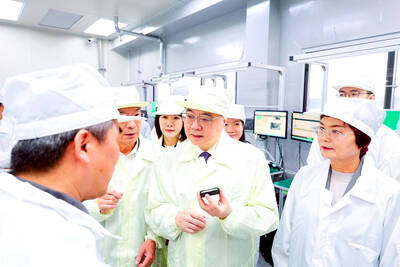
KEY INDUSTRY: The vice premier discussed a plan to create a non-red drone supply chain by next year, which has been allocated a budget of more than NT$7.2 billion The government has budgeted NT$44.2 billion (US$1.38 billion) to cultivate Taiwan’s uncrewed aerial vehicle (UAV) industry over the next five years, which would make the nation a major player in the industry’s democratic supply chain in the Asia-Pacific region, Premier Cho Jung-tai (卓榮泰) said yesterday. Cho made the remarks during a visit to the facilities of Cub Elecparts Inc (為升電裝). Democratic Progressive Party (DPP) Legislator Chen Su-yueh (陳素月) and Chinese Nationalist Party (KMT) Legislator Hsieh Yi-fong (謝依鳳) also participated in the trip. Cub Elecparts has transitioned from the automotive industry to the defense industry, which is the top priority among the nation’s
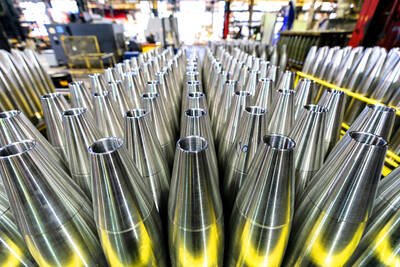
UPGRADED MISSILE: The Chungshan Institute of Science and Technology is reportedly to conduct a live-fire test of the Hsiung Feng III anti-ship missile on Thursday next week The US Army is planning to build new facilities to boost explosives production and strengthen its supply chain, a move aimed at addressing munitions shortages and supporting obligations to partners including Taiwan, Ukraine and Israel, Defense News reported. The army has issued a sources sought notice for a proposed Center of Excellence at the Blue Grass Army Depot in Kentucky, the report said. The facility would serve as a hub within the US industrial base for the production of key military explosives, including research department explosives (RDX) and high melting explosives (HMX), while also supporting research and development of next-generation materials. The proposed
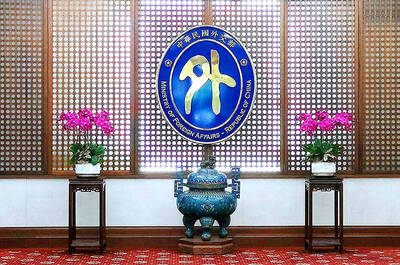
SOUTH KOREA DISPUTE: If Seoul continues to ignore its request, Taiwan would change South Korea’s designation on its arrival cards, the foreign ministry said If South Korea does not reply appropriately to a request to correct Taiwan’s name on its e-Arrival card system before March 31, the government would take corresponding measures to change how South Korea is labeled on the online Taiwan Arrival Card system, the Ministry of Foreign Affairs said yesterday. South Korea’s e-Arrival card system lists Taiwan as “China (Taiwan)” in the “point of departure” and “next destination” fields. Taipei has asked Seoul to change the wording. Since March 1, South Koreans who hold government-issued Alien Resident Certificates (ARC) have been identified as from “South Korea” rather than the “Republic of Korea,” the


 RSS
RSS