


The National Communications Commission (NCC) yesterday launched an investigation into Chinese Television System (CTS, 華視) for allegedly causing public panic by mistakenly running news tickers about a Chinese invasion and disaster.
The news alerts were created by the New Taipei City Fire Department for disaster drill purposes.
CTS ran the news tickers during its news program at 7am, with messages that read: “New Taipei City hit by Chinese missiles, sea vessels and facilities in Port of Taipei damaged,” “Banciao Railway Station under attack” and “New Taipei City’s Taishan District (泰山) struck by magnitude 7 earthquake.”
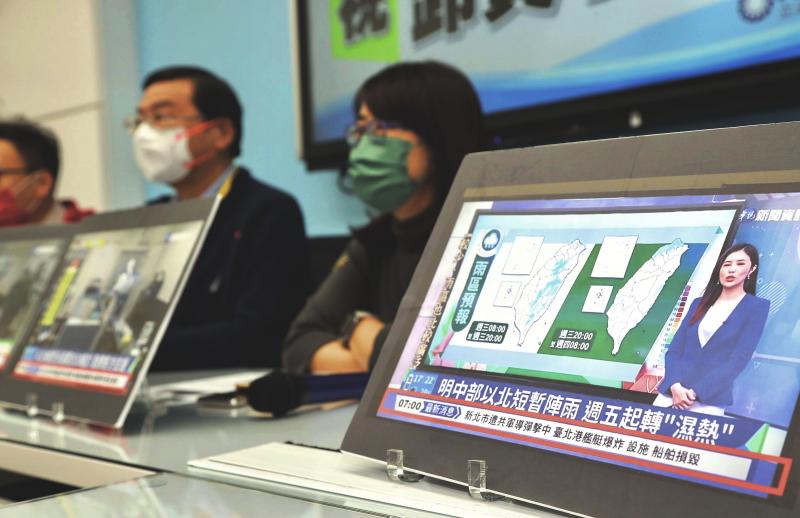
Photo: CNA
As of 2pm, the NCC had received complaints from seven viewers about the network’s error, NCC Deputy Chairman and spokesman Wong Po-tsung (翁柏宗) said at a weekly news conference.
Officials from the NCC’s broadcasting and content department and infrastructure and cybersecurity department visited CTS’ Taipei headquarters yesterday afternoon for an administrative inspection, Wong said, adding that CTS’ ethics committee was told to convene immediately to address the problem.
“CTS management will be asked to come to the NCC and answer questions from commissioners,” Wong said, adding that the commission would review the case based on standard procedures after verifying all information.
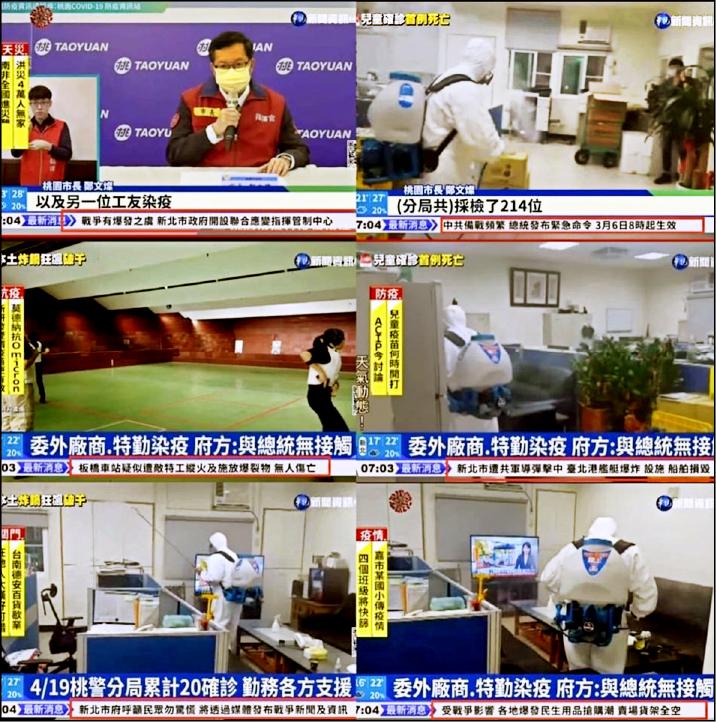
Photo: Screengrab from CTS
The public has high expectations of CTS, as it is part of the government-funded Taiwan Broadcast System (公廣集團), Wong said.
“As a terrestrial television service, CTS is a key infrastructure, and the accuracy of the information it transmits should be scrutinized using higher standards,” he said.
CTS apologized for the error.
“We were tasked by the New Taipei City Government to shoot a disaster drill video, with the script provided by the New Taipei City Fire Department,” CTS said. “The news producer who recorded the video used a horizontal screen layout with news tickers, which was done through a change in the path of a text file link. However, the producer did not restore the file link path after completing the recording on Tuesday, resulting in the error in the morning news program.”
The error was found at 7:49am and corrected immediately, CTS said, adding that all personnel involved would be held accountable.
Asked about the network’s statement, Wong said that the commission would ascertain if CTS was telling the truth by examining how it helps New Taipei City transmit disaster drill messages.
“The network’s quality control mechanism clearly has room for improvement if it broadcasts morning news without checking if every system is in order,” Wong said.
CTS is suspected of breaching Article 21 of the Radio and Television Act (廣播電視法) banning programs that “disrupt public order or adversely affect good social customs,” the NCC said.
TV stations that breach the article face fines of NT$200,000 to NT$2 million (US$6,838 to US$68,378), the NCC said, with the minimum raised to NT$400,000 if it is deemed a major offense.
In March 2020, CTi News was fined NT$800,000 for running a news ticker saying that the nation would go into lockdown in six days due to a COVID-19 outbreak.
The Ministry of Culture, which oversees Taiwan Broadcasting System, also apologized for the CTS incident.
“It was a mistake that should by no means have occurred in the first place,” Minister of Culture Lee Yung-te (李永得) said. “CTS has been ordered to review the incident and submit a report about it. It must not commit such an error again.”
Chinese Nationalist Party (KMT) Legislator Lin Yi-hua (林奕華) said that the NCC should remove CTS from Channel 52 because of this major oversight.
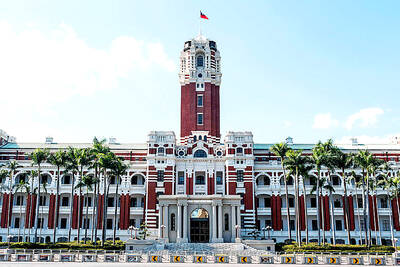
SECURITY: Taipei presses the US for arms supplies, saying the arms sales are not only a reflection of the US security commitment to Taiwan but also serve as a mutual deterrent against regional threats Taiwan is committed to preserving the cross-strait “status quo” and contributing to regional peace and stability, the Presidential Office said yesterday. “It is an undeniable fact that the Republic of China is a sovereign and independent democratic nation,” Presidential Office spokeswoman Karen Kuo (郭雅慧) reiterated, adding that Beijing has no right to claim sovereignty over Taiwan. The statements came after US President Donald Trump warned against Taiwanese independence. Trump wrapped up a state visit to Beijing on Friday, during which Chinese President Xi Jinping (習近平) had pressed him not to support Taiwan. Taiwan depends heavily on US security backing to deter China from carrying
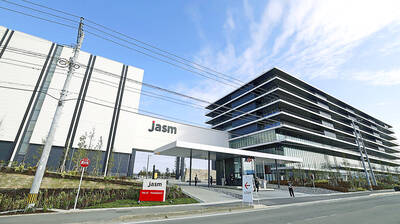
The subsidiary of Taiwan Semiconductor Manufacturing Co (TSMC, 台積電) in Kumamoto, Japan, turned a profit in the first quarter of this year, marking the first time the first fab of the unit has become profitable since mass production started at the end of 2024. According to the contract chipmaker’s financial statement released on Friday, Japan Advanced Semiconductor Manufacturing Inc (JASM), a joint venture running the fab in Kumamoto, posted NT$951 million (US$30.19 million) in profit in the January-to-March period, compared with a loss of NT$1.39 billion in the previous quarter, and a loss of NT$3.25 billion in the first quarter of
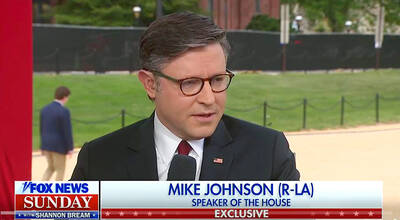
RESOLUTE BACKING: Two Republican senators are planning to introduce legislation that would impose immediate sanctions on China if it attempts to invade Taiwan US House of Representatives Speaker Mike Johnson on Sunday reaffirmed US congressional support for Taiwan, saying the US and “all freedom-loving people” have a stake in preventing China from seizing Taiwan by force. Johnson made the remarks in an interview with Fox News Sunday on US President Donald Trump’s summit with Chinese President Xi Jinping (習近平) last week. In an interview that aired on Friday on Fox News, just as Trump wrapped up a high-stakes visit to China, he said he has yet to green-light a new US$14 billion arms package to Taiwan and that it “depends on China.” “It’s a very good
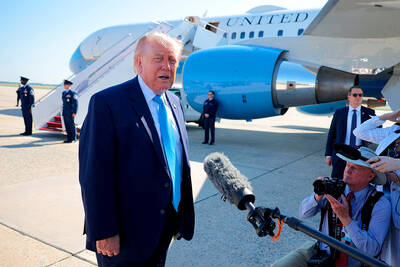
US President Donald Trump yesterday said he would speak to President William Lai (賴清德) as his administration considers whether to move ahead with a US$14 billion weapons sale to Taiwan — a potential arms deal that has drawn criticism from China. “Well, I’ll speak to him. I speak to everybody,” Trump told reporters yesterday when asked if he had any plans to call his counterpart, although he did not offer a time frame for when such a conversation could take place. Trump previously said he would speak to the person “that’s running Taiwan,” without specifying who he meant. “We have that situation very


 RSS
RSS