


The WTO on Tuesday upheld a complaint by China over additional US duties on about US$250 billion of Chinese goods, a decision that sparked outrage in Washington.
The Geneva-based body has been caught in the middle of trade tensions between Washington and Beijing, and has faced relentless attacks from US President Donald Trump.
The tariffs, imposed in 2018, marked the beginning of the trade dispute between the world’s two largest economies, but a panel of experts — set up last year by the WTO Dispute Settlement Body to review the US move — ruled that the tariffs on Chinese goods were “inconsistent” with global trade rules and recommended that the US “bring its measures into conformity with its obligations.”
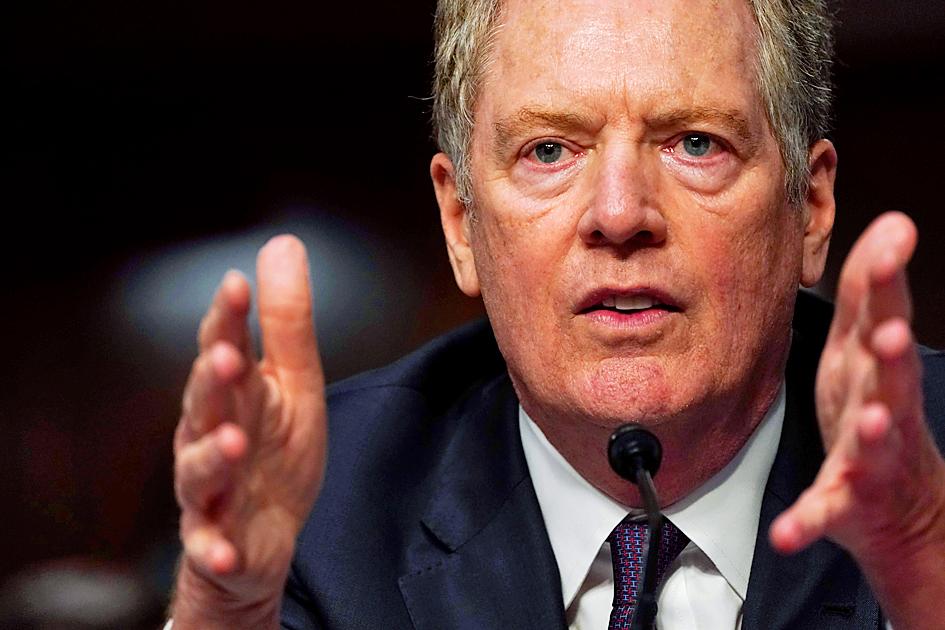
Photo: AFP
The decision was met with ire in Washington, with US Trade Representative Robert Lighthizer saying that it proved the WTO “is completely inadequate to stop China’s harmful technology practices.”
“The Trump administration will not let China use the WTO to take advantage of American workers, businesses, farmers and ranchers,” he said.
Beijing welcomed the move as an “objective and fair ruling.”
“China also hopes that the United States will fully respect the rulings of the expert group ... take practical actions to meet China and other WTO members half way, jointly maintain the multilateral trading system, and promote the stable and healthy development of the world economy,” a Chinese Ministry of Commerce spokesman said.
In a 72-page report, the panel said that Washington had “not met its burden of demonstrating that its measures were provisionally justified” under international trade rules.
In particular, it rejected the US argument that the tariffs were applied to products it said had benefited from practices that the US considers are contrary to “public morals,” such as theft, misappropriation and unfair competition.
“The United States had not met its burden of demonstrating how its restrictions contributed to protecting its public morals and did not extend beyond what was necessary,” the report said.
Lightizer said in response that the US report had cited thousands of pieces of evidence showing China’s unfair trade practices, which “have cost US innovators, workers and businesses billions of dollars every year.”
He said the WTO ruling showed that it “provides no remedy for such misconduct.”

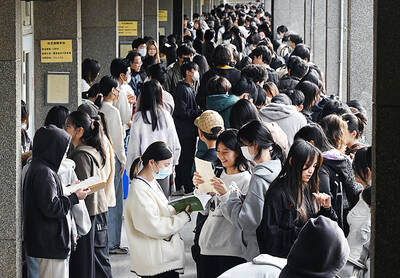
A global survey showed that 60 percent of Taiwanese had attained higher education, second only to Canada, the Ministry of the Interior said. Taiwan easily surpassed the global average of 43 percent and ranked ahead of major economies, including Japan, South Korea and the US, data from the Organisation for Economic Co-operation and Development (OECD) for 2024 showed. Taiwan has a high literacy rate, data released by the ministry showed. As of the end of last year, Taiwan had 20.617 million people aged 15 or older, accounting for 88.5 percent of the total population, with a literacy rate of 99.4 percent, the data

NEW LOW: The council in 2024 based predictions on a pessimistic estimate for the nation’s total fertility rate of 0.84, but last year that rate was 0.69, 17 percent lower An expected National Development Council (NDC) report expects the nation’s population to drop below 12 million by 2065, with the old-age dependency ratio to top 100 percent sooner than 2070, sources said yesterday. The council is slated to release its latest population projections in August, using an ultra-low fertility model, the sources said. The previous report projected that Taiwan’s population would fall to 14.37 million by 2070, but based on a new estimate of the total fertility rate (TFR) — the average number of children born to a woman over her lifetime — the population is expected to reach 12 million by
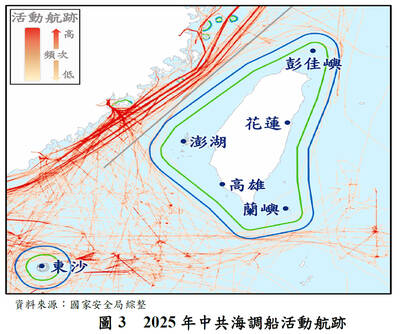
INTENSIFYING THREATS: Beijing’s tactics include massive attacks on the government service network, aircraft and naval vessel incursions and damaging undersea cables China is prepared to interfere in November’s nine-in-one local elections by launching massive attacks on the Taiwanese government’s service network (GSN), a report published by the National Security Bureau showed. The report was submitted to the Legislative Yuan ahead of the bureau’s scheduled briefing at the Foreign Affairs and National Defense Committee tomorrow. The national security team has identified about 13,000 suspicious Internet accounts and 860,000 disputed messages, the bureau said of China’s cognitive warfare against Taiwan. The disputed messages focus on major foreign affairs, national defense and economic issues, which were produced using generative artificial intelligence (AI) and distributed through Chinese
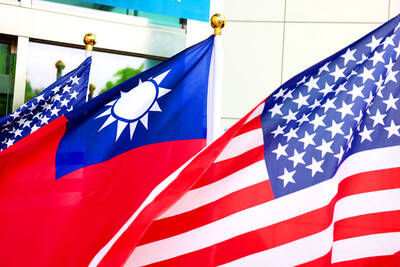
COUNTERING HOSTILITY: The draft bill would require the US to increase diplomatic pressure on China and would impose sanctions on those who sabotage undersea cable networks US lawmakers on Thursday introduced a bipartisan bill to bolster the resilience of Taiwan’s submarine cables to counter China’s hostile activities. The proposal, titled the critical undersea infrastructure resilience initiative act, was cosponsored by Republican representatives Mike Lawler and Greg Stanton, and Democratic Representative Dave Min. US Senators John Curtis and Jacky Rosen also introduced a companion bill in the US Senate, which has passed markup at the chamber’s Committee on Foreign Relations. The House’s version of the bill would prioritize the deployment of sensors to detect disruptions or potential sabotage in real-time and enhance early warning capabilities through global intelligence sharing frameworks,


 RSS
RSS