

The Central Epidemic Command Center (CECC) yesterday reported no new COVID-19 infections, marking the 14th consecutive day that no domestic cases had been reported in Taiwan.
The nation has 429 confirmed cases — out of 60,459 suspected cases — including six deaths and 281 who were removed from isolation after treatment, said Minister of Health and Welfare Chen Shih-chung (陳時中), who heads the center.
Of the confirmed cases, 343 are imported, 55 are domestic and 31 are crew members of the navy supply vessel Panshih (磐石), he said.
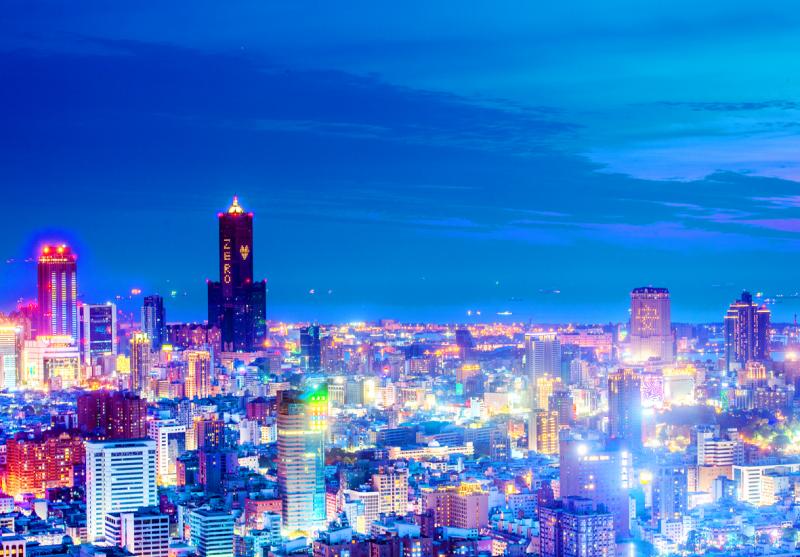
Photo: Chang Chung-yi, Taipei Times
“People who are planning to travel during the upcoming Workers’ Day long weekend still have to practice social distancing, wear a mask, and maintain good personal and environmental hygiene,” Chen said. “These measures are still very important.”
Many people were worried about widespread local infections after large crowds gathered at scenic spots during the Tomb Sweeping Day long weekend earlier this month, but no domestic cases have been reported for 14 consecutive days, which shows that the nation is relatively safe, he added.
“This safety relies on the cautiousness of people and would not exist if everyone let their guard down, so people must remain vigilant,” Chen said.
Transportation authorities and police are cooperating to control vehicle traffic and people flow at many tourist spots, he said.
People can use the Freeway Bureau’s Freeway 1968 (高速公路1968) mobile app to find out whether the number of vehicles or visitors at a scenic area has exceeded the alert level and whether they should avoid that area.
Deputy Minister of the Interior Chen Tsung-yen (陳宗彥), deputy head of the center, said that traffic and crowd control measures were implemented at national parks and scenic areas after the Tomb Sweeping Day weekend.
The center has asked market development associations to help implement crowd control measures at night markets, traditional markets and shopping areas, he said.
Taiwan has achieved an outstanding result in preventing a COVID-19 outbreak so far, because a specialist panel has provided the CECC with correct information to help it draw up disease prevention strategies in a timely manner, while the Centers for Disease Control and local health departments have carefully conducted contact investigations, Chen Tsung-yen said.
Efficient cooperation among ministries, local governments and police departments to monitor and provide services to people under home isolation or quarantine also contributed to the nation’s successful disease prevention record, allowing most people to continue their daily lives without being affected too much by the disease, he added.
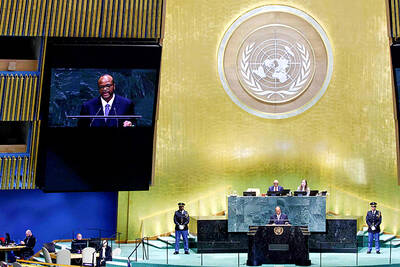
UNITY: Lai thanked the nations who spoke up for Taiwan, saying that democracies must stand together to face global authoritarian expansion Taiwan yesterday thanked eight European and Indo-Pacific countries for opposing unilateral changes to the “status quo” in the Taiwan Strait in a joint statement earlier this week, as well as three of Taiwan’s allies for speaking up for the nation’s participation in the UN at the body’s General Assembly in New York. Minister of Foreign Affairs Lin Chia-lung (林佳龍) welcomed the support and expressed his appreciation for the countries’ stance, the Ministry of Foreign Affairs said in a statement. Foreign ministers and senior representatives of Australia, France, Germany, Japan, New Zealand, Poland, South Korea and the UK issued a statement on Tuesday
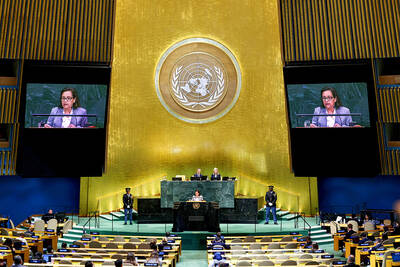
PLEA: How the UN addresses Taiwan’s security issue would be a test of its strength and relevance, Marshall Islands President Hilda Heine told the UN General Assembly Only Taiwan’s elected government can represent the people of Taiwan, Marshall Islands President Hilda Heine said on Friday at the UN General Assembly, calling for the nation’s inclusion in the UN. Taiwan and its 23 million people are a reality, and only its democratically elected government can represent it, Heine said when addressing the 81st session of the UN General Assembly General Debate. Appropriate ways must be found for Taiwan’s substantive participation in UN meetings if the UN is to be truly inclusive and effective in years to come, she said. UN member states would experience pressure to accept a
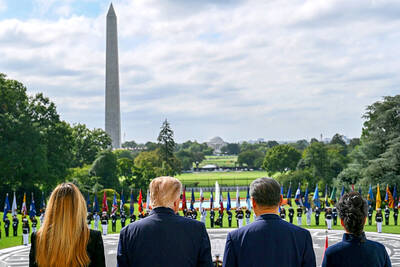
FACTS DISTORTION: The MAC rejected Xi’s remarks that the US and ‘China’ fought side-by-side during WWII, saying the ROC was Washington’s true ally during the war Taiwan yesterday denounced Chinese President Xi Jinping’s (習近平) comments to US President Donald Trump on the nation’s future, after Xi appeared to push Trump for a subtle change in stance that could erode US support for Taiwan. Xi told Trump in Washington on Thursday that he hoped the US would adhere to the “correct position” of opposing Taiwanese independence, according to a Chinese readout of the talks. That would be a tougher version of Washington’s long-standing formulation that it does not “support” independence. There was no immediate White House readout of the exchange. Xi’s remarks represent “the consistent Chinese approach of distorting facts
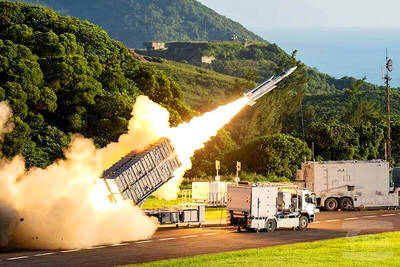
RESILIENCE: Keeping the defense industry’s assembly lines open would prove essential should the nation be involved in a prolonged conflict, a source said The Ministry of National Defense has prepared a NT$22 billion (US$692.3 million) program to acquire about 200 improved Hsiung Feng anti-ship missiles from next year to 2035, a source said. Commenting on condition of anonymity, a high-ranking defense official said the ministry’s plan for enhanced-capability Hsiung Feng II and Hsiung Feng III missiles would be funded as part of the regular defense budget. The 200 missiles would be added on top of the 1,400 missiles being funded via the Sea-Air Combat Power Improvement Plan, they said. The program is not about padding missile numbers, but expanding the capability to defeat


 RSS
RSS