


Therapists dwell in the land of emotions. It is our job to receive the emotional tenor of our analysands, to follow their speech patterns, their repetitions, their haltings, speedings-up and silences. We endeavor to find the words to decipher the complexity and subtlety of what is wanting to be conveyed and understood. It is not a simple job.
The therapist’s emotional capacities are stretched. We register a feeling in the person we are working with, such as fear. But it isn’t just fear; there is a tinge of despair that alerts us to a closing in, almost, a collapse and a freeze. Or we register anger, and simultaneously tucked into the seam of that anger is disappointment, a very different kind of feeling, but which, once recognized, can disperse the anger. Getting to the accuracy of the feeling allows for an emotional sigh of understanding. The feelings can be digested, and in time flow through and out of the body.
Feelings, emotions, are profoundly physical. Whereas once it was thought that they were distractions from thought, we now know that emotions are precursors to thought and profoundly implicated in consciousness. Or, as the American philosopher Owen Flanagan argues in his new book, How to Do Things With Emotions: The Morality of Anger and Shame Across Cultures, emotions are things we do. How we enact them, he insists, what sense we have of them and their purposes, are culturally inscribed and made sense of through the communal embrace of the rules they enforce.
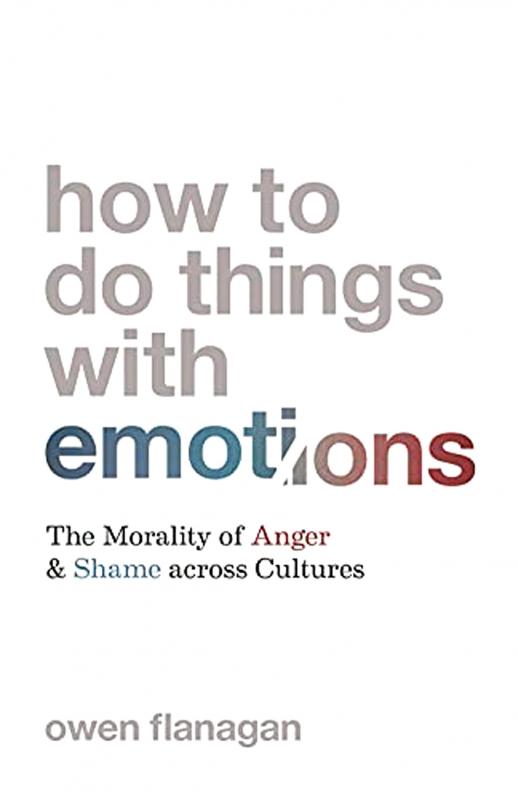
Flanagan is mainly talking about the attitudes that police society through instilling in children the correct ways to behave. In a long discussion on anger and shame, he makes an ethical argument — that we in the west need to turn up shame and tone down anger, because our society suffers from too much explosive fury and too little modesty and embarrassment about personal behavior and desires.
He visits the Minangkabau people of West Sumatra in Indonesia, where shame is the main instrument of socialization. For the Bara people of southern Madagascar, it is parental anger that is deployed to show children what is allowed. Flanagan contrasts our libertarian view of anger, in which we feel free to let rip privately and publicly through trolling, road rage and sending intimate photos, for example, with more homogeneous societies, where anger is used to discourage antisocial behavior and enhance respect. Being scolded, being shamed, is sanctioned by all as an accepted form of child rearing. In such communities, anger is not the expulsive emotion to which we have grown accustomed.
For the Minangkabau, tantrums and protest are simply not tolerated.
Children are taught to withdraw quietly to manage their shame privately.
But lest you think we have re-entered bourgeois Victorian England, Flanagan contends that this form of control isn’t damaging. The emotional harm that we might imagine shame and anger cause are, he argues, eviscerated as the cultural prescription is internalized as conscience, as morality and rules for living.
If there is a fair bit of naivety in Flanagan’s project, there is also much to be admired. As he deconstructs the forms of anger used by Westerners, he seems delighted to turn back the clock, as if we could disregard the different cultural forces, including the anonymity of the Internet slanging machine, the noise of Fox News, the radio shock jocks and various therapies that claim that anger requires healthy expression and shame requires deconstruction.
He ponders the philosopher’s question: which ways of living are best in allowing us to step outside the imprisonment of our personal upbringings? He wants us in the west, in North America and Britain, to reject libertarian values and strive for emotions that enhance rather than splinter society.
Reputation tracking, which Flanagan applauds, pertains to small groups in which transgressive behavior isn’t tolerated because we are responsible to our community. That’s appealing, but it doesn’t reflect late modernity, in which such a group composition seems unrealistic and in which individuality — how I feel, how you feel — is highly valued. Many young people crave recognition — whether online likes or even negative responses — and the nature of these engagements is very different to the day-to-day encounters within our social groups.
Ultimately, Flanagan asks this important question: what do emotions do, and do they do the right thing? His answer draws on his work as a philosopher anthropologist, an approach to which I am sympathetic as a psychoanalyst who often experiences herself as an anthropologist of the mind. Like him, psychoanalysts and therapists understand the individual mind as the sum of other minds and yet unique. We make sense of ourselves by reference to our personal and social behavior.
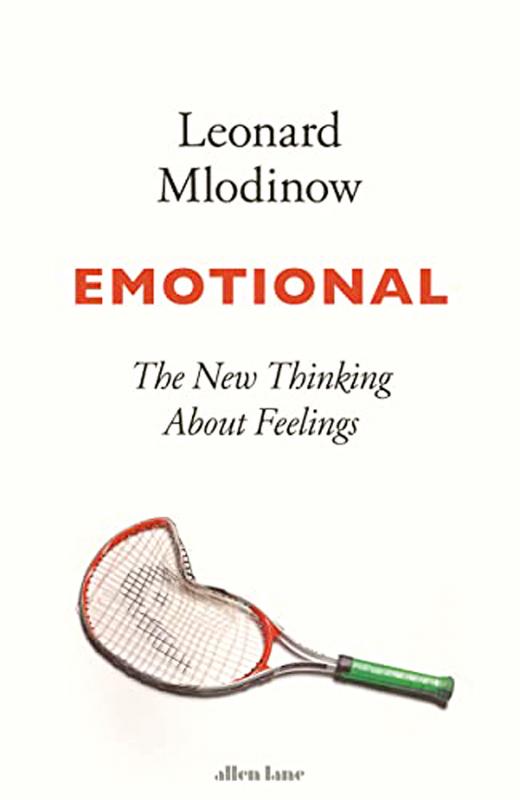
The American physicist and bestselling author Leonard Mlodinow ‘s new book, Emotional: The New Thinking About Feelings, in which he popularizes the findings from neuroscience over the past 50 years, is of a different nature. Mlodinow shows, through reports of psychologists’ experiments and a series of quizzes, that recognizing how much we are motivated by emotions allows us to be more thoughtful and present, more rational.
Feelings are private, personal and social. Emotions are the building blocks of consciousness and thought. Both books argue that we should see this work of emotions as central to who we are and can be.
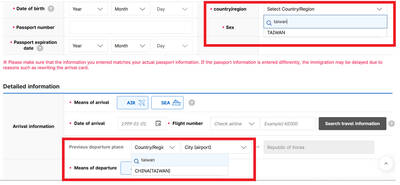
Jason Han says that the e-arrival card spat between South Korea and Taiwan shows that Seoul is signaling adherence to its “one-China” policy, while Taiwan’s response reflects a reciprocal approach. “Attempts to alter the diplomatic status quo often lead to tit-for-tat responses,” the analyst on international affairs tells the Taipei Times, adding that Taiwan may become more cautious in its dealings with South Korea going forward. Taipei has called on Seoul to correct its electronic entry system, which currently lists Taiwan as “China (Taiwan),” warning that reciprocal measures may follow if the wording is not changed before March 31. As of yesterday,

The Portuguese never established a presence on Taiwan, but they must have traded with the indigenous people because later traders reported that the locals referred to parts of deer using Portuguese words. What goods might the Portuguese have offered their indigenous trade partners? Among them must have been slaves, for the Portuguese dealt slaves across Asia. Though we often speak of “Portuguese” ships, imagining them as picturesque vessels manned by pointy-bearded Iberians, in Asia Portuguese shipping between local destinations was crewed by Asian seamen, with a handful of white or Eurasian officers. “Even the great carracks of 1,000-2,000 tons which plied
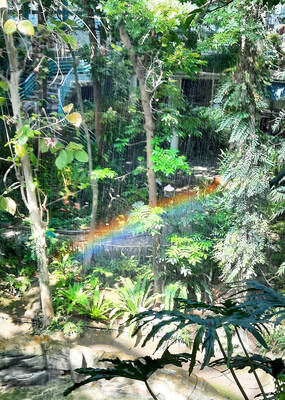
It’s only half the size of its more famous counterpart in Taipei, but the Botanical Garden of the National Museum of Nature Science (NMNS, 國立自然科學博物館植物園) is surely one of urban Taiwan’s most inviting green spaces. Covering 4.5 hectares immediately northeast of the government-run museum in Taichung’s North District (北區), the garden features more than 700 plant species, many of which are labeled in Chinese but not in English. Since its establishment in 1999, the site’s managers have done their best to replicate a number of native ecosystems, dividing the site into eight areas. The name of the Coral Atoll Zone might
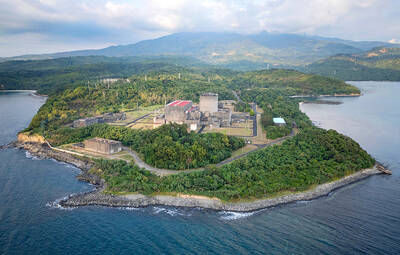
Nuclear power is getting a second look in Southeast Asia as countries prepare to meet surging energy demand as they vie for artificial intelligence-focused data centers. Several Southeast Asian nations are reviving mothballed nuclear plans and setting ambitious targets and nearly half of the region could, if they pursue those goals, have nuclear energy in the 2030s. Even countries without current plans have signaled their interest. Southeast Asia has never produced a single watt of nuclear energy, despite long-held atomic ambitions. But that may soon change as pressure mounts to reduce emissions that contribute to climate change, while meeting growing power needs. The


 RSS
RSS