


Dec. 13 to Dec. 19
On a good day, workers digging the 5,483m-long Anshuo Tunnel (安朔隧道) made two meters of progress. While the brittle rock was easy to blast through, it also collapsed easily, and the crew proceeded carefully as any mishap could set them back weeks.
“We worked around the clock, but we often moved forward just the lengths of two desks,” recalls construction supervisor Shih Ching-pian (施清覑) in the South Link Report (南鐵報導) newspaper.
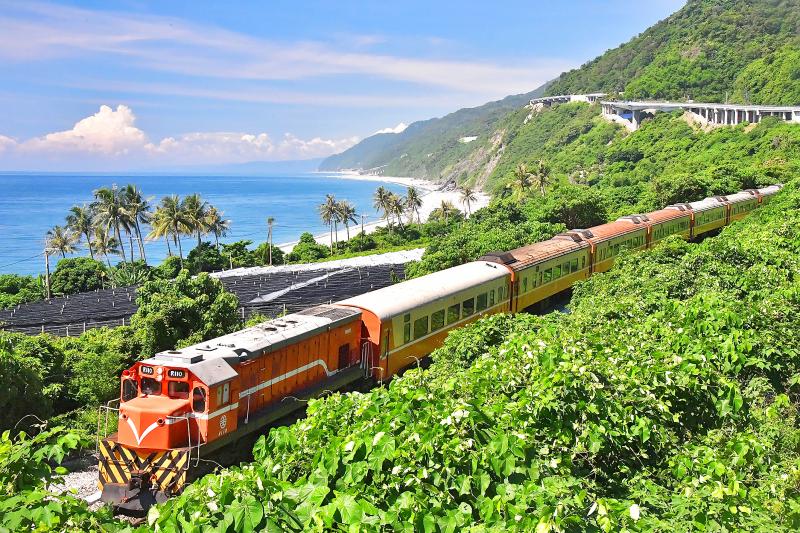
Photo courtesy of Lai Chien-yi
The Anshuo Tunnel is the second longest of 36 tunnels blasted through the Central Mountain Range to build the South Link Railway (南迴鐵路), which was the final section to complete the round-island railroad. Running from Fangliao (枋寮) in Pingtung County to Taitung City, the 98.2km line was inaugurated on Dec. 16, 1991.
Forty percent of the railroad went through tunnels, and the 8,070m long Central Tunnel (中央隧道) was the nation’s longest until the Singuanyin Tunnel (新觀音隧道) was completed in 2003.
Laboring in extreme heat, noise and poor air conditions, many said these workers were “toiling in the belly of the mountain.” Accidents were common, with 21 workers losing their lives.
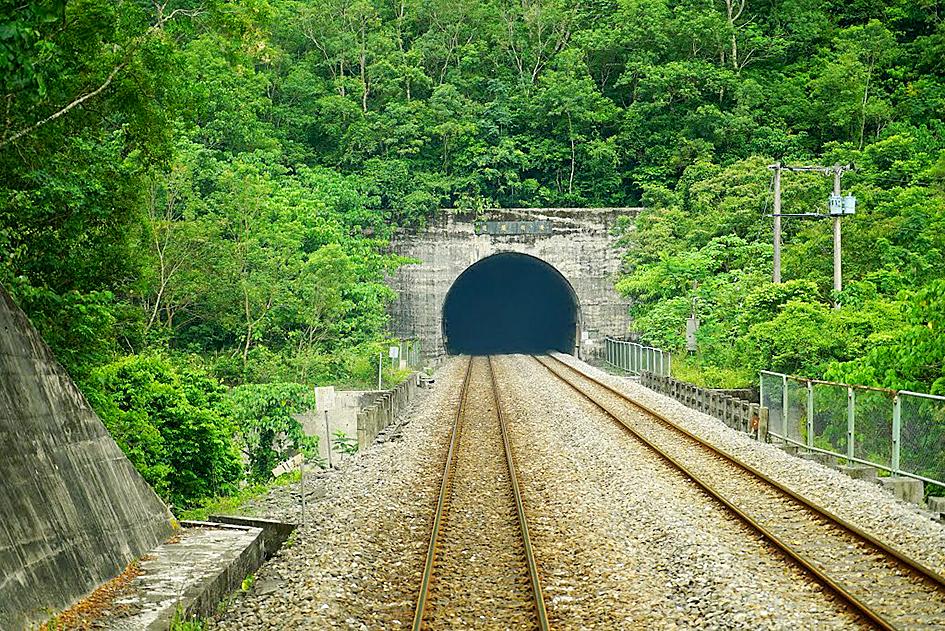
Photo courtesy of Wikimedia Commons
“If the South Link Railway is a baby waiting to be born, the thousands of workers were the ones who endured the birth pangs for the people’s sake,” the South Link Report stated.
The railroad cut travel time between Kaohsiung and Taitung in half, making the journey much safer as well. The government hoped that the South Link would accelerate development on the southeast coast and encourage tourism — just like the North Link did with the northeast coast when it was completed a decade earlier.
NORTHERN SECTION
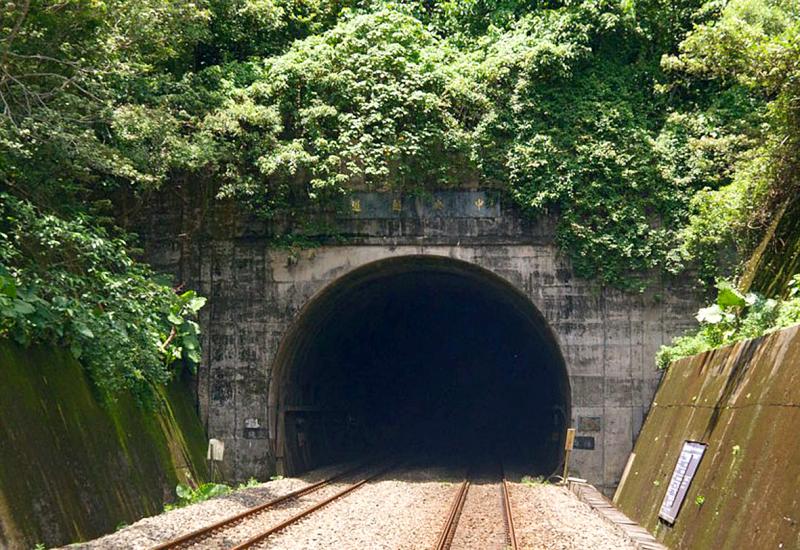
Photo courtesy of Wikimedia Commons
By the time they left, the Japanese had completed most of Taiwan’s round-island railroad, except for the Yilan-Hualien and the Pingtung-Taitung sections. These two projects were included in the colonial government’s development plans, which were cut short by World War II.
The Chinese Nationalist Party (KMT) hoped to complete the endeavor, but due to the rugged, mountainous terrain, they didn’t start planning the Yilan-Hualien North Link Line until 1969. There was a train between Hualien and Taitung, but it was not connected to the main line on either end, making travel quite inconvenient as the roads were often cut off during typhoon season.
There were only two ways to get from Taipei to Hualien then: via a 6am direct bus, or taking the train to Suao (蘇澳) and catching a bus from there. Either way, it took a whole day just to travel 200km.
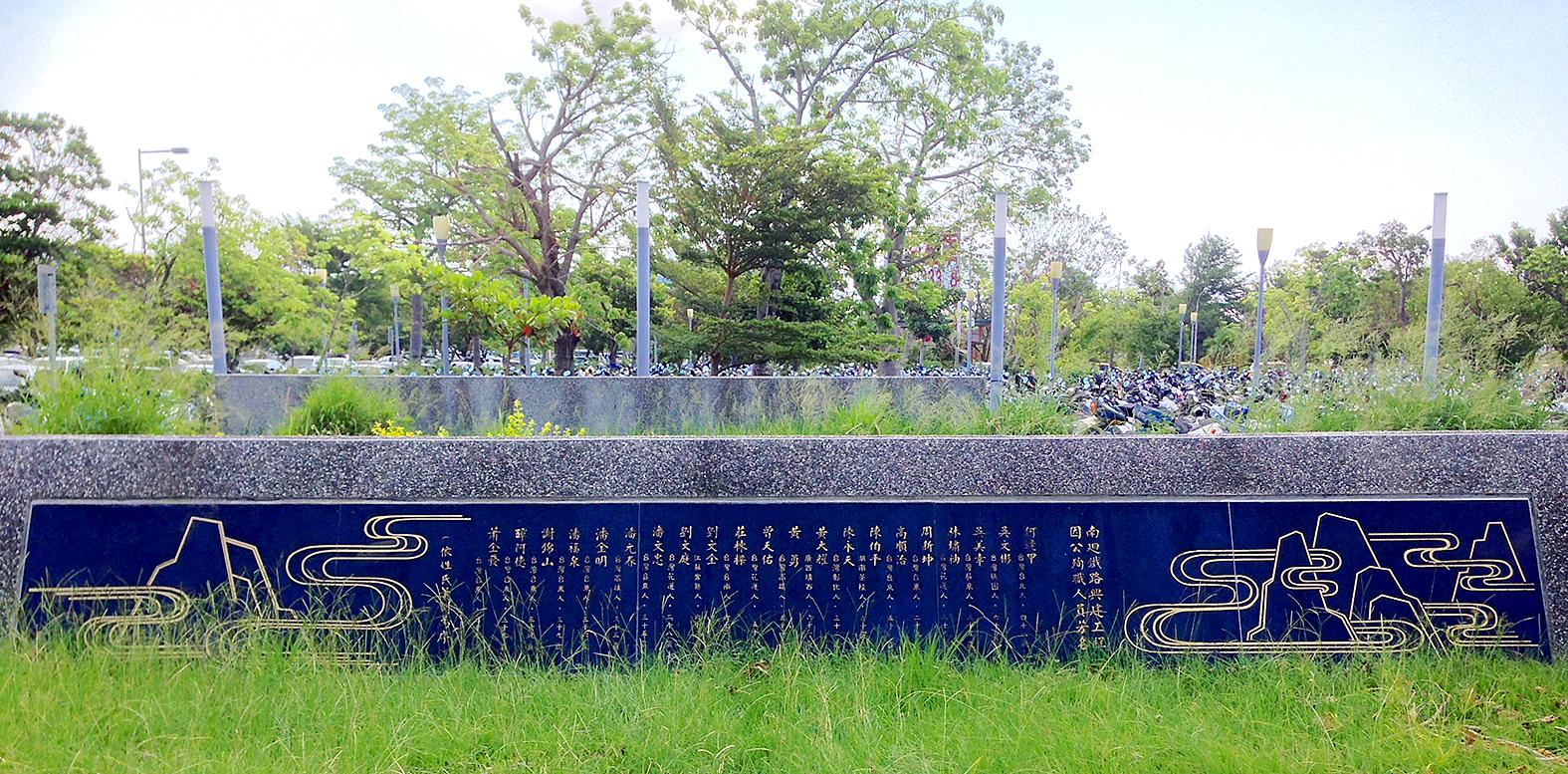
Photo courtesy of Wikimedia Commons
After the disastrous Typhoon Nora in 1973, the North Link Line became a major priority and was listed among the nation’s Ten Major Infrastructure Projects. Like the South Link, it was a challenging endeavor as the geology was unforgiving, typhoons and earthquakes were common and it was hard to transport supplies across the windy and perilous Suhua Highway.
Shih, who studied civil engineering at the former Tainan College of Technology (today’s National Cheng Kung University), was also involved in this project. It took six years to complete this 83.3km route, which included 15 tunnels through the Central Mountain Range, including the 7,740m Guanyin Tunnel.
The Hualien to Sincheng (新城) portion was opened first in July 1975 to accommodate Asia Cement Corp’s local operations, and the rest of it was inaugurated on Feb. 1, 1980.
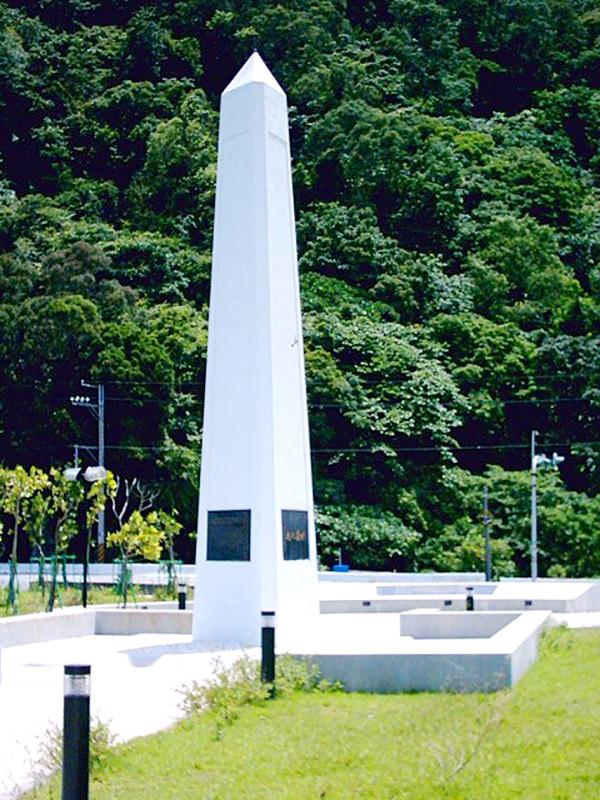
Photo courtesy of Wikimedia Commons
BLASTING THROUGH MOUNTAINS
The KMT had been mulling the South Link since they arrived, conducting surveys in 1947, 1958, 1963, 1968, 1976 and coming up with more than 10 possible routes. They chose the shortest but most arduous option that cut from Fangshan (枋山) straight through the Central Mountain Range. Construction began in July 1980.
Back then, it took about four hours on treacherous roads to drive between Kaohsiung and Taitung. There were only a few buses per day, and the six-hour journey was extremely bumpy and winding. There were even bags for passengers to vomit in.
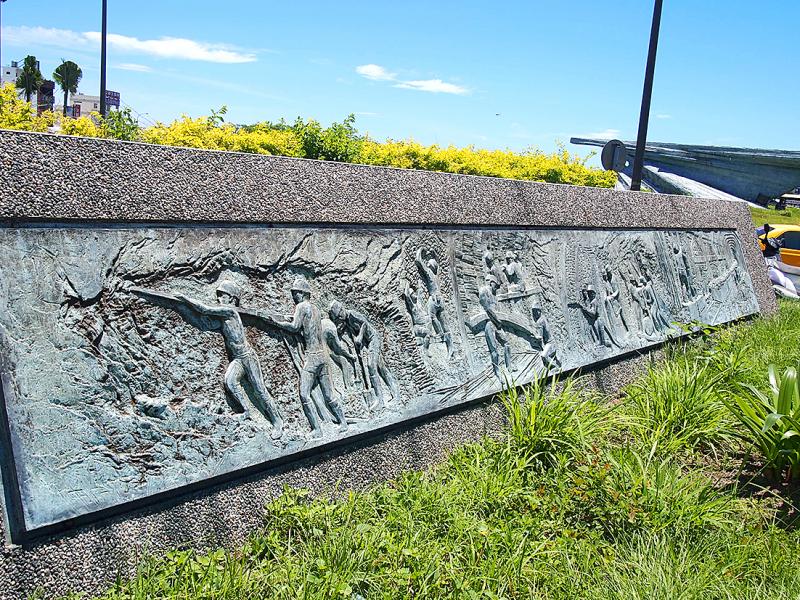
Photo courtesy of Wikimedia Commons
Construction was difficult, as almost half of it involved blasting through steep mountains. The heavy rains and steep cliffs often caused landslides and tunnel collapses, and work was often set back for months due to mishaps. One time, it took three months to pump the water out of a flooded tunnel, and all the equipment inside was ruined. The brittle rock broke off easily, and many workers died from being struck by falling boulders.
In 1985, the Taitung to Jhiben (知本) route was opened first, followed by Jhiben to Taimali (太麻里) in 1988. The mountainous parts in the middle remained problematic with numerous accidents, but bit by bit, the workers pushed through.
By November 1991, the route was complete. The starting point of Fangliao station went from a sleepy backwater station to an important transportation hub, and it was expanded and upgraded with the railway’s completion.
Four days before the South Link Line’s inauguration, then-president Lee Teng-hui (李登輝) boarded a special train in Taipei’s Songshan Station, becoming one of the first people — and the only president — to enjoy a round-trip of Taiwan on rail. The journey took four days as Lee made numerous stops along the way, with a total travel time of 14 hours.
On Dec. 16 that year, the South Link Line was inaugurated with a grand ceremony at Fangliao. However, testing and adjustments would continue for several months, and the public wouldn’t enjoy its services until February the following year.
Taiwan in Time, a column about Taiwan’s history that is published every Sunday, spotlights important or interesting events around the nation that either have anniversaries this week or are tied to current events.
Ajay Verma, a consultant gastroenterologist at Kettering general hospital in Northamptonshire, says our gut is a “complex machine.” “It is constantly providing us with the nutrition we need, initially to grow and develop, and then for us to survive, thrive and repair from injury and illness.” How can we keep it functioning well? Put simply: “Make sure what you put into it is balanced, and that you clear out its waste products adequately,” Verma says. “In a general gastroenterology clinic, the most common conditions we see are irritable bowel syndrome (IBS), gastroesophageal reflux disease, inflammatory bowel disease and constipation,” says Nisha

And so, in the wake of US President Donald Trump’s trip to the People’s Republic of China (PRC), all the experts on the Strait of Hormuz suddenly became experts on US-China-Taiwan relations. The Internet has certainly expanded human knowledge. Lots of these sudden experts made noise this week about Trump’s words after the meeting with PRC dictator Xi Jin-ping (習近平). Trump is going to sell out Taiwan! Longtime Taiwan commentator J. Michael Cole summed the situation up neatly in the Guardian: “We need to keep in mind that he has a tendency to say many things — sometimes contradicting himself within

Last week US President Donald Trump was asked by a reporter whether he would speak on the phone to the President of Taiwan. “l’ll speak to him. I speak to everybody. We have that situation very well in hand,” Trump said. This marked the second time in a couple of weeks he had said he would talk to the President of Taiwan. In 2016 he famously took a call from then-president Tsai Ing-wen (蔡英文), when he was president-elect. Despite warnings that the apocalypse was nigh because of a phone call, the world quickly forgot about the conversation between two democratically-elected presidents.
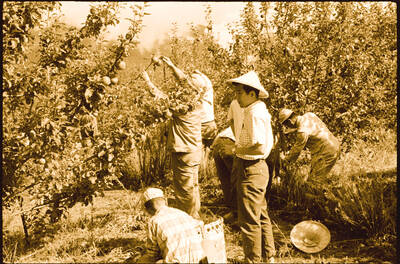
May 25 to May 31 Few believed that apples could be cultivated on a commercial scale in Taiwan’s high mountains. When horticulturalist Cheng Chao-hsiung (程兆熊) first proposed the idea in 1955, both American and Taiwanese colleagues dismissed it as implausible, arguing that temperate fruit could not be reliably grown on a subtropical island, especially on rugged terrain. However, it was this terrain in the Central Mountain Range where many Chinese Civil War veterans were resettled in the late 1950s. With limited job prospects and no family in Taiwan, they were placed on cooperative farms aimed toward self-sufficiency. Some say the conditions


 RSS
RSS