


Next to a countdown showing the number of days to the Tokyo 2020 Olympics is scrawled “just cancel it.” Not a scene from real life but from Akira, a remarkably prescient cult Japanese manga series.
With the announcement that the Tokyo 2020 Olympics have been postponed due to the coronavirus pandemic, the coincidence has led to Akira trending on Japanese social media with fans hailing its mystic powers.
Created by Katsuhiro Otomo, Akira first appeared in comic form, with thousands of pages produced between 1982 and 1990. An anime version came out in 1988 and became a global sci-fi hit.
Photo: AFP
The action takes place in a dystopian 2019 set in a sinister megacity called “neo-Tokyo,” built after the old capital was destroyed in a mysterious explosion in 1982 that set off World War III.
It tells the story of a boy called Akira, who acquired psychic superpowers from a secret military program but became so powerful he was disintegrated.
His organs were buried deep underground in an iron box — on the construction site of the Olympic Stadium — only to be found later by another boy called Tetsuo who eventually inherits his powers.
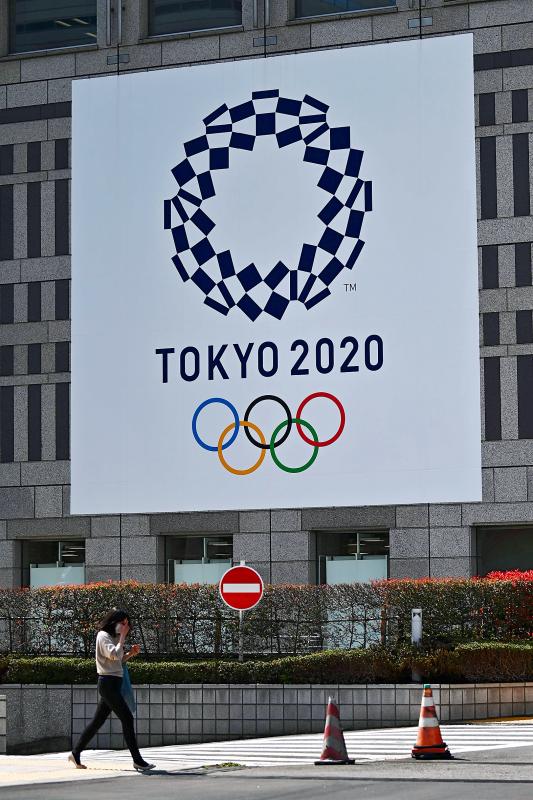
Photo: AFP
“The world of Akira can be summed up in one word: cyberpunk. A futuristic and high-tech world but with a huge gap between the rich and the downtrodden,” said Matthieu Pinon, a specialist on Japanese manga and anime.
While the Olympics are not central to the plot, Tokyo 2020 appears several times in the story, with uncanny if coincidental similarities to the real Games, now postponed until next year.
In an example of life imitating art, the real countdown clocks at Tokyo 2020 headquarters have now been replaced with a sign that reads “under consideration.”
“The story unfolds in a way that suggests a cancellation or a postponement (of the Olympics) is inevitable,” Kaichiro Morikawa, an expert on Japanese pop culture at Tokyo’s Meiji University, said.
Images of the Tokyo 2020 Olympic Stadium construction site, with red and white cranes poking from an oval structure, were a striking reminder to Akira fans of the way it was depicted in the comic.
‘UNUSUAL SENSE OF REALITY’
The Japanese government framed Tokyo 2020 as the “Recovery Games,” aiming to show how the country had bounced back from the devastating 2011 earthquake, tsunami and nuclear meltdown of the Fukushima Daiichi plant.
In the same way, the Tokyo 2020 Games in Akira could be seen as the authorities “reasserting their glory after the destruction” of the fictional 1982 explosion, said Patrick Gaumer, a manga expert.
The fictional Olympic Stadium was built near the ruins of that explosion — a clear allusion to the nuclear bombs dropped on Hiroshima and Nagasaki — as a symbol of recovery, Gaumer said.
In another coincidence, the Akira series also features some fictional news headlines that would resonate today, one of which reads: “The World Health Organization criticizes the measures taken against the pandemic.”
But Pinon said this should be seen as an “element that adds to the atmosphere, nothing more,” as it stands outside the main plot.
So is Akira a prophecy of the future? Morikawa believes it is more like a “reinterpretation of the recent past (post-war Japan), projected onto a fictional near future.”
Pinon said the author, born in 1954, was drawing on the major events of his childhood for his work.
These included the 1964 Olympics, when Japan re-announced itself to the world from the rubble of World War II, as well as the student revolutions of 1968, the authoritarian governments of the time and the frantic redevelopment of Tokyo.
As for the references to Tokyo 2020, “all I can say is that such a coincidence might add an unusual sense of reality to the reading/viewing experience of what is already a masterpiece,” Morikawa said.

If a leisurely afternoon of high-end dining and watching the scenery roll by from the comfort of a plush armchair sounds like a good time to you, consider a trip on the Sea Breeze (海風號). This culinary, cultural and scenic experience is the perfect setting for a date, a celebratory outing with a small group of friends or a relaxing solo ride. The price tag is steep, especially if you consider the short distance the train actually covers over the 3.5-hour journey. But what you’re paying for on the Sea Breeze isn’t transportation; it’s the comfort, the service, the exclusivity, the

June 15 to June 21 According to legend, a giant from Orchid Island (Lanyu, 蘭嶼) named Si Mangangavang once built a large tatala canoe capable of carrying 16 people. He set sail southward to the Batanes in the Philippines, where he traded with the local Ivatan people. One of the goods they coveted was cowhide, which the Tao people of Orchid Island used to make armor. Through continued trade, the Tao and Ivatan forged close ties, and Si Mangangavang became good friends with a Batanes giant named Si Vakag. This story, collected in a 1998 book by ethnologist Yu Guang-hong (余光弘)
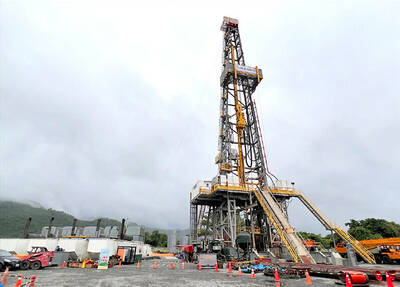
Taiwan’s renewable shortfall is a problem of execution, not resources. Japan’s long-cycle, joined-up energy planning is the model worth studying — but what Taiwan can borrow is the institutional machinery, not the politics. When Nvidia CEO Jensen Huang (黃仁勳) used his visit to Taipei last month to warn that the country needs far more electricity, he was naming a constraint its own planners already know well: Taiwan Power Co (Taipower, 台電) expects demand from the semiconductor and artificial intelligence (AI) sector alone to exceed 5 gigawatts (GW) by 2030. The harder question is not whether to build more capacity but which
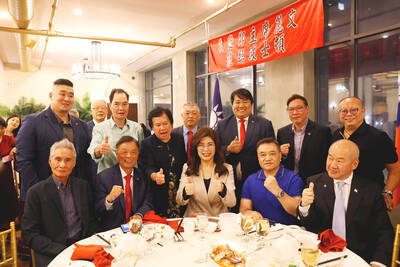
One of the wildest things about the reception of Chinese Nationalist Party (KMT) Chair Cheng Li-wun (鄭麗文) in the international media is the way her words are presented without being contextualized, let alone challenged. The Financial Times, for example, interviewing her during her visit to New York, said that she blamed the halt to exchanges between Taiwan and the People’s Republic of China (PRC) for raising tensions. “There has been no dialogue, so you can see that the situation is almost on the brink of war,” the Financial Times quoted her as saying, without any hint that the PRC, not


 RSS
RSS