


Ed’s Diner, which opened six months ago in Dazhi near Miramar Entertainment Park (美麗華百樂園), serves up authentic American-style barbecue in hearty portions at reasonable prices. Operated by Brit Eddy Sweeney, the restaurant smokes its meat with longan wood, logs of which are stacked outside the restaurant. The interior of Ed’s Diner is simple but homey, with large windows and wooden folding chairs that give it a picnic-like atmosphere even at night.
The menu features barbecue chicken, pork, prime Angus beef brisket, ribs and a 14-ounce Angus beef bone-in prime steak. One of the most popular items is the pulled pork hamburger (NT$150 or NT$250 in a set meal with soup, salad, a bread roll, side dish and drink). The meat is piled into a hollowed-out white bread bun and topped with crunchy coleslaw. The sandwich was delicious and the sauce was sweet and tangy, while the coleslaw added just the right amount of creaminess. My companion was also happy with his large slice of tender Angus brisket (NT$330 for a set meal), though he wished the meat had been from a leaner cut (you can call ahead to Ed’s Diner to see if specific cuts of meat are available that day).
On a second visit, we requested an extra serving of the restaurant’s freshly prepared spicy hot barbecue sauce, which tasted delicious slathered on the brisket. The sauce is also served with the ribs, which are prepared with a dry rub made of herbs and spices. The barbecue ribs are sold in slabs and can be ordered a la carte (NT$450 for half a slab or NT$800 for a full slab) or in a set meal. On both nights we ordered ribs, every single bite was pleasingly tender, with not a hint of dryness on the entire slab.
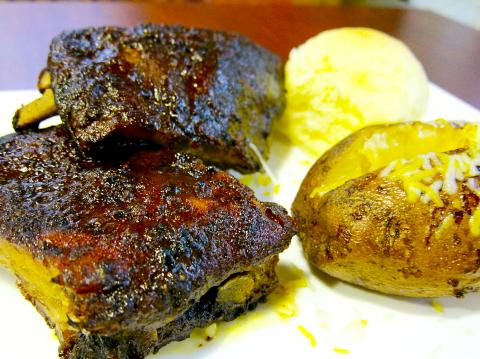
Photo: Catherine Shu, Taipei Times
The menu features a selection of classic barbecue side dishes, like corn on the cob (NT$50 a la carte) and baked potato (NT$50). The slow smoked sweet potato (NT$50) was a good complement to my pulled pork sandwich, but I could have done without the melted cheese on top, which added very little flavor and obscured the sweet potato’s rich, savory flavor. The home baked beans (NT$50) take 12 hours to prepare and taste good, though my companion thought that the sauce was somewhat too thin. My favorite side dish was the home cut fries (NT$50), which the menu says takes two hours to make. The skin was crispy without being too oily and lightly salted. Every plate comes with a dinner roll, which we used to sop up the juices and leftover sauce from our ribs and brisket. The soup and salad served with set meals are forgettable and just give diners something to nibble on until the main course arrives.
The service at Ed’s Diner is extremely prompt and the food arrives quickly, so you don’t have to wait long. Meat is prepared in limited quantities each day. If you are craving a particular dish, make sure to call ahead to check its availability. Ed’s Diner is usually busy on weekend evenings. Reservations aren’t required but they are highly recommended.
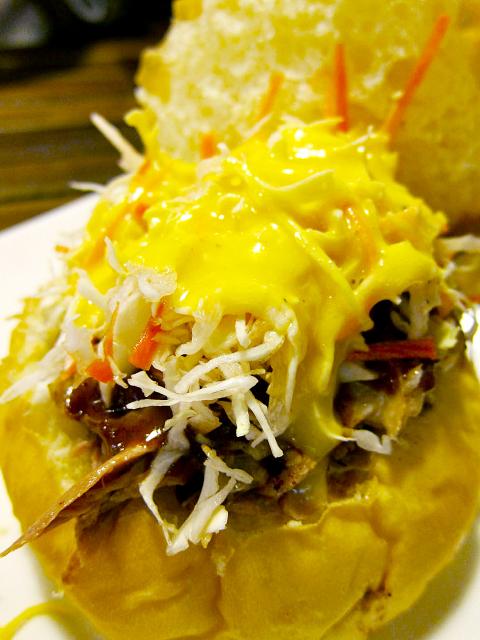
Photo: Catherine Shu, Taipei Times

What was the population of Taiwan when the first Negritos arrived? In 500BC? The 1st century? The 18th? These questions are important, because they can contextualize the number of babies born last month, 6,523, to all the people on Taiwan, indigenous and colonial alike. That figure represents a year on year drop of 3,884 babies, prefiguring total births under 90,000 for the year. It also represents the 26th straight month of deaths exceeding births. Why isn’t this a bigger crisis? Because we don’t experience it. Instead, what we experience is a growing and more diverse population. POPULATION What is Taiwan’s actual population?

For the past five years, Sammy Jou (周祥敏) has climbed Kinmen’s highest peak, Taiwu Mountain (太武山) at 6am before heading to work. In the winter, it’s dark when he sets out but even at this hour, other climbers are already coming down the mountain. All of this is a big change from Jou’s childhood during the Martial Law period, when the military requisitioned the mountain for strategic purposes and most of it was off-limits. Back then, only two mountain trails were open, and they were open only during special occasions, such as for prayers to one’s ancestors during Lunar New Year.

A key feature of Taiwan’s environmental impact assessments (EIA) is that they seldom stop projects, especially once the project has passed its second stage EIA review (the original Suhua Highway proposal, killed after passing the second stage review, seems to be the lone exception). Mingjian Township (名間鄉) in Nantou County has been the site of rising public anger over the proposed construction of a waste incinerator in an important agricultural area. The township is a key producer of tea (over 40 percent of the island’s production), ginger and turmeric. The incinerator project is currently in its second stage EIA. The incinerator

It sounded innocuous enough. On the morning of March 12, a group of Taichung political powerbrokers held a press conference in support of Deputy Legislative Speaker Johnny Chiang’s (江啟臣) bid to win the Chinese Nationalist Party (KMT) primary in the Taichung mayoral race. Big deal, right? It was a big deal, one with national impact and likely sent shivers down the spine of KMT Chairwoman Cheng Li-wun (鄭麗文). Who attended, who did not, the timing and the messaging were all very carefully calibrated for maximum impact — a masterclass in political messaging. In October last year, the Democratic Progressive Party (DPP)


 RSS
RSS