


Musician Joe Wang (王明輝) remembers 1989 well. Political demonstrations brought turmoil to Taiwan society. Long-suppressed social forces were being released from long-term dictatorship. And the first official opposition party -- the DPP -- was using a strategy of protest to clash with the KMT regime.
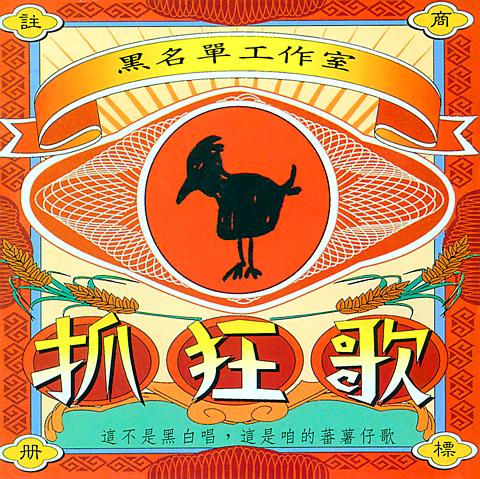
It was also the year that an unprecedented Taiwanese language album appeared on the market, titled Songs of Madness (抓狂歌) and subtitled "These aren't crap songs, these are our yam songs" (yam is a symbol of Taiwan). It was produced by Black List (黑名單工作室) -- comprised of Wang, Io Chen (陳主惠) and Keith Stewart from the US. The album recruited then underground singers such as Chen Ming-chang (陳明章) and Lin Wei-tseh (林瑋哲). The "mad songs" in the album mainly satirized the political situation at that time and ridiculed people's powerlessness in a hyper but chaotic society.
For example, in "Democracy Bumpkin" (民主阿草):
I went strolling in the morning, seeing troops of armed policemen, wondering if they were preparing to fight communists.
My neighbor told me it was against protesters. He said he is something called DPP and it's fun to protest.
There were a bunch of old guys occupying seats in the congress, using our tax money for their medical fees. There were old mainlanders serving the country for 40 years but gaining nothing. I want to protest. I want to protest, they shouted.
"We wanted to record the happenings of Taiwan's society and provide a space for people to think -- through music," Wang recalls. When it comes to protest singers or bands, one might think of Bob Dylan in the 60s, the UK's Billy Bragg in the 80s or Rage Against the Machine in the 90s. In Taiwan, in the late 80s and early 90s, it was Black List and its frontman Joe Wang.
For Wang, Black List's role was to find a way for intellectuals to intervene through music. "Since Lo Ta-yu (羅大佑) in the early 80s, [who sang "Lukang Small Town"], we had not heard an intellectual's voice in the music scene," he says. "For us, we didn't quite believe in sentimental inspiration when we wrote music."
Songs of Madness breaks down the convention of Taiwanese language pop songs, which contain exaggerated elements of lament, either about lost love or good times that can't be relived. But Black List's social criticism cloaked in cynical Taiwanese rap and folk songs, which soon became popular among college students and young middle class. Songs of Madness was labeled by media and critics as the New Taiwanese Songs. Soon, Chen Ming-chang and Lin Wei-tseh became popular songwriters and producers. Chen wrote and produced many award-winning scores for director Ho Hsiao-hsien (侯孝賢) and Lin is now producer of the award-winning singer Faith Yang (楊乃文). But for Wang, who insists on staying aloof from the mainstream, he knew that the New Taiwanese Song movement was no more than a market gimmick. "After Chiang Hui (江蕙) swept away KTV hit rate, the mainstream started to embrace sentiment ballads again," he said.
Wang didn't stop producing alternative music during the 10 years following Songs of Madness, a period during which his star has slowly dimmed. Gradually, Taiwanese language diminished as an essential tool of protest, so Wang shifted his focus to other subjects of social struggle -- for instance, labor and aboriginal issues. "We [Black List] are the only group who cares about the issue of class in Taiwan society," Wang says.

This is the year that the demographic crisis will begin to impact people’s lives. This will create pressures on treatment and hiring of foreigners. Regardless of whatever technological breakthroughs happen, the real value will come from digesting and productively applying existing technologies in new and creative ways. INTRODUCING BASIC SERVICES BREAKDOWNS At some point soon, we will begin to witness a breakdown in basic services. Initially, it will be limited and sporadic, but the frequency and newsworthiness of the incidents will only continue to accelerate dramatically in the coming years. Here in central Taiwan, many basic services are severely understaffed, and
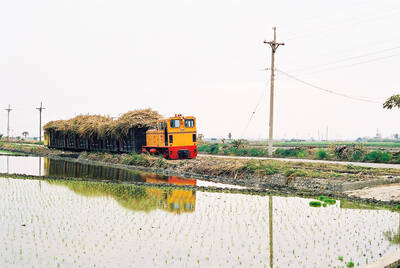
Jan. 5 to Jan. 11 Of the more than 3,000km of sugar railway that once criss-crossed central and southern Taiwan, just 16.1km remain in operation today. By the time Dafydd Fell began photographing the network in earnest in 1994, it was already well past its heyday. The system had been significantly cut back, leaving behind abandoned stations, rusting rolling stock and crumbling facilities. This reduction continued during the five years of his documentation, adding urgency to his task. As passenger services had already ceased by then, Fell had to wait for the sugarcane harvest season each year, which typically ran from

It is a soulful folk song, filled with feeling and history: A love-stricken young man tells God about his hopes and dreams of happiness. Generations of Uighurs, the Turkic ethnic minority in China’s Xinjiang region, have played it at parties and weddings. But today, if they download it, play it or share it online, they risk ending up in prison. Besh pede, a popular Uighur folk ballad, is among dozens of Uighur-language songs that have been deemed “problematic” by Xinjiang authorities, according to a recording of a meeting held by police and other local officials in the historic city of Kashgar in

It’s a good thing that 2025 is over. Yes, I fully expect we will look back on the year with nostalgia, once we have experienced this year and 2027. Traditionally at New Years much discourse is devoted to discussing what happened the previous year. Let’s have a look at what didn’t happen. Many bad things did not happen. The People’s Republic of China (PRC) did not attack Taiwan. We didn’t have a massive, destructive earthquake or drought. We didn’t have a major human pandemic. No widespread unemployment or other destructive social events. Nothing serious was done about Taiwan’s swelling birth rate catastrophe.


 RSS
RSS