


EDITORIAL CARTOON
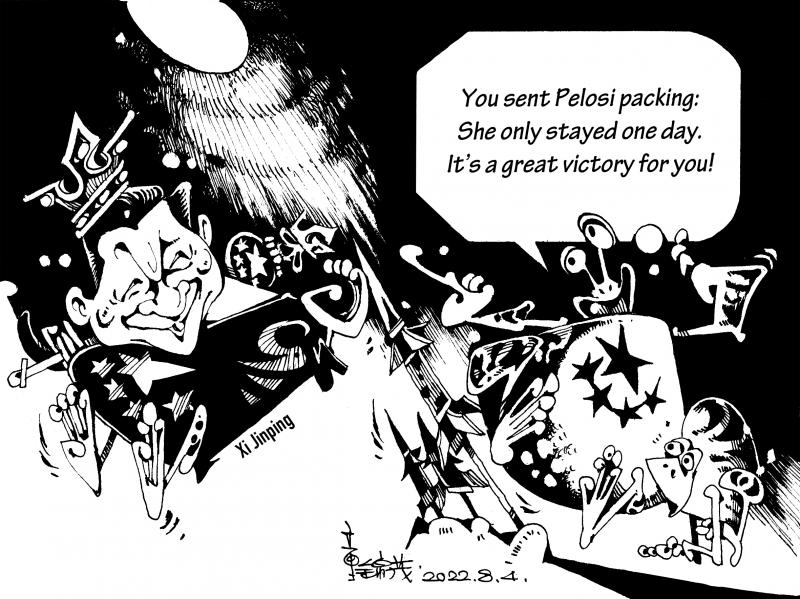

China badly misread Japan. It sought to intimidate Tokyo into silence on Taiwan. Instead, it has achieved the opposite by hardening Japanese resolve. By trying to bludgeon a major power like Japan into accepting its “red lines” — above all on Taiwan — China laid bare the raw coercive logic of compellence now driving its foreign policy toward Asian states. From the Taiwan Strait and the East and South China Seas to the Himalayan frontier, Beijing has increasingly relied on economic warfare, diplomatic intimidation and military pressure to bend neighbors to its will. Confident in its growing power, China appeared to believe
Taiwan-India relations appear to have been put on the back burner this year, including on Taiwan’s side. Geopolitical pressures have compelled both countries to recalibrate their priorities, even as their core security challenges remain unchanged. However, what is striking is the visible decline in the attention India once received from Taiwan. The absence of the annual Diwali celebrations for the Indian community and the lack of a commemoration marking the 30-year anniversary of the representative offices, the India Taipei Association and the Taipei Economic and Cultural Center, speak volumes and raise serious questions about whether Taiwan still has a coherent India
Recent media reports have again warned that traditional Chinese medicine pharmacies are disappearing and might vanish altogether within the next 15 years. Yet viewed through the broader lens of social and economic change, the rise and fall — or transformation — of industries is rarely the result of a single factor, nor is it inherently negative. Taiwan itself offers a clear parallel. Once renowned globally for manufacturing, it is now best known for its high-tech industries. Along the way, some businesses successfully transformed, while others disappeared. These shifts, painful as they might be for those directly affected, have not necessarily harmed society
Legislators of the opposition parties, consisting of the Chinese Nationalist Party (KMT) and the Taiwan People’s Party (TPP), on Friday moved to initiate impeachment proceedings against President William Lai (賴清德). They accused Lai of undermining the nation’s constitutional order and democracy. For anyone who has been paying attention to the actions of the KMT and the TPP in the legislature since they gained a combined majority in February last year, pushing through constitutionally dubious legislation, defunding the Control Yuan and ensuring that the Constitutional Court is unable to operate properly, such an accusation borders the absurd. That they are basing this


 RSS
RSS