


Taiwan on Wednesday introduced a “3+4” health regime for incoming travelers, shortening the quarantine to three days followed by four days of disease self-prevention, reallowed air travelers to transit in Taiwan and raised the inbound traveler cap to 25,000 per week.
However, a negative result from a polymerase chain reaction COVID-19 test conducted within 48 hours of boarding the flight or proof of recovery from the virus is still required, as well as on-arrival testing.
Asked whether Taiwan would reopen its borders to tourists by August, Minister of Health and Welfare Chen Shih-chung (陳時中) earlier this month said the opening might occur earlier, but did not elaborate.
Minister of Transportation and Communications Wang Kwo-tsai (王國材) said disease prevention guidelines are being drafted for inbound travelers, which would require tourists to have received a COVID-19 vaccine booster shot, test negative within 48 hours of boarding the flight and, in the first stage of reopening, travel in a tour group.
Taiwan imposed strict border controls in early 2020, including an entry ban on most foreign visitors and a mandatory quarantine of 14 days, which was in the past few weeks eased to 10, seven and now three days. The shortening began after an outbreak of the Omicron variant of SARS-CoV-2 in April caused a sharp increase in domestic case numbers.
In 2019, 11.8 million international travelers visited Taiwan, including 7.5 million foreigners, but the numbers in 2020 dropped to 1.37 million and 1.09 million respectively. Last year, they dropped further to only 140,479 and 112,410 respectively, and the tourism industry took a hard hit.
However, the easing of entry restrictions has spurred mixed feelings among the public. Many Taiwanese who live abroad have anticipated returning home more often, and many Taiwan residents wish to travel abroad sooner, while others are worried about a resurgence of COVID-19 due to incoming travelers, possibly bringing new variants.
As of Friday, the Central Epidemic Command Center had reported 48 cases of Omicron subvariants BA.4 and BA.5 in travelers who arrived in Taiwan from 17 countries. It warned that the subvariants might be more contagious, and could bypass immunity gained from previous infection and vaccination.
Some experts have reassured the public that, based on the available data, there is no indication that the subvariants cause more severe illness than the currently circulating BA.2 subvariant, and that immunity from previous infection and vaccination still protects against courses of the disease that require hospitalization and might lead to death.
While the local COVID-19 infection rate remains high, to narrow the gap between the local infection risk and the infection risk from international travelers, the government must remain vigilant for indications of BA.4 and BA.5 spreading into local communities by improving its surveillance systems.
Many countries have lifted most COVID-19 curbs, including entry restrictions. Japan, which had strict border controls in place since 2020, last week reopened to tour groups.
The government should study the development of the pandemic in Japan and use its findings as a reference for its plan to carefully reopen to tourists in the near future. It should also pay close attention to the development of next-generation COVID-19 vaccines and purchase them if they are found to be safe and effective. Moreover, it should promote booster shots to older people, who are at greater risk of developing severe COVID-19 symptoms, and to those who are at greater risk of infection, seeking to prepare Taiwan for future waves of the pandemic while carefully rolling back restrictions and encouraging people to live their lives as usual.
Minister of Labor Hung Sun-han (洪申翰) on April 9 said that the first group of Indian workers could arrive as early as this year as part of a memorandum of understanding (MOU) between the Taipei Economic and Cultural Center in India and the India Taipei Association. Signed in February 2024, the MOU stipulates that Taipei would decide the number of migrant workers and which industries would employ them, while New Delhi would manage recruitment and training. Employment would be governed by the laws of both countries. Months after its signing, the two sides agreed that 1,000 migrant workers from India would
In recent weeks, Taiwan has witnessed a surge of public anxiety over the possible introduction of Indian migrant workers. What began as a policy signal from the Ministry of Labor quickly escalated into a broader controversy. Petitions gathered thousands of signatures within days, political figures issued strong warnings, and social media became saturated with concerns about public safety and social stability. At first glance, this appears to be a straightforward policy question: Should Taiwan introduce Indian migrant workers or not? However, this framing is misleading. The current debate is not fundamentally about India. It is about Taiwan’s labor system, its
On March 31, the South Korean Ministry of Foreign Affairs released declassified diplomatic records from 1995 that drew wide domestic media attention. One revelation stood out: North Korea had once raised the possibility of diplomatic relations with Taiwan. In a meeting with visiting Chinese officials in May 1995, as then-Chinese president Jiang Zemin (江澤民) prepared for a visit to South Korea, North Korean officials objected to Beijing’s growing ties with Seoul and raised Taiwan directly. According to the newly released records, North Korean officials asked why Pyongyang should refrain from developing relations with Taiwan while China and South Korea were expanding high-level
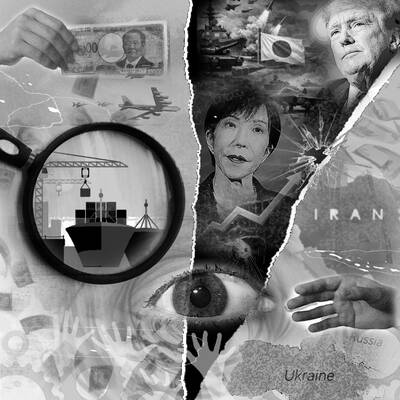
Japan’s imminent easing of arms export rules has sparked strong interest from Warsaw to Manila, Reuters reporting found, as US President Donald Trump wavers on security commitments to allies, and the wars in Iran and Ukraine strain US weapons supplies. Japanese Prime Minister Sanae Takaichi’s ruling party approved the changes this week as she tries to invigorate the pacifist country’s military industrial base. Her government would formally adopt the new rules as soon as this month, three Japanese government officials told Reuters. Despite largely isolating itself from global arms markets since World War II, Japan spends enough on its own


 RSS
RSS