


For weeks, Hoang Thi Quynh worked and slept inside a garment factory in Tien Giang Province, in southern Vietnam. She would start her shift at 7:15am and then, after a day spent sewing sportswear garments, enter an empty hall of the factory complex and settle down for the night.
Each worker had a tent, set one or two meters apart, containing a foil mat, pillow, blanket and a box to store their belongings. No workers were permitted to meet anyone from outside the factory. Even speaking to a visitor over the gates was forbidden.
A COVID-19 wave that spread across the industrial areas of Vietnam earlier this year placed intense pressure on the country’s manufacturing sector, just as factories were churning out products destined for shops ahead of Christmas.

Illustration: Yusha
Vietnam is one of Asia’s key manufacturing hubs, and produces goods for some of the largest Western brands in tech, garments and sportswear. News reports about the outbreak warned of delays in iPhone 13 deliveries, and disruption in the supply of everything from Toyota cars to IKEA curtains.
“Vietnam probably does a third of all apparel production [for the US],” said Jana Gold, a senior director with Alvarez & Marsal Consumer and Retail Group in Washington. “Of all countries to get hit with COVID-19, it really impacted the industry.”
Many factories asked workers to stay on site to comply with government rules designed to minimize infections — a policy that has since been dropped, including by Quynh’s workplace, which allowed her to commute from home again starting last month.
However, production still has not returned to normal, and analysts predict it might not do so until the end of next year’s first quarter. In the run-up to Christmas, retailers scrambled to prioritize which products were most needed by shops. Some continued shipping as late as last month, and even chartered planes to get garments to high streets on time. The real crisis, though, has been felt by the workers — many of them internal migrants — who power the country’s factories.
In July, when COVID-19 cases escalated, a severe lockdown was imposed across industrial areas, banning people from leaving their homes, even to buy food. Hundreds of thousands of workers moved into factories through an arrangement known as “three-on-site,” in which workers sleep, work and eat in their factory. By October, roughly 300,000 workers were doing so in Binh Duong Province alone.
For workers whose factories closed down during lockdown, there was no alternative except to stay in their rental rooms, in limbo. They were unable to earn a living, yet prevented from returning home to their families. Workers had little available cash to cope with the ordeal, said Nguyen Phuong Tu, a visiting research fellow at Adelaide University who specializes in factory workers’ labor rights.
“Most will try to remit savings back to their family members in their hometown, so the savings they have for themselves are not really much,” she said. Although some government support was available, it was nowhere near enough.
When movement restrictions were lifted in early October, many workers decided they had enough and left industrial areas en masse. Motorbikes, strapped with plastic bags bursting with belongings, flooded the streets. As many as 90,000 fled Ho Chi Minh City for their home provinces on the first weekend alone, state media said.
Tran Thi Lan was one of a reported 300,000 people who left Binh Duong, part of the garment manufacturing hub in the south. Her area was at the center of a COVID-19 outbreak, and she spent four months in lockdown.
Eventually, she caught COVID-19 herself.
“I knew that it would be my turn to get infected. Every two weeks people got tested and the infected rooms got closer,” she said shortly after she returned home.
Normally, she earns a basic monthly salary of about 4.8 million dong (US$210) making trainers. She would get an additional 20,000 dong per hour of overtime and 300,000 dong more as a food stipend. It was not much, she said, considering how exhausting the work was. Her company, which suspended operations during the lockdown, gave her no support, she said.
Instead, she relied on charity food packages. She received 800,000 dong from a relief fund, and her landlord helped by halving her rent.
The crisis has underlined the vulnerability of migrant workers’ lives and the need for better government protection, Tu said. Their jobs are low-paying and precarious. In the past, foreign-owned companies have been known to simply close down without paying workers’ wages or social insurance benefits.
Access to public services is also tied to a person’s registered address in their home province, which means they are unable to access key services such as healthcare, childcare or children’s education while working away in the industrial areas.
“I think the economic importance of these workers has been undervalued,” Tu said. “Even though we know Vietnam continues to attract foreign investment based on the attractiveness of low cost and abundant labor supply.”
Factories now face significant labor shortages because so many workers have left. Many are expected to stay home with their families at least until the Lunar New Year holiday.
Gold estimates that, of the vendors she works with, 60 to 70 percent of workers have returned to their jobs.
“In normal times [they] might be able to manage, but with the increase in demand right now, it is just compounding the issue,” she said.
There are also continued, sporadic COVID-19 outbreaks, which lead to temporary shutdowns. On top of this, manufacturers and brands face continued disruption to the supply of raw materials and to shipping.
Mohamed Faiz Nagutha, ASEAN Economist at Bank of America Securities in Singapore, said it is unlikely that production would return to normal levels until the end of the first quarter of next year.
“If you’re talking about actually catching up back to where, in a hypothetical world, production would have been, that will take much longer,” Nagutha said.
The crisis has prompted some retailers to rethink how they balance having an efficient supply chain, and one that is less precarious, said Gold. Others are adopting a more selective approach to buying goods, and doing fewer promotions that require products to be sold in far greater numbers to make the same amount of revenue.
However, Tu is skeptical of whether the crisis will bring greater rights for workers. Some bosses have offered higher pay to entice workers back to factories, but these perks are likely temporary, she said, adding that concrete policy change by local government is needed.
“I would be cautious about saying the bargaining power of the workers has increased in this particular period of time,” she said.
Instead, she fears that pressures on those workers who remain in the industrial areas could be amplified, as factories face the mammoth task of overcoming months of delayed production. The government has proposed lifting the annual overtime cap from 200 hours to 300 hours to boost the sector’s recovery from COVID-19.
For the moment, many workers have voted with their feet.
“When I was stuck inside the rental room, I was really scared of being infected, and that it might affect my health in the long run,” Lan said. “Along with it, my cash running out. I was frightened of the idea that I may not be able to meet my family again.”
Names of the workers in this article have been changed to ensure anonymity.
A gap appears to be emerging between Washington’s foreign policy elites and the broader American public on how the United States should respond to China’s rise. From my vantage working at a think tank in Washington, DC, and through regular travel around the United States, I increasingly experience two distinct discussions. This divergence — between America’s elite hawkishness and public caution — may become one of the least appreciated and most consequential external factors influencing Taiwan’s security environment in the years ahead. Within the American policy community, the dominant view of China has grown unmistakably tough. Many members of Congress, as
The Hong Kong government on Monday gazetted sweeping amendments to the implementation rules of Article 43 of its National Security Law. There was no legislative debate, no public consultation and no transition period. By the time the ink dried on the gazette, the new powers were already in force. This move effectively bypassed Hong Kong’s Legislative Council. The rules were enacted by the Hong Kong chief executive, in conjunction with the Committee for Safeguarding National Security — a body shielded from judicial review and accountable only to Beijing. What is presented as “procedural refinement” is, in substance, a shift away from
The shifting geopolitical tectonic plates of this year have placed Beijing in a profound strategic dilemma. As Chinese President Xi Jinping (習近平) prepares for a high-stakes summit with US President Donald Trump, the traditional power dynamics of the China-Japan-US triangle have been destabilized by the diplomatic success of Japanese Prime Minister Sanae Takaichi in Washington. For the Chinese leadership, the anxiety is two-fold: There is a visceral fear of being encircled by a hardened security alliance, and a secondary risk of being left in a vulnerable position by a transactional deal between Washington and Tokyo that might inadvertently empower Japan
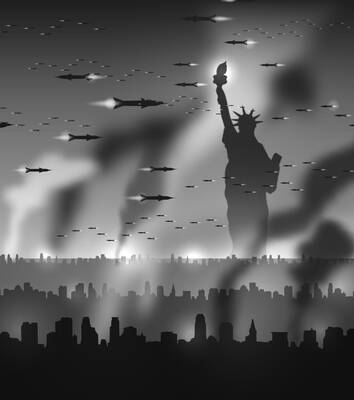
After declaring Iran’s military “gone,” US President Donald Trump appealed to the UK, France, Japan and South Korea — as well as China, Iran’s strategic partner — to send minesweepers and naval forces to reopen the Strait of Hormuz. When allies balked, the request turned into a warning: NATO would face “a very bad” future if it refused. The prevailing wisdom is that Trump faces a credibility problem: having spent years insulting allies, he finds they would not rally when he needs them. That is true, but superficial, as though a structural collapse could be caused by wounded feelings. Something


 RSS
RSS