

Brussels has told British Prime Minister Andy Burnham that Britain needs to raise tariffs on Chinese cars and align more closely align with EU trade policy to avoid “made in Europe” barriers on key exports, the **Financial Times** said yesterday.
In response to lobbying for equal treatment for British products, the bloc told London its best solution would be to join the EU’s customs union, the newspaper said, citing two people familiar with the matter.
“A customs union would solve most of the problems of ‘made in Europe,’” an EU official told the paper. “And also the question of tariff differences, which leads to fears the Chinese could avoid our tariffs by routing through the UK.”
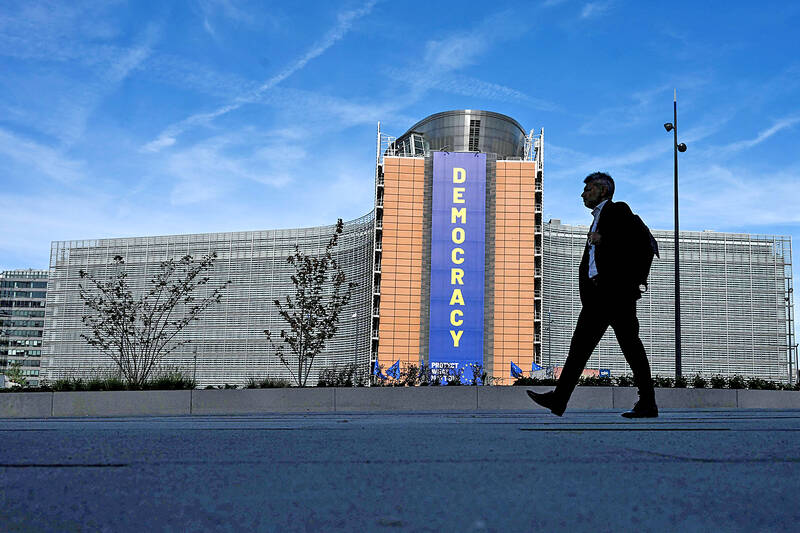
Photo: AFP
Burnham said this week he would make the case for Britain to be considered a “trusted partner” under the bloc’s proposed “Made in EU” rules, warning that the UK’s exclusion could damage its car industry.
The “Made in Europe” policy aims to curb reliance on Chinese components by prioritizing European-made goods — a worry for the British auto industry which feeds parts into EU supply chains and sells cars across the bloc.
The bloc would use every available tool to reduce its “unsustainable” trade deficit with China, European Commission President Ursula von der Leyen told the European Parliament in her “State of the Union” address this month.
The EU and the British Foreign Office did not immediately respond to Reuters requests for comment outside business hours.
Separately, German industry association BDI yesterday called for a more determined effort to reduce economic risks linked to China, arguing that Europe must diversify supply chains and forge new partnerships while avoiding broad-based protectionism.
The BDI, representing major German manufacturers, said in a policy paper that “de-risking” should be pursued more consistently, though it stopped short of spelling out specific measures.
German industry has been increasing pressure on Chancellor Friedrich Merz to take a tougher line towards Beijing, with companies calling for stronger action to address what they describe as unfair competition from Chinese rivals.
“Systemic competition with China’s economy is increasingly challenging the open social market economy and requires an appropriate industrial and trade policy response,” BDI chief executive Tanja Goenner said.
The EU should have tools to respond rapidly to unfair competition, such as anti-dumping and anti-subsidy measures, Goenner said, while warning that any new trade defense measures must be carefully calibrated.
The BDI also urged Germany and the EU to broaden ties with other regions based on economic and security interests.
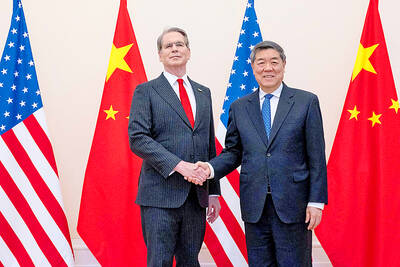
MINIMAL EXPECTATIONS: Analysts think that the two sides are likely to aim for ‘status quo’-level agreements, maintaining civility, without major trade breakthroughs US Secretary of the Treasury Scott Bessent and Chinese Vice Premier He Lifeng (何立峰) were set to meet yesterday to try to set up potential agreements on artificial intelligence (AI), tariffs and critical minerals for a summit in Washington this week between US President Donald Trump and Chinese President Xi Jinping (習近平). The meetings at JPMorgan Chase & Co’s headquarters in Manhattan, which included US Trade Representative Jamieson Greer, were due to start at about 10:30am on Sunday morning and were expected to run all day. Key topics would be the status of a US-China trade truce that is set to expire
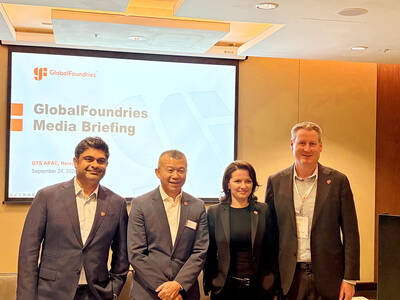
GlobalFoundries Inc yesterday said it plans to accelerate global capacity optimization and expansion to accommodate exponential growth in radio frequency (RF) and other chips driven by the artificial intelligence (AI) boom. Singapore will pay a vital role in the company’s capacity expansion, alongside production line optimizations across its manufacturing sites, GlobalFoundries Asia Pacific head Vincent Feng (范曾文) told a news conference in Hsinchu City. “Many might be surprised to hear that the RF market is thriving now. We are gearing up for a massive capacity expansion, and it is all being driven by AI,” Feng said. He declined to disclose details of the
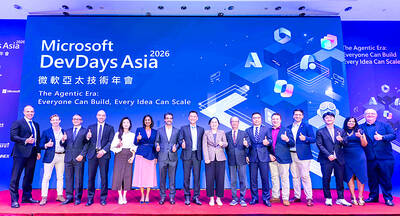
MORE DATA CENTERS: Microsoft’s Taiwan-area general manager said the corporation is looking to add two more data centers in northern Taiwan over the next few years Microsoft Corp plans to double its data centers in Taiwan from two facilities to four, Microsoft Taiwan general manager Sean Pien (卞志祥) said yesterday. “Over the past two to three years, we have consistently seen demand outstrip supply, and we expect that situation to continue over the next two to three years,” Pien said on the sidelines of a news conference in Taipei. The data center sites would mainly be in northern Taiwan to meet customer demand and reduce the risk of operational disruptions caused by a single event, he said, without saying their exact locations. Microsoft enabled the first phase of
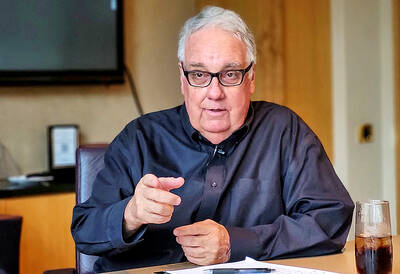
Berkshire Hathaway Inc has been synonymous with Warren Buffett. It falls to his oldest son, Howard Buffett, to keep the conglomerate’s “culture” alive. Friday’s announcement that Warren Buffett, 96, stepped down as chairman means the longtime investor would no longer have a management role at the company he took over in 1965, or be a regular sounding board for Greg Abel, who succeeded him as chief executive officer in January. Howard Buffett, 71, is assuming a different role as non-executive chairman, focused on preserving Berkshire’s culture and values. It is the latest move in a years-long leadership transition. “This one is really about


 RSS
RSS