

Taiwan should pursue nuclear and renewable power together to ensure a stable electricity supply as the rapid development of artificial intelligence (AI) drives demand for computing infrastructure and electricity. Third Wednesday Club chairman Lin Por-fong (林伯豐) said yesterday.
“Without a stable supply of electricity, there can be no industrial development,” Lin said on the sidelines of the trade group’s monthly gathering in Taipei.
High solar-power costs and difficulties in developing offshore wind made it necessary to reconsider the country’s energy policy, said Lin, who is also chairman of Taiwan Glass Industry Corp (台玻).
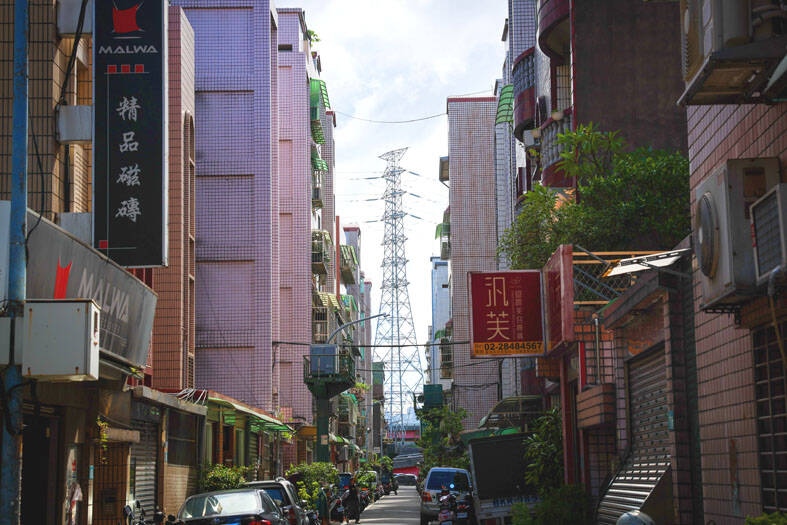
Photo: CNA
Taiwan Power Co’s (Taipower, 台電) accumulated losses, which stood at NT$376.4 billion (US$11.78 billion) at the end of June, cannot be addressed simply through higher electricity rates or government subsidies, he said.
The government-convened electricity rate review committee is due to meet next month to decide whether to adjust electricity rates or extend the current freeze, as Taiwan seeks to cushion the impact of rising energy costs on domestic inflation.
Lin said raising electricity rates or relying on government subsidies would not address the underlying problem. Instead, policymakers should seek to lower power-generation costs by expanding nuclear power, which he estimated costs about NT$1 per kilowatt-hour, compared with an overall generation cost approaching NT$3.
Taiwan has sought to expand renewable energy, while phasing out nuclear power, but the transition has faced higher-than-expected costs and difficulties in offshore wind development. Some offshore wind operators have also encountered financial difficulties, Lin said.
The issue is becoming more urgent as Taiwan’s AI industry expands and power consumption accelerates, he said.
Lin also backed an increase in Taiwan’s minimum wage, saying that higher minimum wages could lift overall pay levels but arguing that minimum wages for local and foreign migrant workers should be decoupled.
Domestic workers should receive higher pay based on differences in work performance and employment conditions, he said.
Taiwan’s minimum monthly wage is expected to exceed NT$30,000 next year, up from NT$29,500.
Wage increases are an inevitable trend amid strong economic growth, Lin said. However, the government should consider whether traditional industries could absorb higher labor costs as they continue to face difficulties, he said.
Taiwan’s labor authorities are due to review the minimum wage next month.

E.Sun Financial Holding Co (玉山金控) is to formally merge with Mercuries Life Insurance Co (三商美邦人壽) on Sept. 1, creating Taiwan’s fifth-largest listed financial holding company by assets and paving the way for capital injections totaling NT$22 billion (US$683.91 million) to shore up the insurer’s finances, top executives said yesterday. “The first priority after the merger will be to bring the insurer back to health through capital injections,” E.Sun Financial chairman Joseph Huang (黃男州) told a news conference in Taipei ahead of a company earnings call. E.Sun would inject NT$16 billion into Mercuries Life next month, followed by another NT$6 billion next year,
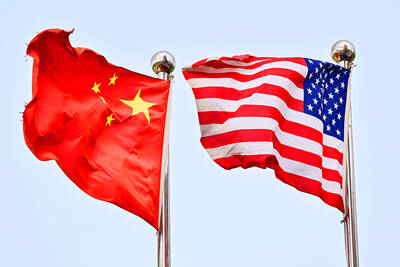
RIVAL BLOCS: Kazakhstan has signed on to the US’ and China’s AI frameworks; a US official said it was difficult to see how a country can be trusted while in a competing pact The US is preparing to tell dozens of countries they must pick sides in the artificial intelligence (AI) race with China, warning they would be excluded from a US-led AI coalition if they also sign up for Beijing’s competing framework, according to a US official and an internal draft reviewed by Reuters. Washington last year launched the Pax Silica initiative aimed at securing supply chains for AI models, semiconductors and critical minerals, amid a fierce technology rivalry with Beijing. About two dozen countries have joined, including Kazakhstan, a key potential source of critical minerals that has also joined China’s coalition,
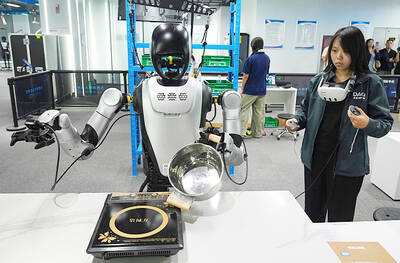
Taiwan and other technology democracies have a "golden but narrowing" three-to-five-year window to lay the foundations for an advanced robotics supply chain outside China, particularly for humanoid robots, a Taiwan-based researcher said yesterday. A report released on Monday by the Research Institute for Democracy, Society and Emerging Technology (DSET) examines China-West competition in physical artificial intelligence (AI) and Taiwan’s potential role in developing alternatives to Chinese robot supply chains. Humanoid robots remain unproven, meaning China’s lead in shipments currently has a limited impact on the real economy, Nathanael Cheng (鄭秉信), a policy analyst in the DSET Economic Security Program, said in a

E-PAPER TRANSITION: Increasing memory prices have caused customers to postpone new product launches, with the firm expecting a later peak season this year E Ink Holdings Inc (元太科技), the world’s biggest e-paper display supplier, yesterday revised downward its revenue growth forecast for this year to between 10 and 15 percent, from the 20 to 25 percent it previously estimated, as surging memory prices are hurting demand for its e-readers and e-notes. The company had expected a transition from monochrome color e-paper displays to color displays used in e-readers and e-notes to continue this year. However, rapidly increasing memory prices have caused customers to postpone new product launches, while demand for models from previous generations has also dwindled due to higher prices, E Ink said. That created


 RSS
RSS