

Taiwan Semiconductor Manufacturing Co (TSMC, 台積電) has held discussions with clients about chipmaking price increases of as much as 10 percent next year to cover the rising cost of manufacturing, the Nikkei reported yesterday, citing people with knowledge of the matter.
The main producer for Nvidia Corp and Apple Inc began those talks last month and finalized base-price hikes this month of between 5 percent and 10 percent, the newspaper reported. The changes will take effect next year and cover both advanced and mature semiconductors, the Nikkei said.
TSMC and other chipmakers are grappling with the soaring cost of a plethora of items employed in production including materials, equipment and power. This month, Taiwan’s largest company raised its spending projections for this year, anticipating artificial intelligence (AI) demand as well as the growing cost of expanding capacity — particularly as it proceeds with a US$265 billion expansion in Arizona.
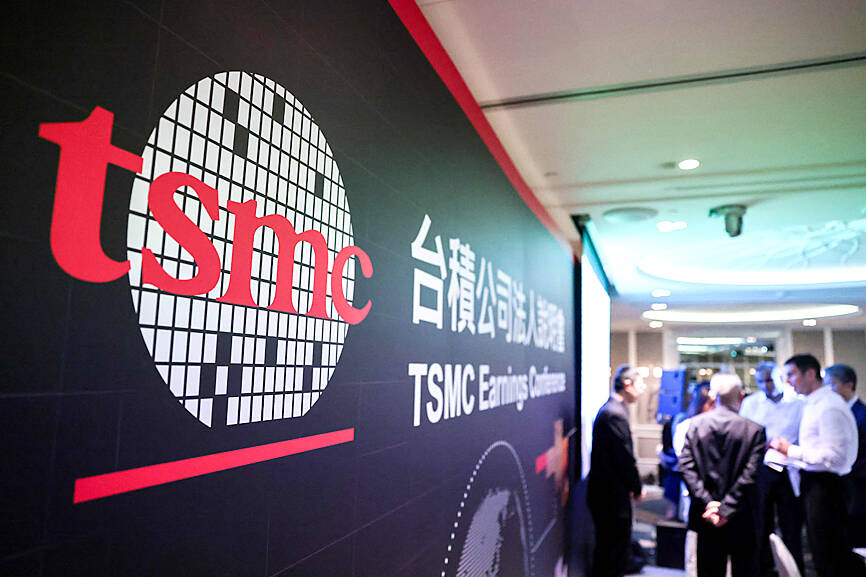
Photo: I-Hwa Cheng, AFP
TSMC, which fabricates chips for many of the world’s biggest tech names from Alphabet Inc to Amazon.com Inc, has long resisted the sharp price swings that characterize the adjacent memory industry. It’s consistently espoused long-term partnerships with customers through volatile up- and down-cycles. At the same time, global supply chain disruptions from the Middle East conflict and raging AI industry demand are inflating costs and piling pressure on TSMC to accelerate capacity construction around the world.
TSMC is postponing price hikes to next year to give its customers time to adjust, the Nikkei said.
“We don’t suddenly increase our price,” TSMC chief executive officer C. C. Wei (魏哲家) told analysts on Thursday last week after unveiling better-than-anticipate earnings. “We earn our value and we make sure that our profit, our gross margin is enough for our long-term sustained expansion, that’s to the benefit of my customers and TSMC also, that’s our philosophy.”
Customers like Nvidia have called on TSMC to quicken its pace of expansion, concerned about bottlenecks in the supply of the AI accelerators and other components that go into data centers. In response, TSMC has established mega-projects such as in Arizona — dubbed the largest-ever foreign direct investment in the US.
The company, fresh off reporting expectation-beating sales and profit for the second quarter of the year and increasing its growth forecasts, still sees challenges in fulfilling all customer orders. The AI megatrend, as TSMC has taken to calling it, is going to drive growth for the company through at least the next few years.
“Our pricing strategy is strategic, not opportunistic. We will continue to work closely with customers and sell our value to them,” TSMC said in a statement yesterday.
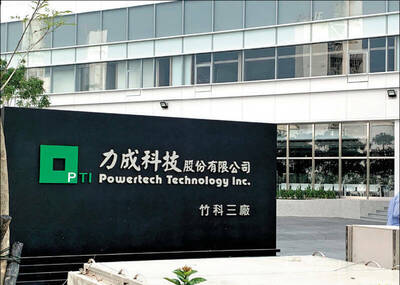
SINGAPORE PLANS: The joint venture would focus on offering technology for advanced package substrates in response to demand from an international customer Powertech Technology Inc (力成科技), a provider of memory and logic chip packaging services, on Thursday said it plans to invest US$400 million to create a new joint venture with Broadcom Inc in Singapore to cater to customer demand for advanced panel-based packaging services. The joint venture would concentrate on offering additive finer-geometry redistribution layer (RDL) technology for advanced package substrates, Powertech said in a statement after the company’s board of directors approved the deal. RDL is a crucial part of fan-out panel-level packaging (FOPLP) technology, which relies on RDL to route electrical connections beyond the physical footprint of silicon. The new investment was
AI RETHINK: Volatility has resurfaced in AI stocks amid concerns about increased competition, possible overcapacity and whether big investments would pay off A selloff in chipmakers gathered pace last week, driving the high-profile group of stocks to a bear market on worries that the artificial intelligence (AI) spending spree is becoming harder to justify. The cohort of semiconductor powerhouses last week saw its worst week since April last year, with a key industry gauge sinking 20 percent from a record. News of a powerful Chinese AI model, Kimi K3, by start-up Moonshot AI Technology Co (月之暗面) further shook markets. Similar to when China’s DeepSeek (深度求索) announced its AI model last year, another low-cost rival to big Western AI models like ChatGPT and
ASML Holding NV plans to raise prices for its chipmaking equipment, setting up a potential clash with its biggest customer, Taiwan Semiconductor Manufacturing Co (TSMC, 台積電), The Information reported on Wednesday, citing people familiar with the matter. TSMC is already pushing back against the Dutch toolmaker’s plans, The Information reported. TSMC declined to comment. A representative for ASML pointed to comments by its chief financial officer, Roger Dassen, during its earnings call on Wednesday about pricing, but declined to comment further. ASML makes the cutting-edge extreme ultraviolet (EUV) lithography machines that are necessary for chipmakers to manufacture advanced semiconductors and is experiencing a surge
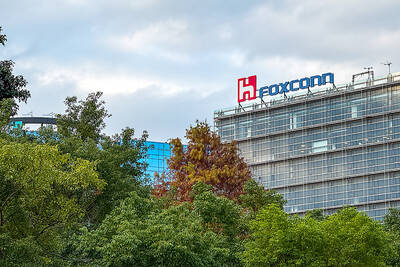
ROBOT LINES: Servers made at the facility are to be assembled by humanoid robots and robotic arms, a source said, amid a push to establish overseas high-tech parks Hon Hai Precision Industry Co (鴻海精密), the world’s largest contract server maker, yesterday said it expects to begin small-volume production of artificial intelligence (AI) servers at its Texas plant within the next two months. The plant would handle back-end assembly and system integration, including Level 10 and Level 11 assembly processes, a source familiar with the matter told the Taipei Times. The servers would be assembled by humanoid robots and robotic arms developed with Nvidia Corp, the source said. Hon Hai is testing a wide range of robots at its US server facilities, including industrial robotic arms and humanoid robots, rather than relying


 RSS
RSS