


Taiwan’s consumer confidence declined this month as escalating tensions in the Middle East weighed on sentiment and heightened concerns over inflation and economic risks, a survey released yesterday by National Central University (NCU) said.
The consumer confidence index dropped 4.28 points from the previous month to 62.3, the lowest level in three years and two months, the survey showed.
All six sub-indicators dropped, including expectations for prices, household finances, the domestic economic outlook, employment opportunities, stock investment interest and purchases of durable goods.

Photo: CNA
The retreat in sentiment reflects growing uncertainty linked to the ongoing conflict in the Middle East, which has raised concerns about global energy supplies and inflation pressures, the monthly survey said.
NCU Research Center for Taiwan Economic Development director Dachrahn Wu (吳大任) said that Taiwan is particularly vulnerable to energy disruptions, as about 95 percent of its energy supply is imported.
If the conflict drags on and affects shipping routes, inflation would be the most immediate risk, followed by broader economic repercussions, Wu said.
“The key concern lies in the security of the Strait of Hormuz, a critical corridor for global oil shipments. Even if military hostilities end soon, supply risks could persist for six months to a year,” he said.
Since many Asian economies — including Taiwan, Japan, South Korea and Vietnam — rely heavily on energy shipments passing through the waterway, any disruption could keep global oil prices elevated and intensify inflationary pressure across the region, Wu said.
Although the government has introduced measures to stabilize energy prices, those policies would delay inflation rather than resolve it altogether, Wu said. As a result, weak consumer sentiment could persist for some time.
Another potential consequence is slower economic activity if higher prices squeeze household budgets, he said. Rising living costs could crowd out spending on leisure and dining out.
If the conflict pushes up prices globally, it could also weigh on consumer spending in the US and other major economies. That could eventually reduce demand for artificial intelligence (AI) applications and equipment such as AI servers, undermining Taiwan’s technology supply chain, Wu said.
Among the index components, sentiment toward stock investment posted the steepest decline. The sub-index measuring interest in investing in stocks over the next six months fell 5.58 points to 22.88, a three-year-and-two-month low.
The TAIEX remains at elevated levels despite pullbacks and shrinking trading volumes, Wu said, warning that “high valuations themselves pose a risk.”
Meanwhile, the sub-index tracking willingness to purchase durable goods in the next six months fell 4.11 points to 93.01, marking a five-month low.
However, inflation concerns and the central bank’s easing of second-home mortgage restrictions could prompt investors to seek refuge in property, potentially helping the housing market recover, the survey said.
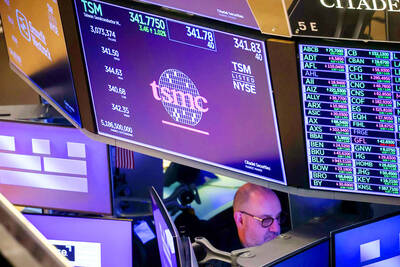
STRONG INTEREST: Analysts have pointed to optimism in TSMC’s growth prospects in the artificial intelligence era as the cause of the rising number of shareholders The number of people holding shares of chipmaker Taiwan Semiconductor Manufacturing Co (TSMC, 台積電) hit a new high last week despite a decline in its stock price, the Taiwan Depository and Clearing Corp (TDCC, 台灣集保) said. The number of TSMC shareholders rose to 2.46 million as of Friday, up 75,536 from a week earlier, TDCC data showed. The stock price fell 1.34 percent during the same week to close at NT$1,840 (US$57.55). The decline in TSMC’s share price resulted from volatility in global tech stocks, driven by rising international crude oil prices as the war against Iran continues. Dealers said
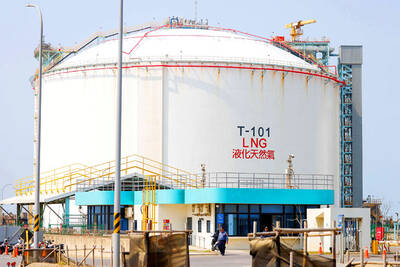
Taiwan’s natural gas supply remains stable through the end of May, despite rising concerns about potential disruptions to Qatari liquefied natural gas (LNG) supplies due to escalating conflicts in the Middle East, the Ministry of Economic Affairs said yesterday. The ministry in a statement said that Taiwan has completed preparations for natural gas supply and shipping schedules through the end of May. It has also made plans to increase natural gas imports from regions outside the Middle East in June to ensure a stable supply, it added. Taiwan sources natural gas from 14 countries and is not solely dependent on the Middle East,

UNPRECEDENTED PACE: Micron Technology has announced plans to expand manufacturing capabilities with the acquisition of a new chip plant in Miaoli Micron Technology Inc unveiled a newly acquired chip plant in Miaoli County yesterday, as the company expands capacity to meet growing demand for advanced DRAM chips, including high-bandwidth memory chips amid the artificial intelligence boom. The plant in Miaoli County’s Tongluo Township (銅鑼), which Micron acquired from Powerchip Semiconductor Manufacturing Corp (力積電) for US$1.8 billion, is expected to make a sizeable capacity contribution to the company from fiscal 2028, the company said in a statement. It would be an extended production site of Micron’s large-scale manufacturing hub in Taichung, the company said. As the global semiconductor industry is racing to reach US$1 trillion
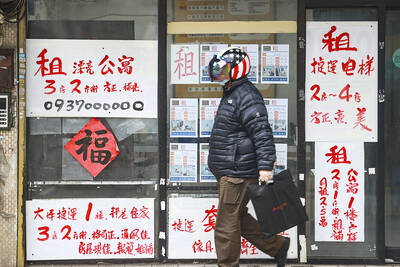
A man walks past real-estate advertisements outside a house in Taipei yesterday. The central bank yesterday said it plans to establish an “Inflation-at-Risk” gauge as a supplementary tool for observing inflation, as policymakers express wish to communicate more effectively with the public when making inflation forecasts.


 RSS
RSS