


India is hoping to garner as much as US$200 billion in investments for data centers over the next few years as it scales up its ambitions to become a hub for artificial intelligence (AI), Indian Minister for Electronics and Information Technology Ashwini Vaishnaw said yesterday.
The investments underscore the reliance of tech titans on India as a key technology and talent base in the global race for AI dominance.
For New Delhi, they bring in high-value infrastructure and foreign capital at a scale that can accelerate its digital transformation ambitions.
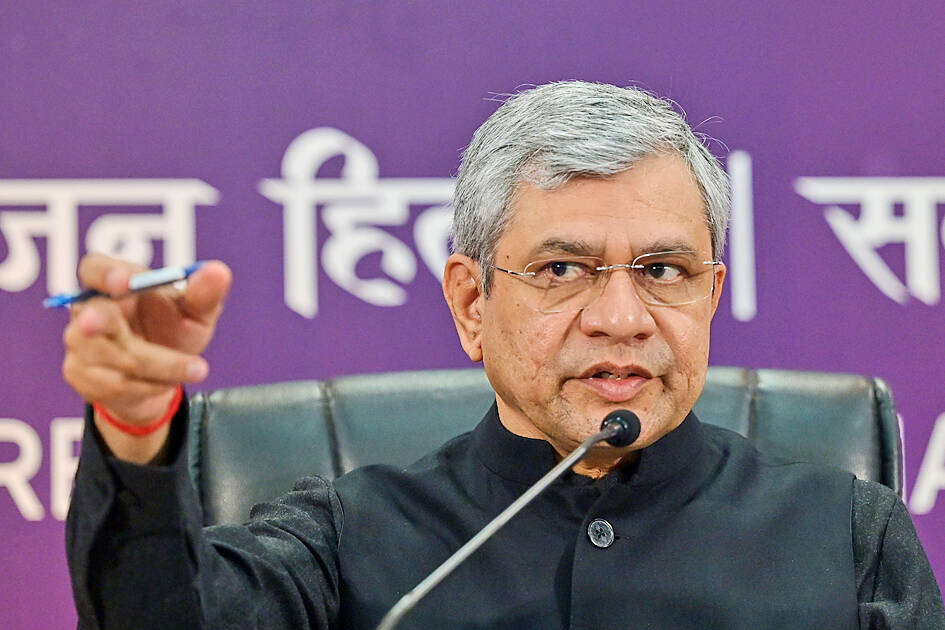
Photo: AP
“Today, India is being seen as a trusted AI partner to the Global South nations seeking open, affordable and development-focused solutions,” Vaishnaw told The Associated Press in an e-mail interview, as New Delhi hosts a major AI Impact Summit this week drawing participation from at least 20 global leaders and a who’s who of the tech industry.
In October last year, Google announced a US$15 billion investment plan in India over the next five years to establish its first AI hub in the South Asian country. Microsoft Corp followed two months later with its biggest-ever Asia investment announcement of US$17.5 billion to advance India’s cloud and AI infrastructure over the next four years.
Amazon.com Inc has committed US$35 billion investment in India by 2030 to expand its business, specifically targeting AI-driven digitization. The cumulative investments are part of US$200 billion in investments that are in the pipeline and New Delhi hopes would flow in.
Vaishnaw said India’s pitch is that AI must deliver measurable impacts at scale rather than remain an elite technology.
“A trusted AI ecosystem will attract investment and accelerate adoption,” he said, adding that a central pillar of India’s strategy to capitalize on the use of AI is building infrastructure.
The government recently announced a long-term tax holiday for data centers as it hopes to provide policy certainty and attract global capital.
Vaishnaw said the government has already operationalized a shared computing facility with more than 38,000 graphics processing units, allowing start-ups, researchers and public institutions to access high-end computing without heavy upfront costs.
“AI must not become exclusive. It must remain widely accessible,” he said.
Alongside the infrastructure drive, India is backing the development of sovereign foundational AI models trained on Indian languages and local contexts. Some of these models meet global benchmarks and in certain tasks rival widely used large language models, Vaishnaw said.
India is also seeking a larger role in shaping how AI is built and deployed globally as the country does not see itself strictly as a “rule maker or rule taker,” according to Vaishnaw, but an active participant in setting practical, workable norms while expanding its AI services footprint worldwide.
“India will become a major provider of AI services in the near future,” he said, describing a strategy that is “self-reliant yet globally integrated” across applications, models, chips, infrastructure and energy.
Investor confidence is another focus area for New Delhi as global tech funding becomes more cautious.
Vaishnaw said the technology’s push is backed by execution, pointing to the Indian government’s AI Mission program, which emphasizes sector specific solutions through public-private partnerships.
The government is also betting on reskilling its workforce as global concerns grow that AI could disrupt white collar and technology jobs.
New Delhi is scaling AI education across universities, skilling programs and online platforms to build a large AI-ready talent pool, the minister said.
Widespread 5G connectivity across the country and a young, tech-savvy population are expected to help with the adoption of AI at a faster pace, he added.
Balancing innovation with safeguards remains a challenge though, as AI expands into sensitive sectors such as governance, health care and finance.
Vaishnaw outlined a fourfold strategy that includes implementable global frameworks, trusted AI infrastructure, regulation of harmful misinformation and stronger human and technical capacity to hedge the impact.
“The future of AI should be inclusive, distributed and development-focused,” he said.
OpenAI has warned US lawmakers that its Chinese rival DeepSeek (深度求索) is using unfair and increasingly sophisticated methods to extract results from leading US artificial intelligence (AI) models to train the next generation of its breakthrough R1 chatbot, a memo reviewed by Bloomberg News showed. In the memo, sent on Thursday to the US House of Representatives Select Committee on China, OpenAI said that DeepSeek had used so-called distillation techniques as part of “ongoing efforts to free-ride on the capabilities developed by OpenAI and other US frontier labs.” The company said it had detected “new, obfuscated methods” designed to evade OpenAI’s defenses
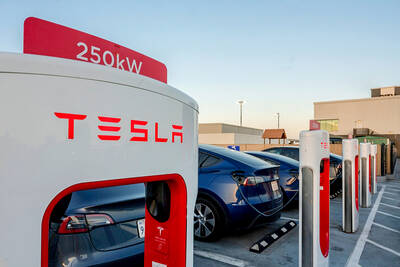
NEW IMPORTS: Car dealer PG Union Corp said it would consider introducing US-made models such as the Jeep Grand Cherokee and Stellantis’ RAM 1500 to Taiwan Tesla Taiwan yesterday said that it does not plan to cut its car prices in the wake of Washington and Taipei signing the Agreement on Reciprocal Trade on Thursday to eliminate tariffs on US-made cars. On the other hand, Mercedes-Benz Taiwan said it is planning to lower the price of its five models imported from the US after the zero tariff comes into effect. Tesla in a statement said it has no plan to adjust the prices of the US-made Model 3, Model S and Model X as tariffs are not the only factor the automaker uses to determine pricing policies. Tesla said

Australian singer Kylie Minogue says “nothing compares” to performing live, but becoming an international wine magnate in under six years has been quite a thrill for the Spinning Around star. Minogue launched her first own-label wine in 2020 in partnership with celebrity drinks expert Paul Schaafsma, starting with a basic rose but quickly expanding to include sparkling, no-alcohol and premium rose offerings. The actress and singer has since wracked up sales of around 25 million bottles, with her carefully branded products pitched at low-to mid-range prices in dozens of countries. Britain, Australia and the United States are the biggest markets. “Nothing compares to performing
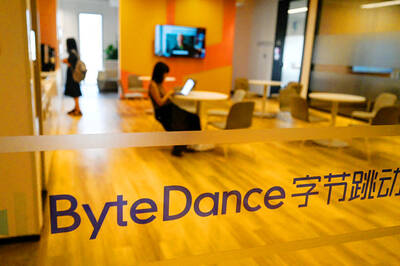
AUSPICIOUS TIMING: Ostensibly looking to spike the guns of domestic rivals, ByteDance launched the upgrade to coincide with the Lunar New Year China’s ByteDance Ltd (字節跳動) has rolled out its Doubao 2.0 model, an upgrade of the country’s most widely used artificial-intelligence (AI) app, the company announced on Saturday. ByteDance is one of several Chinese firms hoping to generate overseas and domestic buzz around its new AI models during the Lunar New Year holiday, which began yesterday, when hundreds of millions of Chinese partake in family gatherings in their hometowns. The company, like rival Alibaba Group Holding Ltd (阿里巴巴), was caught off-guard by DeepSeek’s (深度求索) meteoric rise to global fame during last year’s Spring Festival, when Silicon Valley and investors worldwide were


 RSS
RSS