


Chipmaker Intel Corp has tested chipmaking tools this year from a toolmaker with deep roots in China and two overseas units that were targeted by US sanctions, according to two sources with direct knowledge of the matter.
Intel, which fended off calls for its CEO’s resignation from US President Donald Trump in August over his alleged ties to China, got the tools from ACM Research Inc, a Fremont, California-based producer of chipmaking equipment.
Two of ACM’s units, based in Shanghai and South Korea, were among a number of firms barred last year from receiving US technology over claims they have supported the Chinese government’s efforts at harnessing commercial technology for military use and making advanced chips or chipmaking tools. ACM denies the allegations.
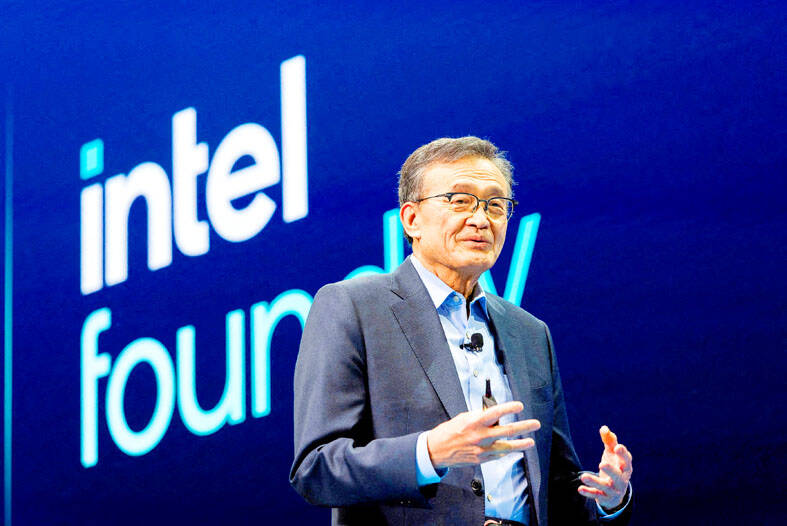
Photo: REUTERS
The two so-called wet etch tools, used for removing material from the silicon wafers that are transformed into semiconductors, were tested for possible use in Intel’s most advanced chipmaking process, known as 14A. That process is due for an initial launch in 2027.
Reuters could not determine if Intel had made a decision to add the tools to the advanced chipmaking process and has no evidence that the company violated any US regulations.
ACM said it could not comment on “specific customer engagements,” but could confirm that “ACMR’s US team has sold and delivered multiple tools from our Asian operations to domestic customers.”
It also said it has disclosed the shipment of three tools to a “major US-based semiconductor manufacturer,” which are being tested and some of which have met performance standards.
However, the fact that Intel, which is now part-owned by the US government, would consider adding tools made by a firm with sanctioned units into its most advanced manufacturing line, raises important national security concerns, China hawks said.
They flagged the possible transfer of Intel’s sensitive technological knowhow to China, the eventual displacement of trusted Western tool suppliers with China-linked firms and even the potential for sabotage efforts by Beijing.
Intel’s testing of ACM tools “highlights egregious gaps in US technology protection policies and should not be permitted,” said Chris McGuire, a former White House National Security Council official under former US president Joe Biden and senior fellow with the Council on Foreign Relations.
“Chinese tools could easily be remotely or physically manipulated by Beijing to degrade or even halt US chip production. And US companies should play no part in helping China improve its chipmaking tools, which are the foundation of all advanced technology development,” he added.
ACM said it does not pose a national security threat, adding that its US operations are “bifurcated and isolated” from the sanctioned Shanghai-based unit, and that US customers are supported directly by US personnel, with robust safeguards to protect customer trade secrets.
ACM Research was founded in 1998 by David Wang (王暉), who still serves as CEO and owns more than 57 percent of the company’s voting shares. ACM’s Chinese-language Web site lists Wang as a US citizen with Chinese permanent residency.
ACM also sells equipment to sanctioned Chinese chipmaker Yangtze Memory Technologies Corp (長江存儲) as well as China’s ChangXin Memory Technologies (長鑫存儲), which was named by the US Department of Defense as a Chinese military-backed company, according to a recent presentation on its Web site.
Semiconductor Manufacturing International Corp (SMIC, 中芯), another ACM customer targeted by US sanctions over alleged ties to the Chinese military industrial complex,
While the company is headquartered in California, most of the company’s research and development take place in China, where ACM established its Shanghai-based research-and-development facility in 2006, according to a May investor presentation.
CHIP RACE: Three years of overbroad export controls drove foreign competitors to pursue their own AI chips, and ‘cost US taxpayers billions of dollars,’ Nvidia said China has figured out the US strategy for allowing it to buy Nvidia Corp’s H200s and is rejecting the artificial intelligence (AI) chip in favor of domestically developed semiconductors, White House AI adviser David Sacks said, citing news reports. US President Donald Trump on Monday said that he would allow shipments of Nvidia’s H200 chips to China, part of an administration effort backed by Sacks to challenge Chinese tech champions such as Huawei Technologies Co (華為) by bringing US competition to their home market. On Friday, Sacks signaled that he was uncertain about whether that approach would work. “They’re rejecting our chips,” Sacks
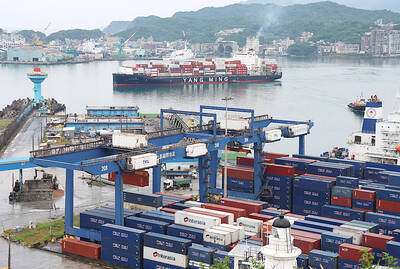
Taiwan’s exports soared 56 percent year-on-year to an all-time high of US$64.05 billion last month, propelled by surging global demand for artificial intelligence (AI), high-performance computing and cloud service infrastructure, the Ministry of Finance said yesterday. Department of Statistics Director-General Beatrice Tsai (蔡美娜) called the figure an unexpected upside surprise, citing a wave of technology orders from overseas customers alongside the usual year-end shopping season for technology products. Growth is likely to remain strong this month, she said, projecting a 40 percent to 45 percent expansion on an annual basis. The outperformance could prompt the Directorate-General of Budget, Accounting and
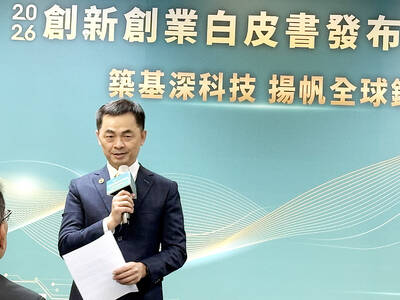
BARRIERS: Gudeng’s chairman said it was unlikely that the US could replicate Taiwan’s science parks in Arizona, given its strict immigration policies and cultural differences Gudeng Precision Industrial Co (家登), which supplies wafer pods to the world’s major semiconductor firms, yesterday said it is in no rush to set up production in the US due to high costs. The company supplies its customers through a warehouse in Arizona jointly operated by TSS Holdings Ltd (德鑫控股), a joint holding of Gudeng and 17 Taiwanese firms in the semiconductor supply chain, including specialty plastic compounds producer Nytex Composites Co (耐特) and automated material handling system supplier Symtek Automation Asia Co (迅得). While the company has long been exploring the feasibility of setting up production in the US to address

OPTION: Uber said it could provide higher pay for batch trips, if incentives for batching is not removed entirely, as the latter would force it to pass on the costs to consumers Uber Technologies Inc yesterday warned that proposed restrictions on batching orders and minimum wages could prompt a NT$20 delivery fee increase in Taiwan, as lower efficiency would drive up costs. Uber CEO Dara Khosrowshahi made the remarks yesterday during his visit to Taiwan. He is on a multileg trip to the region, which includes stops in South Korea and Japan. His visit coincided the release last month of the Ministry of Labor’s draft bill on the delivery sector, which aims to safeguard delivery workers’ rights and improve their welfare. The ministry set the minimum pay for local food delivery drivers at


 RSS
RSS