


Taiwan is set to surpass South Korea this year in terms of wealth for the first time in more than two decades, marking a shift in Asia’s economic ranks made possible by the ascent of Taiwan Semiconductor Manufacturing Co (TSMC, 台積電).
According to the latest forecasts released on Thursday by the central bank, Taiwan’s GDP is expected to expand 4.55 percent this year, a further upward revision from the 4.45 percent estimate made by the statistics bureau last month.
The growth trajectory puts Taiwan on track to exceed South Korea’s GDP per capita — a key measure of living standards — a year earlier than predicted by the IMF in April. While both are ahead of Japan, Taiwan with this year’s projected GDP per capita of about US$38,000 remains less than half the level of Singapore.
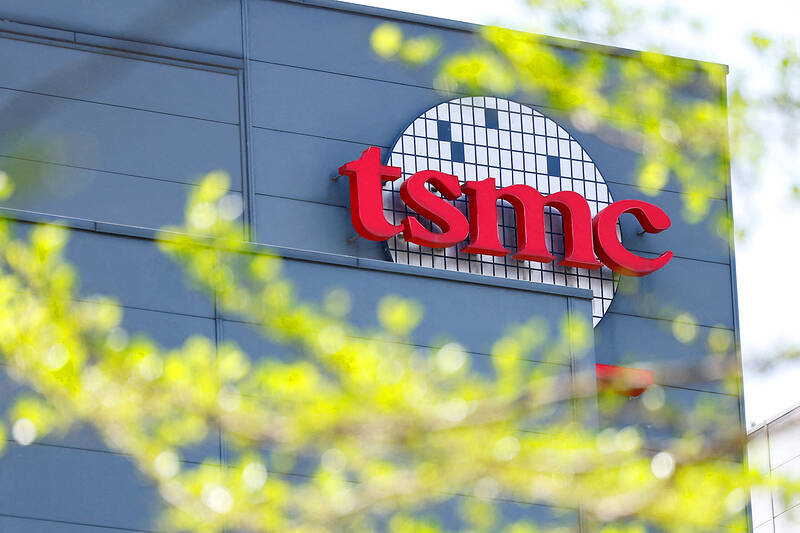
Photo: Ann Wang, REUTERS
Although skewed by the New Taiwan dollar’s surge against the US dollar, Asia’s new pecking order offers another glimpse into how a global spending boom around artificial intelligence (AI) has transformed the economic fortunes of the nation of 23 million people.
Taiwan saw its economy stagnate for decades after key manufacturers started to depart for China to take advantage of cheaper costs there starting in the late 1980s. However, pandemic-era chip shortages vaulted its firms into global prominence, when state leaders and executives from the US to Europe scrambled to secure the semiconductors they needed to keep their economies humming.
The advent of ChatGPT then turbocharged that growth for TSMC and others like Foxconn Technology Group (富士康科技集團), which together assemble the majority of the world’s most advanced chips and servers essential to the development of AI. By contrast, Samsung Electronics Co, a conglomerate whose revenue is equivalent to about 11 percent of South Korea’s economy, has been struggling to catch up.
“South Korea’s economy spans a wide range of industries, including struggling sectors like petrochemicals, while Taiwan is more concentrated in the tech sector and has benefited more from the global AI boom. With Korea’s potential growth rate slipping due to aging and other structural issues, the trend may continue rather than prove temporary,” Bloomberg economist Hyosung Kwon said.
Global demand for high-end tech products from Taiwan and South Korea has kept them both relatively immune to the sweeping US tariffs imposed by US President Donald Trump.
Whereas South Korea’s economy has stagnated, expanding less than 1 percent from a year earlier in the second quarter, Taiwan clocked one of the world’s quickest growth rates with a gain of more than 8 percent.
The Bank of Korea projects full-year growth at 0.9 percent.
Taiwan’s dominance in products underpinning AI development has created boom times for its exports, which exceeded those of South Korea for the first time last month.
That milestone is especially telling given how South Korea’s population and overall GDP are more than double Taiwan’s size.
The rapid appreciation of the NT dollar this year is another factor that helps explain why the country’s GDP per capita has caught up so fast.
It is the best performer among Asian currencies this year with a gain of about 9 percent, after exporters rushed to sell the greenback in part on expectations the authorities would allow it to strengthen to help reach a trade deal with the Trump administration. The South Korean won has gained about 6 percent against the US dollar so far this year.
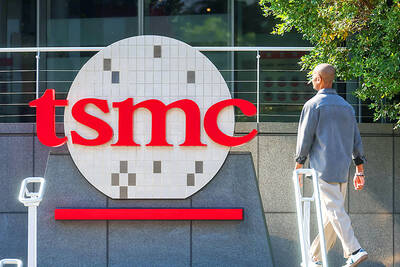
Shares of contract chipmaker Taiwan Semiconductor Manufacturing Co (TSMC, 台積電) came under pressure yesterday after a report that Apple Inc is looking to shift some orders from the Taiwanese company to Intel Corp. TSMC shares fell NT$55, or 2.4 percent, to close at NT$2,235 on the local main board, Taiwan Stock Exchange data showed. Despite the losses, TSMC is expected to continue to benefit from sound fundamentals, as it maintains a lead over its peers in high-end process development, analysts said. “The selling was a knee-jerk reaction to an Intel-Apple report over the weekend,” Mega International Investment Services Corp (兆豐國際投顧) analyst Alex Huang
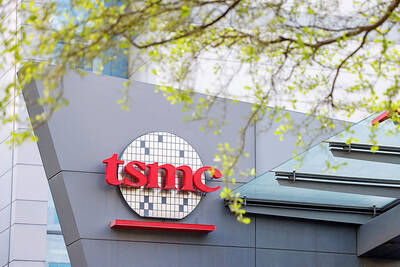
Taiwan Semiconductor Manufacturing Co (TSMC, 台積電) is expected to remain Apple Inc’s primary chip manufacturing partner despite reports that Apple could shift some orders to Intel Corp, industry experts said yesterday. The comments came after The Wall Street Journal reported on Friday that Apple and Intel had reached a preliminary agreement following more than a year of negotiations for Intel to manufacture some chips for Apple devices. Taiwan Institute of Economic Research (台灣經濟研究院) economist Arisa Liu (劉佩真) said TSMC’s advanced packaging technologies, including integrated fan-out and chip-on-wafer-on-substrate, remain critical to the performance of Apple’s A-series and M-series chips. She said Intel and Samsung
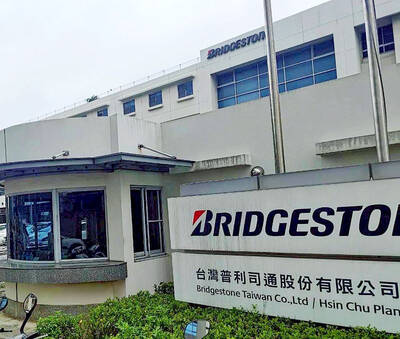
TRANSITION: With the closure, the company would reorganize its Taiwanese unit to a sales and service-focused model, Bridgestone said Bridgestone Corp yesterday announced it would cease manufacturing operations at its tire plant in Hsinchu County’s Hukou Township (湖口), affecting more than 500 workers. Bridgestone Taiwan Co (台灣普利司通) said in a statement that the decision was based on the Tokyo-based tire maker’s adjustments to its global operational strategy and long-term market development considerations. The Taiwanese unit would be reorganized as part of the closure, effective yesterday, and all related production activities would be concluded, the statement said. Under the plan, Bridgestone would continue to deepen its presence in the Taiwanese market, while transitioning to a sales and service-focused business model, it added. The Hsinchu
Taiwan Semiconductor Manufacturing Co (TSMC, 台積電) has approved a capital budget of US$31.28 billion for production expansion to meet long-term development needs during the artificial intelligence (AI) boom. The company’s board meeting yesterday approved the capital appropriation plan for purposes such as the installation of advanced technology capacity and fab construction, the world’s largest contract chipmaker said in a statement. At an earnings conference last month, TSMC forecast that its capital expenditure for this year would be at the higher end of the US$52 billion to US$56 billion range it forecast in January in response to robust demand for 5G, AI and


 RSS
RSS