


Best known abroad for its herring, deep-fried croquettes and sickly sweet stroopwafels, it is fair to say the Netherlands has not historically been world-renowned for its cuisine.
Yet for the first time, a Michelin-starred restaurant in Amsterdam has been voted the world’s best on TripAdvisor, further proof the food scene in the country is on the rise, its head chef said.
With the exception of Irish oysters and Japanese wagyu, everything on the menu at the Bougainville restaurant is local Dutch produce, chef Tim Golsteijn said in his bustling kitchen just off Amsterdam’s main square.
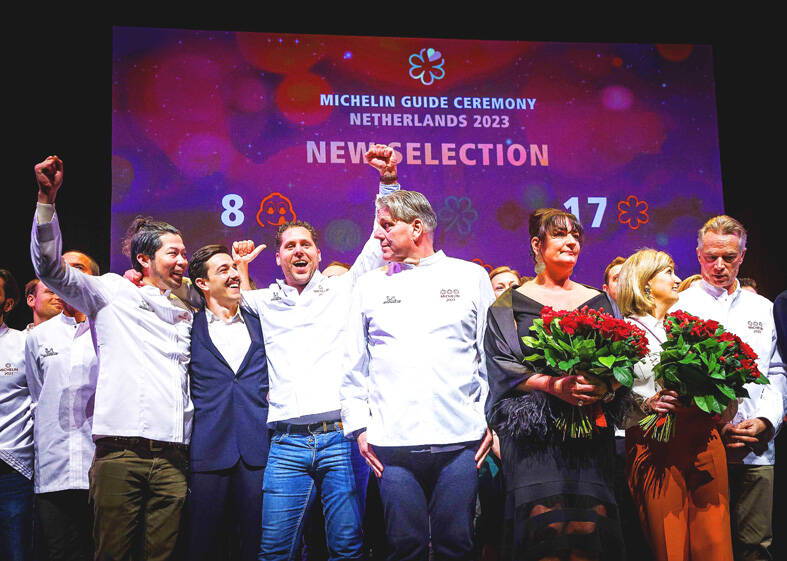
Photo: EPA-EFE
“Dutch gastronomy has really been growing in the past 10 years, also because Amsterdam is becoming more and more of a big international city,” said the 36-year-old, who was born and raised in the capital and describes himself as “100 percent Dutchie.”
“You can’t compare it to London or New York or Tokyo, but we are getting there,” he said, as his sous chefs chopped, sliced and stirred ready for another busy dinner service.
In 1958, there were only eight Michelin-starred restaurants in the whole country, but now the Netherlands has forced its way into the world’s top 10, with 123 restaurants boasting a coveted star.
Golsteijn uses North Sea fish, local lobster and Dutch lamb, but also draws on culinary inspiration from around the world — reflecting the Dutch people’s history as seafarers and colonizers.
“From ages ago, we were travelers ... we came back with spices, with coffee, with chocolate. We took that into our food culture,” he said.
However, he is also taking down-to-earth Dutch staples and elevating them to Michelin-star level.
For example, the restaurant serves kibbeling, a humble, deep-fried fish bite snack found in beach cafes around the country, but with sea bass instead of the usual cod belly.
Dutch food has an undeserved reputation, said Isabelle Nelis, who runs culinary tours around Amsterdam.
“Most people think about heavy dishes like pea soup, or the dishes that we do in winter with the mashed potato, cabbage, sausage, but there is so much more,” she said.
It is not just food. Land reclaimed from the sea in the Netherlands contains excellent minerals for wine-producing grapes and there is even a burgeoning champagne industry, Nelis said.
The food scene has changed greatly over the years and is now “alive and buzzing,” she said, helped by the cosmopolitan nature of melting-pot Amsterdam.
Restaurants are serving about 180 different types of cuisine in Amsterdam, she said, adding: “You can eat in every nationality” in the world.
Eric Toner, the owner of the Bougainville, said the quality of the Dutch food scene had changed beyond recognition in the past few decades.
“When I was young, decades ago, it was maybe one or two restaurants with a star in Amsterdam. Maybe six or 10 in the whole of the Netherlands. Now we have 24 or 26 in Amsterdam alone,” he said.
As a child growing up in the Netherlands, “we ate a lot of meatballs, potatoes, vegetables and a lot of gravy over it. That was a normal dinner.”
Yet the next generation has much more refined tastes, helped by a greater choice of cuisines from around the world, he said.
“We have gone from a normal small country when everyone eats a big potato pan on the table ... to an international food culture,” he said.
The award made headlines around the Netherlands, but Toner and Golsteijn acknowledge that the TripAdvisor award, based on customer reviews rather than professional critics, does not catapult their restaurant to the highest echelons of global gastronomy.
For Toner, it is all about meeting customer expectations.
“I was completely flabbergasted. It’s an honor to win every prize,” he said. “But I know also the downside of it. Expectations go up and when I say: ‘What is the best restaurant in the world?’ I would not say my restaurant, I would say a three-star restaurant.”
The restaurant, within a hotel overlooking the Dam Square in Amsterdam, offers a five-course menu priced at 130 euros (US$140).
For Nelis, the Dutch should take more pride in their produce.
“We tend to complain a lot. We complain when it’s raining. When it’s nice weather, we say it’s too hot, and that’s the same with the food,” she said. “We don’t pat ourselves on the back enough.”
After several years flying high as Asia’s best Nvidia Corp proxy, Taiwan Semiconductor Manufacturing Co (TSMC, 台積電) is increasingly vying with other artificial intelligence (AI) stocks for investor attention. Stock traders are chasing a wider array of beneficiaries as mainstream usage of AI creates demand for hardware beyond the most-advanced chips TSMC makes for Nvidia. Subthemes from the deepening memory crunch to advances in robotics are also luring bids. At the same time, investment caps on single stocks are pushing funds to diversify, while retail investors long familiar with TSMC through its US depositary receipts are being offered a broader set of
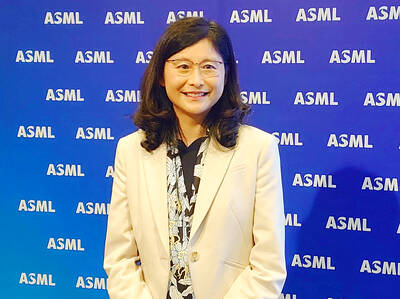
Netherlands-based semiconductor equipment supplier ASML Holding NV yesterday said that it is planning to hire an additional 1,000 people in Taiwan this year in response to growing demand from clients. ASML had previously planned to recruit 600 people this year, but that the plan has been adjusted upward, ASML vice president and ASML Taiwan general manager Grace Wang (汪佳慧) told reporters. ASML has a workforce of more than 4,500 in Taiwan, accounting for about 10 percent of its global total, Wang said. This year’s recruitment campaign would focus on adding people in the customer support, manufacturing and supply chain domains to assist ASML
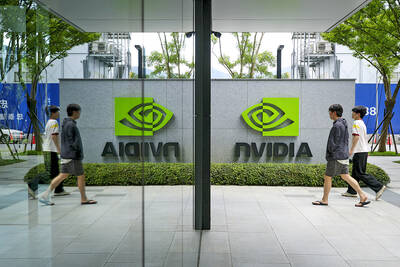
UNDER MICROSCOPE: Taiwan detained three people who allegedly conspired to buy servers in Taiwan and export them using fraudulent documentation, prosecutors said Nvidia Corp chief executive officer Jensen Huang (黃仁勳) on Saturday urged Super Micro Computer Inc to tighten up on compliance after Taiwan detained three people this week for allegedly making fraudulent declarations about artificial intelligence (AI) servers made by its US partner. The development marked the nation’s first crackdown on semiconductor smuggling, which grew after the US slapped restrictions on exports of high-end chips such as Nvidia AI accelerators to China. Nvidia is “rigorous” in explaining regulations to all of its partners, Huang told reporters after arriving in Taipei. “Ultimately Super Micro has to run their own company,” he said in response to
Nvidia Corp yesterday announced that CEO Jensen Huang (黃仁勳) would attend an employee meeting in Taipei tomorrow to celebrate the launch of the company’s Taiwan headquarters project. Huang would attend a gathering at the site of Nvidia’s planned headquarters in Beitou Shilin Technology Park (北投士林科技園區), the company said in a statement. After arriving in Taiwan on Saturday last week, Huang told reporters that he plans to meet with Quanta Computer Inc (廣達) chairman Barry Lam (林百里) and Taiwan Semiconductor Manufacturing Co (TSMC, 台積電) chairman C.C. Wei (魏哲家), and would attend the groundbreaking ceremony for Nvidia’s Taiwan headquarters tomorrow. Nvidia has not yet applied


 RSS
RSS