


Yuen Foong Yu Consumer Products Co (永豐餘消費品實業) has pledged to invest NT$1.9 billion (US$60.96 million) in Taiwan to expand its capacity to manufacture toilet paper, inner layers for masks and cleaning products, the Ministry of Economic Affairs said on Friday.
The company has gained approval from the InvesTaiwan Service Center to participate in a government incentive program as it is planning to build a new factory in Taichung’s Cingshui District (清水) and install smart production lines at its plant in Taoyuan’s Yangmei District (楊梅), the ministry said.
Yuen Foong Yu, a unit of YFY Inc (永豐餘控股), sells its products in Taiwan and China. The company is the largest household paper maker in Taiwan, owning the brands Mayflower, Delight and Tender. It also sells kitchen paper towels and interfold tissue under a Mayflower sub-brand in China.
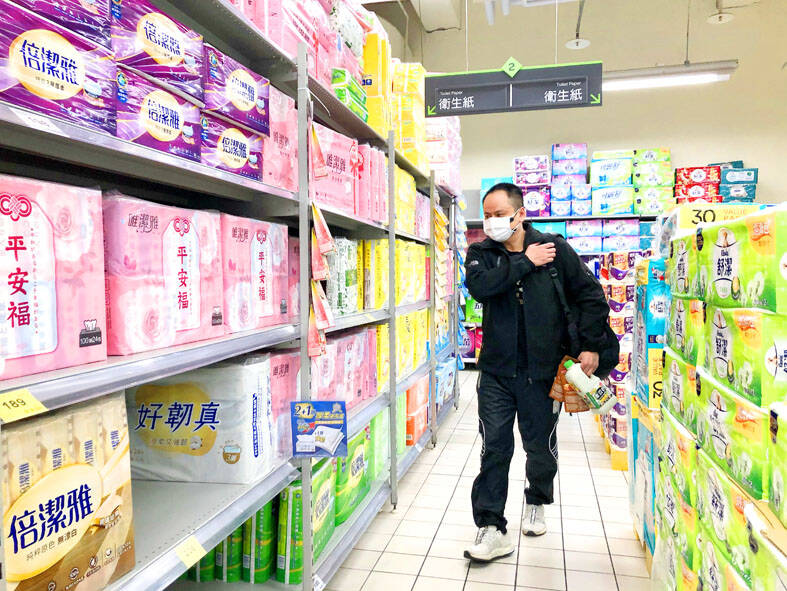
Photo: Peter Lo, Taipei Times
The firm has in the past few years also made inroads into the high gross margin cleaning product segment through its natural cleaning product brands Fresh Sense and Orange House in the two countries.
Apart from meeting growing consumer demand through the construction of new manufacturing facilities, the company also aims to be more environmentally friendly, the ministry said, adding that the new Cingshui plant would have solar power generation systems installed on its roof.
The company is committed to better waste management at its plants to address sustainable production, and plans to convert recycled materials and surplus materials into alternative fuels for boilers to ensure that resources are reused effectively, the ministry said.
The company also proposed increasing the reuse rate of recycled water and build paper recycling systems at its plants, it added.
Yuen Foong Yu posted revenue of NT$7.39 billion in the first three quarters of this year, up from NT$7.25 billion a year earlier, while net profit fell to NT$552.48 million, from NT$832.04 million. Earnings per share were NT$2.07 in the first three quarters, down from NT$3.39 a year earlier, company data showed.
Proposed investments by sheet metal producer Yeong Jye Co (永傑空調機械) and Primo Biotechnology Co (普瑞默生物科技) were also approved by the InvesTaiwan Service Center, as the two firms are planning to construct new manufacturing facilities, the ministry said.
The Invest in Taiwan initiative has to date attracted 1,279 companies to invest more than NT$1.82 trillion and create 140,758 local jobs, the ministry added.
Shares of contract chipmaker Taiwan Semiconductor Manufacturing Co (TSMC, 台積電) came under pressure yesterday after a report that Apple Inc is looking to shift some orders from the Taiwanese company to Intel Corp. TSMC shares fell NT$55, or 2.4 percent, to close at NT$2,235 on the local main board, Taiwan Stock Exchange data showed. Despite the losses, TSMC is expected to continue to benefit from sound fundamentals, as it maintains a lead over its peers in high-end process development, analysts said. “The selling was a knee-jerk reaction to an Intel-Apple report over the weekend,” Mega International Investment Services Corp (兆豐國際投顧) analyst Alex Huang
Taiwan Semiconductor Manufacturing Co (TSMC, 台積電) is expected to remain Apple Inc’s primary chip manufacturing partner despite reports that Apple could shift some orders to Intel Corp, industry experts said yesterday. The comments came after The Wall Street Journal reported on Friday that Apple and Intel had reached a preliminary agreement following more than a year of negotiations for Intel to manufacture some chips for Apple devices. Taiwan Institute of Economic Research (台灣經濟研究院) economist Arisa Liu (劉佩真) said TSMC’s advanced packaging technologies, including integrated fan-out and chip-on-wafer-on-substrate, remain critical to the performance of Apple’s A-series and M-series chips. She said Intel and Samsung
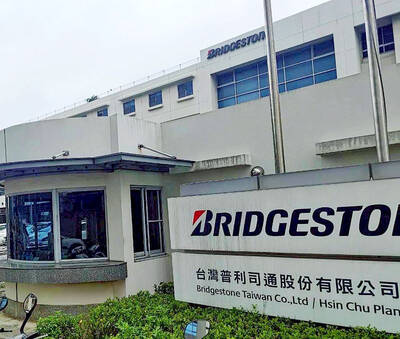
TRANSITION: With the closure, the company would reorganize its Taiwanese unit to a sales and service-focused model, Bridgestone said Bridgestone Corp yesterday announced it would cease manufacturing operations at its tire plant in Hsinchu County’s Hukou Township (湖口), affecting more than 500 workers. Bridgestone Taiwan Co (台灣普利司通) said in a statement that the decision was based on the Tokyo-based tire maker’s adjustments to its global operational strategy and long-term market development considerations. The Taiwanese unit would be reorganized as part of the closure, effective yesterday, and all related production activities would be concluded, the statement said. Under the plan, Bridgestone would continue to deepen its presence in the Taiwanese market, while transitioning to a sales and service-focused business model, it added. The Hsinchu
Taiwan Semiconductor Manufacturing Co (TSMC, 台積電) has approved a capital budget of US$31.28 billion for production expansion to meet long-term development needs during the artificial intelligence (AI) boom. The company’s board meeting yesterday approved the capital appropriation plan for purposes such as the installation of advanced technology capacity and fab construction, the world’s largest contract chipmaker said in a statement. At an earnings conference last month, TSMC forecast that its capital expenditure for this year would be at the higher end of the US$52 billion to US$56 billion range it forecast in January in response to robust demand for 5G, AI and


 RSS
RSS