


DRAM chipmaker Nanya Technology Corp (南亞科技) yesterday reported that net profit inched up 0.4 percent last quarter, as foreign-exchange gains helped cushion the effect of flagging consumer electronics demand amid high inflation and COVID-19 lockdowns in China.
Net profit rose to NT$6.57 billion (US$220.3 million) from NT$6.55 billion in the first quarter, or earnings per share of NT$2.12 from NT$2.11 in the previous quarter.
While operating income last quarter contracted 14.3 percent sequentially to NT$5.36 billion, net income grew mainly due to non-operating income of NT$1.74 billion, more than half of which came from foreign-exchange gains, the company said.

Photo: Grace Hung, Taipei Times
Nanya Technology expects a rough quarter ahead amid increasing inflation worldwide and flagging consumer confidence, as well as uncertainty about production resumption in China.
China’s “zero COVID” policy has severely affected consumer spending in the world’s biggest economy and rippled through electronic supply chains there, Nanya Technology said.
“The third quarter will be a challenging period. The third quarter is usually a high season, but this year, it is unclear whether there would be a seasonal effect,” Nanya Technology president Lee Pei-ing (李培瑛) told an online news briefing yesterday.
“Demand for [DRAM] is dwindling in the short term,” Lee said.
Weak demand for DRAM chips for consumer electronics, mainly smartphones and notebook computers, would ultimately spread to memory chips used in servers, as people turn conservative about most products due to macroeconomic uncertainties, he said.
Any recovery in DRAM chip demand would hinge on improvements in global inflation, production resumption in China and economic stimulus measures from governments around the world, Lee said.
The average selling price is expected to dip further this quarter following a mid-single-digit percentage sequential decline last quarter on lingering impact from global inflation as Russia’s invasion of Ukraine led to surges in crude oil and natural gas prices, Lee said.
Gross margin is also under mounting pressure and likely to trend down this quarter from 44.1 percent in the quarter ending June 30, due to rising costs of raw materials, manufacturing equipment and electricity rate hikes of 15 percent, Lee said.
Foreign-exchange gains lifted gross margin by 0.2 percentage points last quarter from 43.9 percent in the first quarter, Lee said, but added that it is hard to predict how the market would move this quarter.
Major memorychip inventories rose last quarter and could continue rising in the second half of the year given an unfavorable external environment, he said.
Nanya Technology said it was sticking to its planned capital expenditure of NT$28.4 billion for this year, but delays in equipment delivery might trim the spending by about 10 percent.


Taiwan’s foreign exchange reserves fell below the US$600 billion mark at the end of last month, with the central bank reporting a total of US$596.89 billion — a decline of US$8.6 billion from February — ending a three-month streak of increases. The central bank attributed the drop to a combination of factors such as outflows by foreign institutional investors, currency fluctuations and its own market interventions. “The large-scale outflows disrupted the balance of supply and demand in the foreign exchange market, prompting the central bank to intervene repeatedly by selling US dollars to stabilize the local currency,” Department of Foreign

Intel Corp is joining Elon Musk’s long-shot effort to develop semiconductors for Tesla Inc, Space Exploration Technologies Corp and xAI, marking a surprising twist in the chipmaker’s comeback bid. Intel would help the Terafab project “refactor” the technology in a chip factory, the company said on Tuesday in a post on X, Musk’s social media platform. That is a stage in the development process that typically helps make chips more powerful or reliable. The chipmaker’s shares jumped 4.2 percent to US$52.91 in New York trading on Tuesday. The Terafab project is a grand plan by Musk to eventually manufacture his own chips for
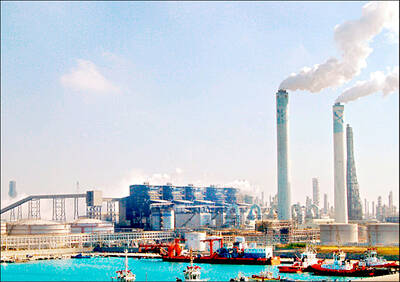
Taiwan Power Co (Taipower, 台電) yesterday said it plans to resume operations at two coal-fired power generators for three months to boost security of electricity supply as liquefied natural gas (LNG) supply risks are running high due to the Middle East conflict. The two coal-fired power generators are at Mailiao Power Plant in Yunlin County’s Mailiao Township (麥寮). The plant, operated by Formosa Plastics Group (台塑集團), supplied electricity to Taipower’s power grid until the end of last year. Taipower’s decision came about one month after Minister of Economic Affairs Kung Ming-hsin (龔明鑫) on March 10 said that the nation had no imminent

Some robotaxi passengers were left stranded in the middle of fast-moving traffic in a major Chinese city after their driverless vehicles stopped running, according to police and media reports on Wednesday. A preliminary investigation indicates more than 100 robotaxis came to a halt because of a “system malfunction,” police in the city of Wuhan said in a statement, without elaborating. No injuries were reported. One passenger told Chinese media that their robotaxi stopped after turning a corner. An instruction on a screen read: “Driving system malfunction. Staff are expected to arrive in 5 minutes.” After no one showed up, the passenger pushed


 RSS
RSS