


Five local insurers are considering raising new funds to bolster their financial strength as increasing compensation claims from COVID-19 insurance policyholders are reducing their profits, the Financial Supervisory Commission said on Thursday.
Five of the six insurers with the greatest COVID-19 insurance sales — Fubon Insurance Co (富邦產險), Cathay Century Insurance Co (國泰世紀產險), Tokio Marine Newa Insurance Corp (新安東京海上產險), CTBC Insurance Co (中國信託產險), Chung Kuo Insurance Co (兆豐產險) and Hotai Insurance Co (和泰產險) — are considering new plans to raise capital, the commission said.
Two insurers plan to increase capital once their risk-based capital — a ratio of an insurer’s total capital to its required risk-based capital, signaling a company’s strength — falls below 250 percent, Insurance Bureau Deputy Director-General Chang Yu-hui (張玉輝) told a news conference.
The commission requested that insurance companies maintain the ratio above 200 percent.
The commission forecast that the capital injections would not be carried out before the end of this month, given that the total amount of compensation to policyholder is still mounting, Chang said.
Meanwhile, 10 of all 12 insurance companies that sold COVID-19 policies expect that the compensation claims from policyholders would have a limited impact on their financial profile, Chang said.
A total of 2.96 million policies had been sold in the first five months of the year, with a total premium of NT$2.45 billion, while insurers had paid NT$4.04 billion in total to 115,400 policyholders, the commission’s data showed.
Meanwhile, more than 1 million COVID-19 policies have not been underwritten by insurers, the commission said, adding that it has asked the insurers to increase staffing to expedite the underwriting.
For the whole of last year, local insurers sold 9.1 million COVID-19 insurance policies and earned premium income of NT$7.15 billion, while paying compensation of NT$2.3 billion to policyholders, the data showed.
Cumulative compensation totaled NT$6.33 billion, comprising about 66 percent of cumulative premium income of NT$9.6 billion, the commission said.
The loss ratio is predicted to continue rising this month, it said.

SECOND-RATE: Models distilled from US products do not perform the same as the original and undo measures that ensure the systems are neutral, the US’ cable said The US Department of State has ordered a global push to bring attention to what it said are widespread efforts by Chinese companies, including artificial intelligence (AI) start-up DeepSeek (深度求索), to steal intellectual property from US AI labs, according to a diplomatic cable. The cable, dated Friday and sent to diplomatic and consular posts around the world, instructs diplomatic staff to speak to their foreign counterparts about “concerns over adversaries’ extraction and distillation of US AI models.” Distillation is the process of training smaller AI models using output from larger, more expensive ones to lower the costs of training a powerful new

Singapore-based ride-hailing and delivery giant Grab Holdings’ planned acquisition of Foodpanda’s Taiwan operations has yet to enter the formal review stage, as regulators await supplementary documents, the Fair Trade Commission (FTC) said yesterday. Acting FTC Chairman Chen Chih-min (陳志民) told the legislature’s Economics Committee that although Grab submitted its application on March 27, the case has not been officially accepted because required materials remain incomplete. Once the filing is finalized, the FTC would launch a formal probe into the deal, focusing on issues such as cross-shareholding and potential restrictions on market competition, Chen told lawmakers. Grab last month announced that it would acquire
Shares of Taiwan Semiconductor Manufacturing Co (TSMC, 台積電) have repeatedly hit new highs, but an equity analyst said the stock’s valuation remains within a reasonable range and any pullback would likely be technical. The contract chipmaker’s historical price-to-earnings (P/E) ratio has ranged between 20 and 30, Cathay Futures Consultant Co (國泰證期) analyst Tsai Ming-han (蔡明翰) told Central News Agency. With market consensus projecting that TSMC would post earnings per share of about NT$100 (US$3.17) this year, supported by strong global demand for artificial intelligence (AI) applications, and the stock currently trading at a P/E ratio of below 25, Tsai said the valuation
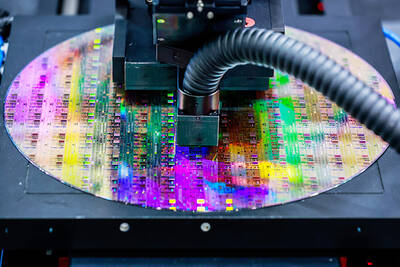
The artificial intelligence (AI) boom has triggered a seismic reshuffling of global equity markets, with Taiwan and South Korea muscling past European nations one by one. With its stock market now valued at nearly US$4.3 trillion, Taiwan surpassed the UK, Europe’s biggest market, earlier this month, data compiled by Bloomberg showed. South Korea is about US$140 billion away from doing the same. The tech-heavy Asian markets have shot past Germany and France in the past seven months. The shift is largely down to massive gains in shares of three companies that provide essential hardware for AI: Taiwan Semiconductor Manufacturing Co (TSMC, 台積電),


 RSS
RSS