


China has rolled out a broad package of measures to support businesses and stimulate demand as it seeks to offset the damage from COVID-19 lockdowns on the world’s second-largest economy.
The 33-point package includes 140 billion yuan (US$21 billion) in additional tax rebates and 300 billion yuan in railway construction bonds, Xinhua news agency reported, citing a decision from a meeting of the State Council chaired by Chinese Premier Li Keqiang (李克強).
“Without a certain level of GDP growth, stable employment cannot be realized,” Li said. “One good thing is that we refrained from excessive money supply and mass stimulus in the past few years, and we still have policy tools in reserve.”
The additional tax cuts represent about 0.1 percent of China’s GDP last year and push the government’s total planned reduction in taxes this year to 2.64 trillion yuan — slightly more than the relief Beijing offered in 2020 when China was first hit by the COVID-19 pandemic.
Economists were cautious about whether the measures would provide a material boost to growth as China’s strict “zero COVID-19” policy causes major disruption to business activity.
Many economists expect that the government will not meet its annual GDP growth target of about 5.5 percent this year, with UBS Group AG the latest to downgrade its forecast to just 3 percent.
“We believe these measures will provide some help and alleviate the severity of the growth slowdown or even contraction, but we remain cautious about growth prospects for this year,” Nomura Holdings Ltd economists led by Lu Ting (陸挺) wrote in a note.
The State Council said the policies are intended to “stabilize” the economy and get it back onto its normal track. Authorities will improve policies to help supply chains function, ensure domestic cargo transport runs smoothly, and increase the number of domestic and international flights, it said.
Beijing is to extend an existing delay on companies’ social-insurance contributions to the end of the year and expand the measure to more sectors, according to the report, with those deferred payments expected to amount to 320 billion yuan.
A quota for loans aimed at small and medium-sized enterprises would be doubled, it said.
The State Council urged local governments to speed up spending, asking them to use the proceeds of special bonds by the end of August. The scope of the funds would also be expanded to include new technology-focused infrastructure.
To stimulate demand, the State Council said it would be up to cities to set their own support measures and relax restrictions on purchases of automobiles.
The nation is to launch a series of infrastructure projects in areas such as water, the renovation of old housing, energy security and underground piping, it said. It also plans to start a new round of rural road construction and renovation.
The State Council also said it would increase emergency loans to the civil aviation industry by 150 billion yuan and support the industry to issue bonds of 200 billion yuan.
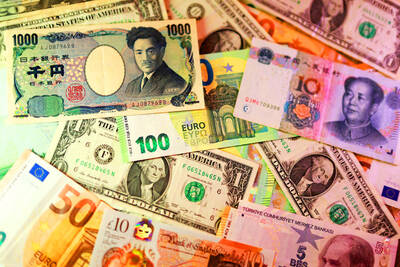
Taiwan’s foreign exchange reserves fell below the US$600 billion mark at the end of last month, with the central bank reporting a total of US$596.89 billion — a decline of US$8.6 billion from February — ending a three-month streak of increases. The central bank attributed the drop to a combination of factors such as outflows by foreign institutional investors, currency fluctuations and its own market interventions. “The large-scale outflows disrupted the balance of supply and demand in the foreign exchange market, prompting the central bank to intervene repeatedly by selling US dollars to stabilize the local currency,” Department of Foreign
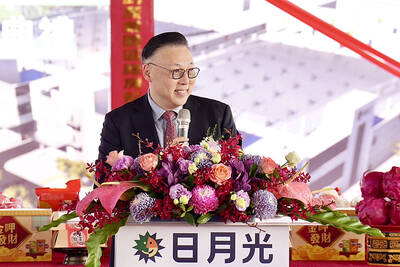
ENERGY ISSUES: The TSIA urged the government to increase natural gas and helium reserves to reduce the impact of the Middle East war on semiconductor supply stability Chip testing and packaging service provider ASE Technology Holding Co (日月光投控) yesterday said it planned to invest more than NT$100 billion (US$3.15 billion) in building a new advanced chip testing facility in Kaohsiung to keep up with customer demand driven by the artificial intelligence (AI) boom. That would be included in the company’s capital expenditure budget next year, ASE said. There is also room to raise this year’s capital spending budget from a record-high US$7 billion estimated three months ago, it added. ASE would have six factories under construction this year, another record-breaking number, ASE chief operating officer Tien Wu

The EU and US are nearing an agreement to coordinate on producing and securing critical minerals, part of a push to break reliance on Chinese supplies. The potential deal would create incentives, such as minimum prices, that could advantage non-Chinese suppliers, according to a draft of an “action plan” seen by Bloomberg. The EU and US would also cooperate on standards, investments and joint projects, as well as coordinate on any supply disruptions by countries like China. The two sides are additionally seeking other “like-minded partners” to join a multicountry accord to help create these new critical mineral supply chains, which feed into

For weeks now, the global tech industry has been waiting for a major artificial intelligence (AI) launch from DeepSeek (深度求索), seen as a benchmark for China’s progress in the fast-moving field. More than a year has passed since the start-up put Chinese AI on the map in early last year with a low-cost chatbot that performed at a similar level to US rivals. However, despite reports and rumors about its imminent release, DeepSeek’s next-generation “V4” model is nowhere in sight. Speculation is also swirling over the geopolitical implications of which computer chips were chosen to train and power the new


 RSS
RSS