


Wafer testing service provider Chunghwa Precision Test Technology Co (CHPT, 中華精測) yesterday reported that revenue last month rose 27.22 percent from February, but fell 7.86 percent to NT$323.78 million (US$11.28 million) from last year.
“A more diverse product mix and increased demand from customers in the US have mitigated the seasonal impact,” Chunghwa Precision Test said in a statement.
Revenue in the first quarter was NT$829.1 million, down 34.88 percent quarter-on-quarter, but up 2.18 percent year-on-year, it said.
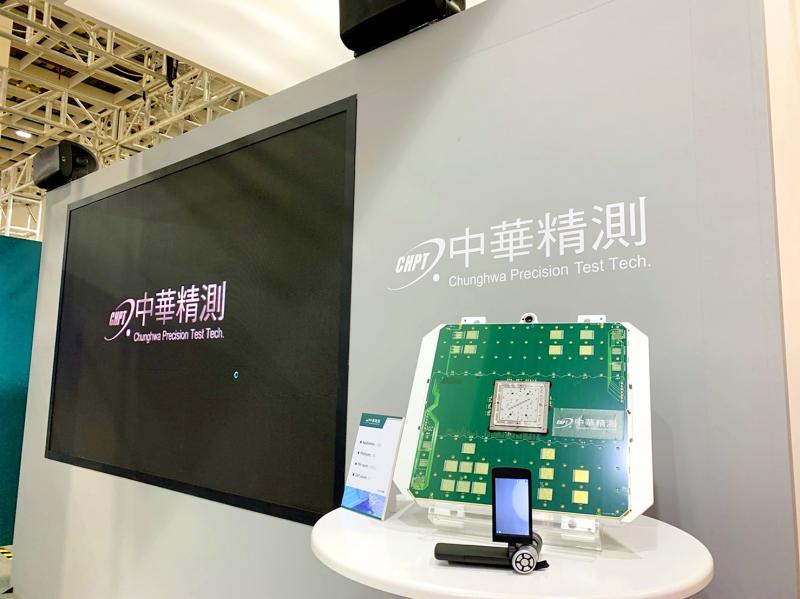
Photo: Grace Hung, Taipei Times
The firm has had robust demand for its vertical probe card business, which provides services for 5G products such as radio frequency (RF) chips and application processors for smartphones.
As Russia’s war against Ukraine continues, its effects on the global economy and supply chains are emerging, the company said.
However, Chunghwa Precision maintains a cautiously optimistic outlook on this year’s business prospects, as the global semiconductor industry continues to develop, it said, adding that it has confidence in its global deployment strategy and its full range of products, including a variety of probe cards with micro-electromechanical systems.
“With the advancement of 5G technology and the evolution of high-tech products — from smartphones to devices that use artificial intelligence [AI], such as self-driving cars and the metaverse — global chipmakers are moving toward the development of chips with more computing power and higher speeds,” the company said.
Chunghwa Precision said that the chips being developed by its US customers — including core, RF, high-performance computing, high-speed transmission and memory chips — would open up opportunities for its products and help it expand into new markets.
Revenue last year edged up 0.78 percent to a record NT$4.24 billion from NT$4.21 billion in 2020, while net profit fell 4.5 percent annually to NT$892 million, with earnings per share of NT$27.2, company data showed.
Chunghwa Precision’s board of directors in February proposed to distribute a cash dividend of NT$13.6 per share, representing a payout ratio of 50 percent, the highest in the company’s history.
Taiwan Semiconductor Manufacturing Co (TSMC, 台積電) yesterday reported record revenue of NT$416.975 billion (US$13.17 billion) for last month, putting the world’s largest contract chipmaker on track to set a record for quarterly revenue. Last month’s figure surpassed March’s record NT$415.19 billion and represented increases of 1.5 percent from April and 30.1 percent from a year earlier. For the first five months of the year, TSMC generated NT$1.96 trillion in revenue, up 30 percent year-on-year, it said in a statement. TSMC has forecast second-quarter revenue of between US$39 billion and US$40.2 billion, representing sequential growth of about 10 percent and year-on-year growth of about

Infineon Technologies AG is preparing to open its largest single investment, a 5 billion euro (US$5.8 billion) semiconductor factory built with the help of EU subsidies, as the bloc seeks to boost chip production. The power chip fab, which is an extension of the German company’s Dresden campus, is scheduled to open on July 2, Infineon chief operating officer Alexander Gorski said this week at the site. The project is a major recipient of EU Chips Act funds, receiving about 1 billion euros in subsidies. The new plant represents a rare success for the bloc’s flagship semiconductor law, which was drawn up during
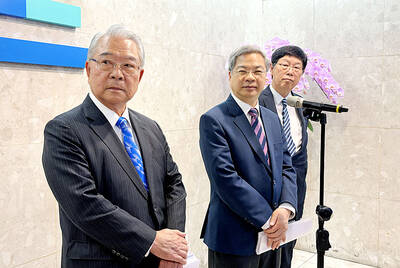
PATENT PROBE: US lawmakers called for a ban on imports of chips made by TSMC if they are found to infringe on US patents, with a preliminary ruling expected soon Minister of Economic Affairs Kung Ming-hsin (龔明鑫) yesterday expressed confidence in Taiwan Semiconductor Manufacturing Co’s (TSMC, 台積電) compliance with patent regulations after reports linked the company to a patent infringement lawsuit in the US. US Representative Ryan Zinke, and US senators Tim Sheehy, Roger Marshall and Bernie Moreno urged the US International Trade Commission in a May 22 letter to ban imports of chips made by TSMC if they are found to infringe on US patents, Axios reported on Wednesday. An administrative law judge is expected to issue a preliminary ruling this month, with the commission potentially making a final decision in
Taiwan remained the sixth-largest net creditor nation in the world last year, despite a fall of more than 10 percent in its net international investment position (NIIP) over the year, the central bank said yesterday. The NIIP is the difference between a country’s external financial assets and its external financial liabilities. Taiwan’s external financial assets hit US$3.27 trillion at the end of last year, up US$275.75 billion or 9.2 percent from a year earlier, the central bank said in its annual NIIP report. The growth largely reflected an increase in holdings of overseas marketable securities by residents in Taiwan, as well as a


 RSS
RSS