


Kaisa Group Holdings Ltd (佳兆業集團) and its Hong Kong-listed units were yesterday morning suspended from trading, a day after the Chinese developer flagged liquidity pressure and said it missed payments on wealth products it guaranteed.
The developer’s property management arm, Kaisa Prosperity Holdings Ltd (佳兆業物業集團); health operation, Kaisa Health Group Holdings Ltd (佳兆業健康集團); and construction equipment provider, Kaisa Capital Investment Holdings Ltd 佳兆業資本投資集團), were also halted. No reason was given for the suspension.
Kaisa’s shares and bonds tumbled on Thursday after the company said it has faced “unprecedented pressure on its liquidity” due to unfavorable factors such as credit rating downgrades and a challenging property market environment.
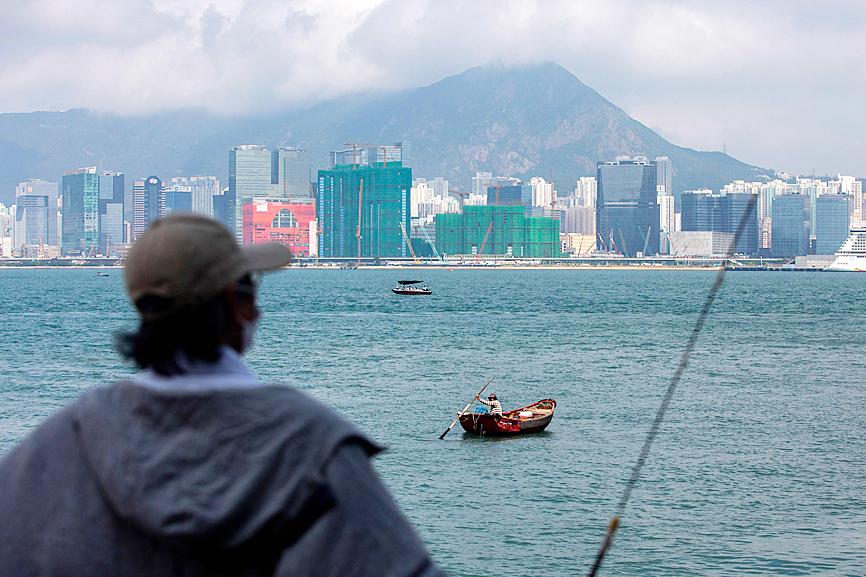
Photo: AFP
The missed payments on wealth management products (WMP) came two months after China Evergrande Group (恆大集團) faced protests from investors demanding money on similar overdue offerings.
Chinese developers are facing an intensifying cash crunch following a government campaign to reduce leverage in the industry. That has been made worse by a slump in home sales and prices as sentiment among homebuyers evaporates. A bond sell-off is making it prohibitively expensive for the nation’s builders to refinance maturing debt.
“Kaisa’s nonpayment of a guaranteed wealth management product may exacerbate the sector’s crisis,” Bloomberg Intelligence analyst Andrew Chan wrote in a note. It “suggests investors need to be aware not only of upcoming public debt payments, but of obligations such as WMPs which may not be widely known.”
Kaisa is “making all efforts” to resolve its liquidity problem such as by speeding up asset sales, it said in a statement on Thursday.
The company is seeking buyers for assets including Kaisa Prosperity, but no clear candidates had emerged, Reuters reported last week.
Kaisa became a focus of investor concern after it canceled meetings with investors last month, triggering doubts about its liquidity and sending its dollar bonds lower.
Downgrades by S&P Global Ratings and Fitch Ratings a few days later caused a fresh sell-off in the developer’s shares, which have tumbled more than 70 percent this year.
Kaisa’s dollar bonds stabilized yesterday morning after the previous day’s plunge. Its 6.5 percent note due on Dec. 7 rose US$0.004 to US$0.457, according to Bloomberg-compiled data.
Its shares dropped 15 percent on Thursday to the lowest price since its 2009 listing.
Kaisa Group holds 67 percent of Kaisa Prosperity and 43 percent of Kaisa Health. The developer’s founding chairman Kwok Ying Shing (郭英成) and his family hold about 25 percent of Kaisa and 57 percent of equipment firm Kaisa Capital.
The first Chinese builder to default on dollar bonds, Kaisa completed a debt restructuring in 2016. Since then, it has grown to become China’s third-largest US dollar debt borrower among developers with more than US$11 billion of bonds outstanding in the currency. It ranked as China’s 27th-biggest property developer by sales last month.
In addition to Kaisa’s US$400 million note due next month, it has US$2.8 billion of dollar bonds maturing next year, Bloomberg data show.
It is scheduled to pay an interim dividend of HK$0.04 per share on Dec. 17, which would cost the company about HK$281 million (US$36.1 million).

Japanese Prime Minister Sanae Takaichi has talked up the benefits of a weaker yen in a campaign speech, adopting a tone at odds with her finance ministry, which has refused to rule out any options to counter excessive foreign exchange volatility. Takaichi later softened her stance, saying she did not have a preference for the yen’s direction. “People say the weak yen is bad right now, but for export industries, it’s a major opportunity,” Takaichi said on Saturday at a rally for Liberal Democratic Party candidate Daishiro Yamagiwa in Kanagawa Prefecture ahead of a snap election on Sunday. “Whether it’s selling food or

CONCERNS: Tech companies investing in AI businesses that purchase their products have raised questions among investors that they are artificially propping up demand Nvidia Corp chief executive officer Jensen Huang (黃仁勳) on Saturday said that the company would be participating in OpenAI’s latest funding round, describing it as potentially “the largest investment we’ve ever made.” “We will invest a great deal of money,” Huang told reporters while visiting Taipei. “I believe in OpenAI. The work that they do is incredible. They’re one of the most consequential companies of our time.” Huang did not say exactly how much Nvidia might contribute, but described the investment as “huge.” “Let Sam announce how much he’s going to raise — it’s for him to decide,” Huang said, referring to OpenAI
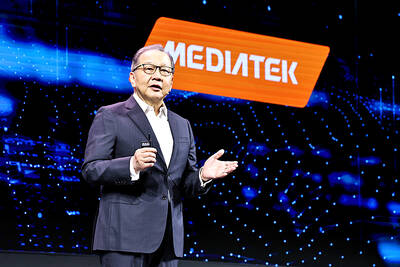
CHIP HANG-UP: Surging memorychip prices would deal a blow to smartphone sales this year, potentially hindering one of MediaTek’s biggest sources of revenue MediaTek Inc (聯發科), the world’s biggest smartphone chip designer, yesterday said its new artificial intelligence (AI) chips used in data centers are to account for 20 percent of its total revenue next year, as cloud service providers race to deploy AI infrastructure to meet voracious demand. MediaTek is believed to be developing tensor processing units for Google, which are used in AI applications. While it did not confirm such reports, MediaTek said its new application-specific IC (ASIC) business would be a new growth engine for the company. It again hiked its forecast for the addressable ASIC market to US$70 billion by 2028, compared

SIGNS OF STABILITY: With US tariff risks to GDP subsiding, reliable economic conditions are expected to reinforce the bank operating environment, Fitch said Fitch Ratings has upgraded the outlook for Taiwan’s banking sector to “neutral” from “deteriorating,” citing a tariff agreement with the US that has reduced uncertainty in Taiwan’s macroeconomic environment and stabilized financial performance. The US on Jan. 15 agreed to lower tariffs on Taiwanese goods from 20 percent to 15 percent, without stacking them on existing most-favored-nation rates, placing Taiwan on equal footing with major competitors such as Japan, South Korea and the EU. The deal also grants Taiwan-made semiconductors and related products most-favorable-nation treatment under Section 232 of the US Trade Expansion Act. Under the agreement, Taiwanese semiconductor, electronics manufacturing service, artificial


 RSS
RSS