


US President Joe Biden plans to nominate Jonathan Kanter as head of the US Department of Justice’s antitrust division, the White House said on Tuesday, the latest sign that the administration is preparing a broad crackdown on large technology companies.
Kanter, 47, who left one of the nation’s biggest law firms last year to start his own firm, is a long-time foe of Alphabet Inc’s Google, representing companies that have pushed antitrust enforcers to sue the search giant.
Kanter has “been a leading advocate and expert in the effort to promote strong and meaningful antitrust enforcement and competition policy,” the White House said in a statement.
If confirmed by the US Senate, Kanter would take over the antitrust division as it forges ahead with a monopoly lawsuit filed in October last year against Google and an investigation of Apple Inc over its App Store practices.
Kanter is the favored candidate of a faction of lawmakers and antitrust experts who say the US economy is plagued by monopoly power across industries, and that enforcers at the justice department and the Federal Trade Commission (FTC) need to more aggressively police mergers and anticompetitive conduct.
Kanter’s nomination follows Biden’s signing of a sweeping executive order designed to promote competition across industries, including measures such as restricting non-compete agreements for workers and allowing imports of prescription drugs from Canada.
Advocates of more aggressive antitrust enforcement cheered Kanter’s nomination.
Kanter is “absolutely the right person for this job at this moment,” said US representatives Jerrold Nadler and David Cicilline, who are respectively chair of the US House of Representatives Judiciary Committee and antitrust subcommittee.
“We look forward to working with the justice department as we advance legislation to lower prescription drug prices, prohibit anticompetitive conduct and mergers online, and modernize the antitrust laws,” they said in a statement.
US Senator Amy Klobuchar, the Democrat who chairs the Senate antitrust subcommittee, said Kanter’s “deep legal experience and history of advocating for aggressive action make him an excellent choice.”
US Senator Elizabeth Warren, also a Democrat, called it “tremendous news for workers and consumers.”
US Representative Pramila Jayapal, who authored a bill to force companies such as Google, Amazon.com Inc, Apple and Facebook Inc to divest some business lines, said Kanter’s nomination is “excellent news for workers, consumers, small businesses, and innovation across America.”
Sarah Miller, head of anti-monopoly group the American Economic Liberties Project, said Kanter was behind “successful legal arguments driving the major antitrust investigations into big tech.”
If confirmed, Kanter would become one of the top antitrust officials in the US, along with FTC Chairwoman Lina Khan.
Biden unexpectedly elevated Khan to run the FTC after she was confirmed by the US Senate as a commissioner last month. Khan, who was a Columbia Law School professor when she was appointed, is one of the most prominent advocates in the US for more forceful antitrust enforcement and breaking with the standard playbook for policing competition.
Kanter is closely aligned with Khan as well as Tim Wu, who was appointed as a White House adviser on technology and competition policy.
Unlike Khan, who needs a majority of the five-member FTC to take enforcement actions, Kanter would have the sole authority to file lawsuits seeking to stop mergers and challenge companies over practices that harm competition.
While Kanter was under consideration by Biden, supporters posted photographs on social media of coffee mugs emblazoned with “Wu & Khan & Kanter.”
Kanter, who also previously worked as an antitrust lawyer at the FTC, left Paul, Weiss, Rifkind, Wharton & Garrison LLP last year to found Kanter Law Group.
During the administration of former US president Barack Obama, Microsoft Corp engaged him to push antitrust officials to take action against Google. More recently, he represented clients, including Yelp Inc, who urged the justice department to sue Google last year.
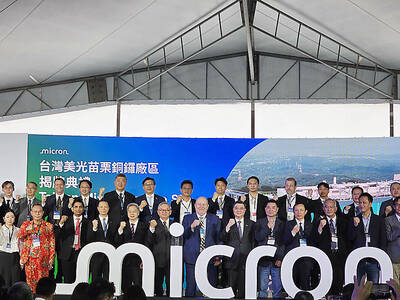
UNPRECEDENTED PACE: Micron Technology has announced plans to expand manufacturing capabilities with the acquisition of a new chip plant in Miaoli Micron Technology Inc unveiled a newly acquired chip plant in Miaoli County yesterday, as the company expands capacity to meet growing demand for advanced DRAM chips, including high-bandwidth memory chips amid the artificial intelligence boom. The plant in Miaoli County’s Tongluo Township (銅鑼), which Micron acquired from Powerchip Semiconductor Manufacturing Corp (力積電) for US$1.8 billion, is expected to make a sizeable capacity contribution to the company from fiscal 2028, the company said in a statement. It would be an extended production site of Micron’s large-scale manufacturing hub in Taichung, the company said. As the global semiconductor industry is racing to reach US$1 trillion

Singapore-based ride-hailing and delivery giant Grab Holdings Ltd has applied for regulatory approval to acquire the Taiwan operations of Germany-based Delivery Hero SE's Foodpanda in a deal valued at about US$600 million. Grab submitted the filing to the Fair Trade Commission on Friday last week, with the transaction subject to regulatory review and approval, the company said in a statement yesterday. Its independent governance structure would help foster a healthy and competitive market in Taiwan if the deal is approved, Grab said. Grab, which is listed on the NASDAQ, said in the filing that US-based Uber Technologies Inc holds about 13 percent of

Taiwan’s food delivery market could undergo a major shift if Singapore-based Grab Holdings Ltd completes its planned acquisition of Delivery Hero SE’s Foodpanda business in Taiwan, industry experts said. Grab on Monday last week announced it would acquire Foodpanda’s Taiwan operations for US$600 million. The deal is expected to be finalized in the second half of this year, with Grab aiming to complete user migration to its platform by the first half of next year. A duopoly between Uber Eats and Foodpanda dominates Taiwan’s delivery market, a structure that has remained intact since the Fair Trade Commission (FTC) blocked Uber Technologies Inc’s
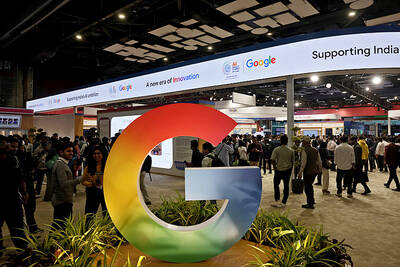
Memory chip stocks extended their losses yesterday after Alphabet Inc’s Google publicized research that could allow more efficient use of the storage needed for artificial intelligence (AI) development. SK Hynix Inc and Samsung Electronics Co, South Korean leaders in the market, fell more than 6 percent and about 5 percent respectively in Seoul. In the US, Micron Technology Inc, Western Digital Corp and Sandisk Corp slid more than 2 percent in pre-market trading, after they all closed lower on Wednesday. Memory companies have been on a tear in recent months as the rapid development of AI infrastructure triggered a spike in chip


 RSS
RSS