


EQUITIES
Semiconductors boost TAIEX
The TAIEX closed higher yesterday as large-cap semiconductor shares attracted buying sparked by an overnight rally in semiconductor shares on US markets caused by an acquisition deal. However, turnover remained thin, as market sentiment was hurt by concerns over possible technical resistance ahead of 13,000 points. Many investors were also waiting for comments on the US economy from the US Federal Reserve during a two-day policymaking meeting that was due to start later in the day, dealers said. The TAIEX ended up 57.83 points, or 0.45 percent, at 12,845.65, on turnover of NT$185.726 billion (US$6.32 billion). Foreign institutional investors bought a net NT$5.90 billion of shares on the main board, Taiwan Stock Exchange data showed.
CURRENCY
New Taiwan dollar soars
The New Taiwan dollar yesterday rose to its highest level against the US dollar in almost two-and-a-half years in the wake of continued fund inflows, dealers said. The local currency ended up NT$0.106, or 0.36 percent, at NT$29.380 against the US dollar, central bank data showed. The closing level was the highest since April 19, 2018, when the NT dollar ended at NT$29.340 against the greenback. A strong Chinese yuan also encouraged traders to pocket more of other regional currencies, including the NT dollar, dealers said. Taiwan Association of Machinery Industry chairman Alex Ko (柯拔希) urged the central bank to take action to keep the currency weak, or Taiwanese machinery exporters would lose their global competitive edge. The central bank is to hold its quarterly policymaking meeting tomorrow and the market has been awaiting comments on the foreign exchange market from Governor Yang Chin-long (楊金龍).
SEMICONDUCTORS
Local alliance formed
Local semiconductor equipment suppliers C Sung Manufacturing Ltd (志聖工業), Gallant Precision Machining Co (均豪精密) and Gallant Micro Machining Co (均華精密) yesterday said that they have formed an alliance to provide one-stop shop services and integrated solutions for customers. The alliance has set up its first office in Kaohsiung to cope with growing demand from chip testers and packagers, Gallant Precision said in a joint statement. The alliance also plans to build a new laboratory, or a new platform, to speed up product qualification, the statement said.
BUSINESS
Fewer firms plan bonuses
Fewer companies in Taiwan are willing to pay their employees mid-autumn bonuses this year, because of the economic effects of the COVID-19 pandemic, a survey released yesterday showed. Only 55.5 percent of employers said that they would distribute bonuses, compared with 60.2 percent last year, the online job bank yes123 said, citing its online polls. Among the companies planning to pay bonuses, the average amount would be 5 percent less from last year, at about NT$1,460, because of the adverse economic effects of the pandemic, the job bank said. Of those planning to issue bonuses, 35.9 percent would pay NT$800 to NT$1,200, 22.4 percent would pay NT$500 to NT$800 and 10 percent NT$1,500 to NT$2,000, the poll found. The survey was conducted from Aug. 26 to Tuesday last week and collected 933 valid responses.

DAMAGE REPORT: Global central banks are assessing war-driven inflation risks as the law of unintended consequences careens around the world, spiking oil prices Central banks from Washington to London and from Jakarta to Taipei are about to make their first assessments of economic damage after more than two weeks of conflict between the US and Iran. Decisions this week encompassing every member of the G7 and eight of the world’s 10 most-traded currency jurisdictions are likely to confirm to investors that the specter of a new inflation shock is already worrying enough to prompt heightened caution. The US Federal Reserve is widely expected to do exactly what everyone anticipated weeks ahead of its March 17-18 policy gathering: hold rates steady. The narrative surrounding that
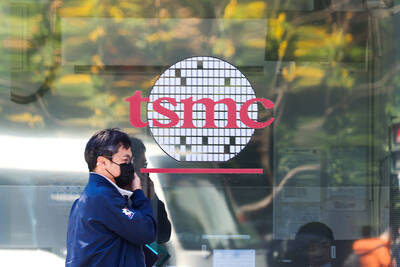
Taiwan Semiconductor Manufacturing Co’s (TSMC, 台積電) share of the global foundry market rose to almost 70 percent last year amid booming demand for artificial intelligence (AI), market information advisory firm TrendForce Corp (集邦科技) said on Thursday. The contract chipmaker posted US$122.54 billion in revenue, up 36.1 percent from a year earlier, accounting for 69.9 percent of the global market, TrendForce said. Its share was up from 64.4 percent in 2024, it said. TSMC’s closest rival, Samsung Electronics, was a distant second, posting US$12.63 billion in sales, down 3.9 percent from a year earlier, for a 7.2 percent share of the global market. In the

At a massive shipyard in North Vancouver, Canadian workers grind metal beams for a powerful new icebreaker crucial to cementing the country’s presence in the increasingly contested arctic. Icebreakers are specialized, expensive vessels able to navigate in the frozen far north. And “this is the crown jewel,” said Eddie Schehr, vice president of production at the Seaspan shipyard. For Canadian Prime Minister Mark Carney, who heads to Norway next Friday to observe arctic defense drills involving troops from 14 NATO states, Canada’s extreme north has emerged as a strategic priority. “Canada is and forever will be an Arctic nation,” he said ahead of

Chinese entrepreneur Frank Gao used to spend long hours running his social media accounts but now outsources the chore to artificial intelligence (AI) agent tool OpenClaw, which is taking China by storm despite official warnings over cybersecurity. OpenClaw, created in November by an Austrian coder, differs from bots such as ChatGPT because it can execute real-life tasks such as sending e-mails, organizing files or even booking flight tickets. “Since January, I’ve spent hours on the lobster every day,” Gao said in an interview, referring to OpenClaw’s red crustacean mascot. “We’re family.” After downloading OpenClaw, users connect it to artificial intelligence models of their


 RSS
RSS