


The number of people moving from Hong Kong and Macau to Taiwan and registering residency here increased 15 percent last year to 11,009, with many of them settling in Taipei or New Taipei City, property brokers said on Tuesday.
Citing Ministry of the Interior statistics, Great Home Realty Co (大家房屋) lead researcher Mandy Lang (郎美囡) said that 2,774 of them live in New Taipei City and 2,418 in Taipei.
The region has similar languages and cultural backgrounds, as well as shared eating habits, making such relocations easier, Lang said.
People have come from Hong Kong and Macau to study and work for many years, and pro-democracy activities in Hong Kong last year have added to the trend, she said.
New Taipei City topped the list of areas to settle in, followed by Taipei, Taoyuan, Taichung, Kaohsiung and Tainan, likely due to the local job market, Lang said.
Average home prices are NT$315,000 per ping (3.3m2) in New Taipei City, lower than Taipei’s NT$597,000 per ping, but higher than the national average of NT$247,000 per ping, a brokers’ tally showed.
Average home prices are NT$174,000 in Taoyuan, NT$181,000 in Taichung, NT$132,000 in Tainan and NT$167,000 in Kaohsiung, the brokers’ data showed.
The National Health Insurance’s coverage is another draw factor, Lang said.
Taiwan has lower immigration thresholds for people from Hong Kong and Macau than for people from other nations, H&B Realty Co (住商不動產) said.
Investment immigration requirements are NT$6 million for people from the two Chinese territories, much lower than NT$15 million for other nationalities, H&B said.
They can also seek to live in Taiwan as dependents of locals or as professionals, it said.

STRONG INTEREST: Analysts have pointed to optimism in TSMC’s growth prospects in the artificial intelligence era as the cause of the rising number of shareholders The number of people holding shares of chipmaker Taiwan Semiconductor Manufacturing Co (TSMC, 台積電) hit a new high last week despite a decline in its stock price, the Taiwan Depository and Clearing Corp (TDCC, 台灣集保) said. The number of TSMC shareholders rose to 2.46 million as of Friday, up 75,536 from a week earlier, TDCC data showed. The stock price fell 1.34 percent during the same week to close at NT$1,840 (US$57.55). The decline in TSMC’s share price resulted from volatility in global tech stocks, driven by rising international crude oil prices as the war against Iran continues. Dealers said
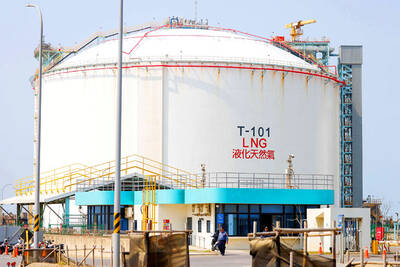
Taiwan’s natural gas supply remains stable through the end of May, despite rising concerns about potential disruptions to Qatari liquefied natural gas (LNG) supplies due to escalating conflicts in the Middle East, the Ministry of Economic Affairs said yesterday. The ministry in a statement said that Taiwan has completed preparations for natural gas supply and shipping schedules through the end of May. It has also made plans to increase natural gas imports from regions outside the Middle East in June to ensure a stable supply, it added. Taiwan sources natural gas from 14 countries and is not solely dependent on the Middle East,

China is clamping down on fertilizer exports to protect its domestic market, industry sources said, putting an additional strain on global markets that were already grappling with shortages caused by the US-Israeli war on Iran. China is among the largest fertilizer exporters — shipping more than US$13 billion of it last year — and it has a history of controlling exports to keep prices low for farmers. Shipments through the war-blocked Strait of Hormuz account for about one-third of the sea-borne supply. This month, Beijing banned exports of nitrogen-potassium fertilizer blends and certain phosphate varieties, sources said. The ban, which has not

Grab Holdings Ltd agreed to buy Delivery Hero SE’s Foodpanda operations in Taiwan for US$600 million, a deal that marks its first foray outside of its Southeast Asian base. The cash acquisition will allow Grab to expand into 21 cities across Taiwan, the Singapore-based ride-hailing and delivery company said in a statement yesterday. Grab expects the transaction to be completed in the second half, subject to regulatory approvals. The purchase will give Grab a presence on the island of about 23 million people, helping it to expand beyond its intensely competitive home market. Grab has seen growth slow dramatically as it takes


 RSS
RSS