


With the real interest rate still negative, the nation's central bank yesterday announced that it will raise the benchmark interest rate for the ninth straight quarter by 0.125 percentage points.
The decision to hike rates takes effect today, boosting the bank's rediscount rate to 2.625 percent, while lifting the secured accommodations rate and the unsecured loan rate to 3 percent and 4.875 percent respectively.
The authority has ratcheted up its benchmark interest rate by a cumulative 1.25 percentage points since October 2004.
"Despite the nation's sagging domestic demand and a mild increase in the consumer price index [CPI], the real interest rate is still lower than the neutral level and the bank's board of directors believes a fine-tuning approach [increasing the interest rate] is conducive to guarding against possible inflation," central bank governor Perng Fai-nan (
The central bank predicted that the CPI growth rate could be maintained at 1.5 percent this year, lower than the Directorate General of Budget, Accounting and Statistics' estimate of 1.8 percent, citing falling crude oil prices and a higher comparison base last year.
The bank's main concern for the moment is to steer the negative real interest rate -- the value of the prime rate minus the CPI -- back to a neutral level, Perng said.
Asked how closely the rate had approached the neutral level, Perng refused to elaborate, saying only that "it is moving closer to the neutral level step by step," leaving the door open for another rate hike in December.
"We'll monitor the CPI's fluctuations closely in the future to map out suitable monetary policies," Perng said.
The government's statistics agency predicted that the nation's economy will expand by 4.28 percent this year, up from last year's rate of 4.03 percent.
But domestic demand will only contribute 1.1 percentage points to the economic growth rate as private consumption has weakened dramatically as a result of the consumer loan crisis. Robust exports will account for the lion's share of 3.18 percentage points.
Chen Miao (
As a result, Chen saw further rate increases ahead.
He predicted another 0.125 percentage point increase in December on the basis of a better-than-expected business outlook and bullish external trade in the fourth quarter.
In addition, private consumption is expected to rebound by the end of the year, he added.
On the currency front, Perng expressed confidence in the New Taiwan dollar, saying that exchange rate movements against the greenback are stable, fluctuating between NT$31.3 and NT$33 to the US dollar.
The NT dollar yesterday closed down NT$0.034 at NT$32.992 against the US dollar in Taipei.
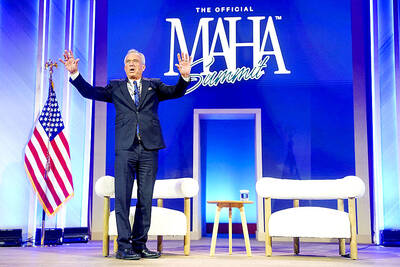
Sweeping policy changes under US Secretary of Health and Human Services Robert F. Kennedy Jr are having a chilling effect on vaccine makers as anti-vaccine rhetoric has turned into concrete changes in inoculation schedules and recommendations, investors and executives said. The administration of US President Donald Trump has in the past year upended vaccine recommendations, with the country last month ending its longstanding guidance that all children receive inoculations against flu, hepatitis A and other diseases. The unprecedented changes have led to diminished vaccine usage, hurt the investment case for some biotechs, and created a drag that would likely dent revenues and
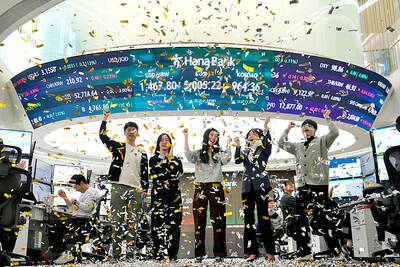
Global semiconductor stocks advanced yesterday, as comments by Nvidia Corp chief executive officer Jensen Huang (黃仁勳) at Davos, Switzerland, helped reinforce investor enthusiasm for artificial intelligence (AI). Samsung Electronics Co gained as much as 5 percent to an all-time high, helping drive South Korea’s benchmark KOSPI above 5,000 for the first time. That came after the Philadelphia Semiconductor Index rose more than 3 percent to a fresh record on Wednesday, with a boost from Nvidia. The gains came amid broad risk-on trade after US President Donald Trump withdrew his threat of tariffs on some European nations over backing for Greenland. Huang further
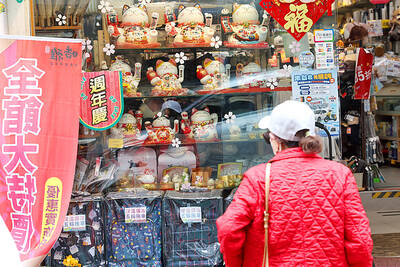
CULPRITS: Factors that affected the slip included falling global crude oil prices, wait-and-see consumer attitudes due to US tariffs and a different Lunar New Year holiday schedule Taiwan’s retail sales ended a nine-year growth streak last year, slipping 0.2 percent from a year earlier as uncertainty over US tariff policies affected demand for durable goods, data released on Friday by the Ministry of Economic Affairs showed. Last year’s retail sales totaled NT$4.84 trillion (US$153.27 billion), down about NT$9.5 billion, or 0.2 percent, from 2024. Despite the decline, the figure was still the second-highest annual sales total on record. Ministry statistics department deputy head Chen Yu-fang (陳玉芳) said sales of cars, motorcycles and related products, which accounted for 17.4 percent of total retail rales last year, fell NT$68.1 billion, or

MediaTek Inc (聯發科) shares yesterday notched their best two-day rally on record, as investors flock to the Taiwanese chip designer on excitement over its tie-up with Google. The Taipei-listed stock jumped 8.59 percent, capping a two-session surge of 19 percent and closing at a fresh all-time high of NT$1,770. That extended a two-month rally on growing awareness of MediaTek’s work on Google’s tensor processing units (TPUs), which are chips used in artificial intelligence (AI) applications. It also highlights how fund managers faced with single-stock limits on their holding of market titan Taiwan Semiconductor Manufacturing Co (TSMC, 台積電) are diversifying into other AI-related firms.


 RSS
RSS