


Japan's agriculture minister yesterday called a US probe into the outbreak of mad cow disease incomplete and said his country would not reconsider a six-week ban on American beef until it receives new proposals from Wash-ington for tighter safeguards.
Japan is pressing the US to test all cattle for the disease before slaughter, a measure implemented by Japan's much smaller beef industry after a mad cow scare here two years ago.
The US says blanket testing is unnecessary and would be pro-hibitively expensive, but a series of US agriculture and trade officials sent to Tokyo to persuade Japan to lift an import ban have come away empty handed.
Agriculture Minister Yoshiyuki Kamei said yesterday that he had asked the most recent delegation to propose safeguards "based on" Japan's system, which Kamei credited with restoring consumer confidence in Japanese beef.
"We have explained our country's position," Kamei said in a television interview. "We are expecting some kind of proposal from the United States."
Before it suspended imports on Dec. 24, Japan was the most lucrative export market for US beef, buying almost US$1 billion worth in 2002.
Kamei criticized last month's decision by the US Agricultural Department to give up efforts to track all 80 cows that entered the US from a Canadian farm with a single Holstein that tested positive for the disease in Washington state in December. The probe closed after 28 cows were traced.
"It's unclear where the other 50 cows ended up, and that's not adequate," he said. "I don't think they made enough of an effort."
"There's no guarantee there won't be a second or third case, and Japanese consumers need to feel confident about eating American beef even if that happens," he said.
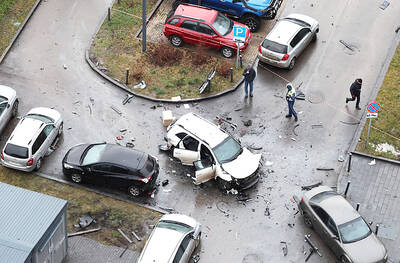
A car bomb killed a senior Russian general in southern Moscow yesterday morning, the latest high-profile army figure to be blown up in a blast that came just hours after Russian and Ukrainian delegates held separate talks in Miami on a plan to end the war. Kyiv has not commented on the incident, but Russian investigators said they were probing whether the blast was “linked” to “Ukrainian special forces.” The attack was similar to other assassinations of generals and pro-war figures that have either been claimed, or are widely believed to have been orchestrated, by Ukraine. Russian Lieutenant General Fanil Sarvarov, 56, head

SAFETY FIRST: Double the number of police were deployed at the Taipei Marathon, while other cities released plans to bolster public event safety Authorities across Taiwan have stepped up security measures ahead of Christmas and New Year events, following a knife and smoke bomb attack in Taipei on Friday that left four people dead and 11 injured. In a bid to prevent potential copycat incidents, police deployments have been expanded for large gatherings, transport hubs, and other crowded public spaces, according to official statements from police and city authorities. Taipei Mayor Chiang Wan-an (蔣萬安) said the city has “comprehensively raised security readiness” in crowded areas, increased police deployments with armed officers, and intensified patrols during weekends and nighttime hours. For large-scale events, security checkpoints and explosives
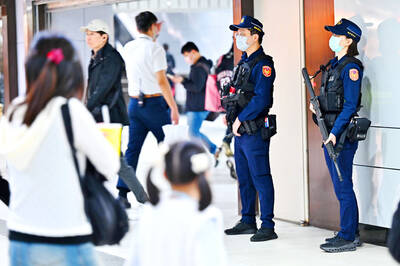
PUBLIC SAFETY: The premier said that security would be tightened in transport hubs, while President Lai commended the public for their bravery The government is to deploy more police, including rapid response units, in crowded public areas to ensure a swift response to any threats, President William Lai (賴清德) said yesterday after a knife attack killed three people and injured 11 in Taipei the previous day. Lai made the remarks following a briefing by the National Police Agency on the progress of the investigation, saying that the attack underscored the importance of cooperation in public security between the central and local governments. The attack unfolded in the early evening on Friday around Taipei Main Station’s M7 exit and later near the Taipei MRT’s Zhongshan
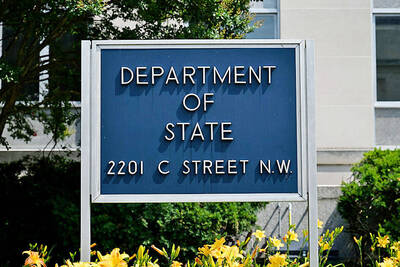
REBUFFED: In response to Chinese criticism over recent arms sales, Washington urged Beijing to engage in meaningful dialogue instead of threats and intimidation Washington’s long-term commitment to Taiwan would not change, the US Department of State said yesterday, urging Beijing to stop pressuring Taiwan and engage in meaningful bilateral dialogues. The remarks came in response to a backlash from Beijing about Washington’s latest approval of arms sales to Taiwan. The US Defense Security Cooperation Agency said in a statement on Wednesday that the Taipei Economic and Cultural Representative Office in the US has asked to purchase an arms package, including Tactical Mission Network Software; AH-1W helicopter spare and repair parts; M109A7 self-propelled howitzers; HIMARS long range precision strike systems; tube-launched, optically tracked, wire-guided missiles; Javelin


 RSS
RSS