


Everyone is drinking it, everyone is speaking of it -- the new "Cola Turka" launched in the midst of Turkey's sizzling summer has been an overnight success with some suggesting that a diplomatic spat between Ankara and Wash-ington has helped the new cola take on its better-known US rivals.
"We didn't chose to take advantage of the political situation," says Eda Gokkan, in charge of the new soda's advertising campaign at Young and Rubicam.
"We're just trying to sell the Turkish life-style," she said.
But the cola's launch two weeks ago coincided with an outbreak of nationalist sentiment in the wake of the arrest by US forces of 11 Turkish soldiers in northern Iraq, according to the sales manager of a supermarket in the center of Istanbul who gave her name as Didem.
"Because of the war in Iraq, 90 percent of Turks have turned against the United States and many chose to buy local rather than US products," she said.
The cola's successful launch "is the result of an la turca reaction'" to the arrest of the Turkish soldiers in northern Iraq on July 4th, the mass daily newspaper Milliyet proclaimed.
The soldiers were released 60 hours later, but the whole episode was viewed as a national humiliation and it sparked a diplomatic row with Washington.
No reason was officially given for the arrests, but US forces said the Turkish soldiers were acting "suspiciously," adding that explosives were found at their Sulaymaniyah headquarters.
Some papers have since high-lighted instances of shopkeepers who are refusing to sell US products, including the more famous US colas.
Hurriyet newspaper, quoting a survey by the Roper ASW institute, said the sales of US products had dropped by 13 percent in Turkey in the past few months.
A tongue-in-cheek TV ad has also helped "Cola Turka," a product sold by the Turkish Ulker food group, gain national attention.
Starring US comedian Chevy Chase, the TV spot shows Americans adopting Turkish customs as they drink the new cola, from throwing water after a departing car to ensure its smooth journey to growing big moustaches.
"This isn't Turkish propaganda, but rather positive nationalism," says Serdar Erener, one of those responsible for advertising the new product.
Early sales reports suggest Cola Turka has gained a 25 percent market share in a country which consumes 1 billion liters of colas a year, with Coca Cola holding the lion's share.
With the cola war now in full swing, the Vatan daily wondered about the implications for domestic politics, since the son of Prime Minister Recep Tayyip Erdogan is a local distributor for the new Cola Turka, while the son of former prime minister Mesut Yilmaz, a political rival, is a distributor for Coca Cola.
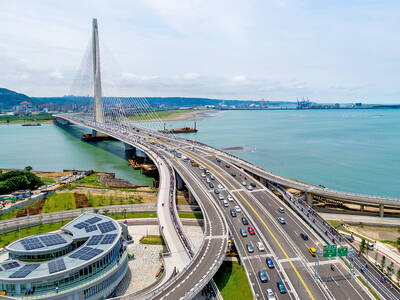
The Ministry of Transportation and Communications yesterday inaugurated the Danjiang Bridge across the Tamsui River in New Taipei City, saying that the structure would be an architectural icon and traffic artery for Taiwan. Feted as a major engineering achievement, the Danjiang Bridge is 920m long, 211m tall at the top of its pylon, and is the longest single-pylon asymmetric cable-stayed bridge in the world, the government’s Web site for the structure said. It was designed by late Iraqi-British architect Zaha Hadid. The structure, with a maximum deck of 70m, accommodates road and light rail traffic, and affords a 200m navigation channel for boats,
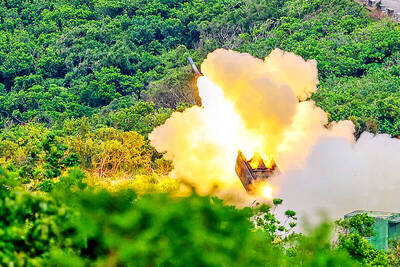
PRECISION STRIKES: The most significant reason to deploy HIMARS to outlying islands is to establish a ‘dead zone’ that the PLA would not dare enter, a source said A High Mobility Artillery Rocket System (HIMARS) would be deployed to Penghu County and Dongyin Island (東引) in Lienchiang County (Matsu) to force the Chinese military to retreat at least 100km from the coastline, a military source said yesterday. Taiwan has been procuring HIMARS and Army Tactical Missile Systems (ATACMS) from the US in batches. Once all batches have been delivered, Taiwan would possess 111 HIMARS units and 504 ATACMS, which have a range of 300km. Considering that “offense is the best defense,” the military plans to forward-deploy the systems to outlying islands such as Penghu and Dongyin so that
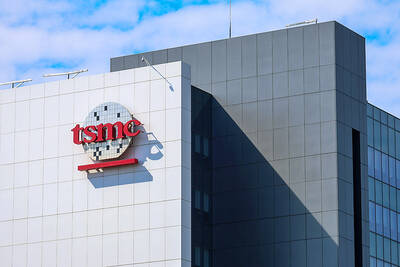
Taiwan Semiconductor Manufacturing Co (TSMC, 台積電), the world’s largest foundry service provider, yesterday said that global semiconductor revenue is projected to hit US$1.5 trillion in 2030, after the figure exceeds US$1 trillion this year, as artificial intelligence (AI) demand boosts consumption of token and compute power. “We are still at the beginning of the AI revolution, but we already see a significant impact across the whole semiconductor ecosystem,” TSMC deputy cochief operating officer Kevin Zhang (張曉強) said at the company’s annual technology symposium in Hsinchu City. “It is fair to say that in the past decade, smartphones and other mobile devices were
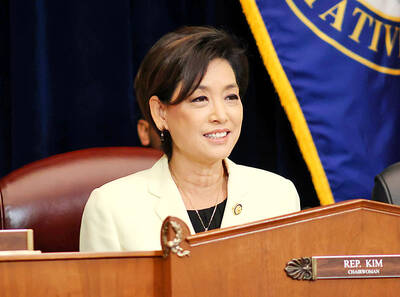
‘CLEAR MESSAGE’: The bill would set up an interagency ‘tiger team’ to review sanctions tools and other economic options to help deter any Chinese aggression toward Taiwan US Representative Young Kim has introduced a bill to deter Chinese aggression against Taiwan, calling for an interagency “tiger team” to preplan coordinated sanctions and economic measures in response to possible Chinese military or political action against Taiwan. “[Chinese President] Xi Jinping [習近平] has directed the People’s Liberation Army to be ready to invade Taiwan by 2027. China has a plan. America should have one too,” Kim said in a news release on Thursday last week. She introduced the “Deter PRC [People’s Republic of China] aggression against Taiwan act” to “ensure the US has a coordinated sanctions strategy ready should


 RSS
RSS