


Thousands of protesters rallied outside the White House on Sunday to press US President Barack Obama to scrap plans for a multibillion-dollar oil pipeline stretching from Canada to Texas.
“Our mainstream society is extremely destructive and exploitative. This is one of the most egregious examples of overexploitation,” said Ken Srdjak, 25, an artist from Ohio.
Completing the pipeline would mean “harming indigenous peoples and the environment,” he said.
Washington has launched consultations on the 2,700km Keystone XL pipeline, which would run from the tar sands of the Canadian province of Alberta to the Gulf of Mexico in the southern US.
Many environmentalists fear a potential pipeline accident would spell disaster for aquifers in central US Great Plains states. That could disproportionately endanger rural towns and Native Americans, they say.
Thousands of demonstrators crammed Lafayette Square opposite the White House, as Obama was out playing golf.
Hundreds protested in vibrant orange vests reading “Stop Keystone XL,” while others waved signs with slogans, such as “We believe in a better way — if it doesn’t involve tar sands” and “Pipeline to the Apocalypse.”
Dozens more danced to pop music in front of a soundstage waving their protest banners less than a block from the White House. Lauren Glapa, 19, rode a bus overnight from Indiana University for her first protest with dozens of classmates to make their voices heard.
“So many people don’t know anything about this issue. Obviously Obama does and I don’t know what he is going to do, but if we increase awareness, maybe he will do the right thing,” she said, readying for the long ride home.
The Keystone XL pipeline proposed by TransCanada would begin in western Canada and pass through the US states of Montana, South Dakota, Nebraska, Kansas and Oklahoma before ending up at refineries in Texas.
A number of environmental and citizen groups are fighting the pipeline because exploiting the unconventional oil sands of Alberta requires energy that produces a large volume of greenhouse gases.
Concerns about potential for an environmental disaster seem to be heightened on the heels of last year’s devastating BP oil spill in the Gulf of Mexico.
The US Department of State is handling public consultations, since the pipeline would run across the border with Canada. However, it said on Wednesday it might not decide whether to issue a permit for the proposed pipeline by the end of this year as planned.
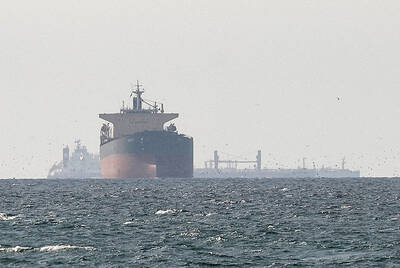
A ship that appears to be taking on the identity of a scrapped gas carrier exited the Strait of Hormuz on Friday, showing how strategies to get through the waterway are evolving as the Middle East war progresses. The vessel identifying as liquefied natural gas (LNG) carrier Jamal left the Strait on Friday morning, ship-tracking data show. However, the same tanker was also recorded as having beached at an Indian demolition yard in October last year, where it is being broken up, according to market participants and port agent’s reports. The ship claiming to be Jamal is likely a zombie vessel that
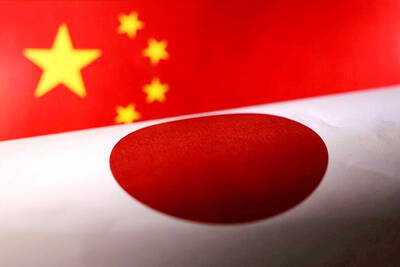
Japan is to downgrade its description of ties with China from “one of its most important” in an annual diplomatic report, according to a draft reviewed by Reuters, as relations with Beijing worsen. This year’s Diplomatic Bluebook, which Japanese Prime Minister Sanae Takaichi’s government is expected to approve next month, would instead describe China as an important neighbor and the relationship as “strategic” and “mutually beneficial.” The draft cites a series of confrontations with Beijing over the past year, including export controls on rare earths, radar lock-ons targeting Japanese military aircraft and increased pressure around Taiwan. The shift in tone underscores a deterioration

LAW CONSTRAINTS: The US has been pressing allies to send warships to open the Strait, but Tokyo’s military actions are limited under its postwar pacifist constitution Japan could consider deploying its military for minesweeping in the Strait of Hormuz if a ceasefire is reached in the war on Iran, Japanese Minister of Foreign Affairs Toshimitsu Motegi said yesterday. “If there were to be a complete ceasefire, hypothetically speaking, then things like minesweeping could come up,” Motegi said. “This is purely hypothetical, but if a ceasefire were established and naval mines were creating an obstacle, then I think that would be something to consider.” Japan’s military actions are limited under its postwar pacifist constitution, but 2015 security legislation allows Tokyo to use its Self-Defense Forces overseas if an attack,

German Chancellor Friedrich Merz’s conservative Christian Democratic Union (CDU) yesterday faced a regional election battle in Rhineland-Palatinate, now held by the center-left Social Democratic Party (SPD). Merz’s CDU has enjoyed a narrow poll lead over the SPD — their coalition partners at the national level — who have ruled the mid-sized state for 35 years. Polling third is the far-right Alternative for Germany (AfD), which spells a greater threat to the two centrist parties in several state elections in September in the country’s ex-communist east. The picturesque state of Rhineland-Palatinate, bordering France, Belgium and Luxembourg and with a population of about 4 million,


 RSS
RSS