


Two Islamist militants were found guilty on Monday by a federal jury of plotting to bomb New York’s John F. Kennedy International Airport.
Russell Defreitas, 67, a US citizen born in Guyana, and Abdul Kadir, 58, of Guyana, conspired to blow up buildings, fuel tanks and pipelines at the airport in the New York City borough of Queens.
The men, who were arrested in June 2007, face up to life in prison. They will be sentenced on Dec. 15.
Defreitas, who had worked at the airport, provided knowledge of its facilities and layout, US prosecutors said, while Kadir, an engineer, helped with technical aspects such as how to blow up the pipelines.
“The foiled plot to bomb the JFK Airport fuel tanks and the fuel line that supplied them was a serious threat,” New York Police Commissioner Ray Kelly said in a statement. “Terrorists intent on targeting New York were stopped in their tracks.”
Defense attorneys for the men portrayed them as all bluster and no substance during the trial in federal court in Brooklyn.
Prosecutors said Defreitas and Kadir did more than just talk and “took concrete steps to make this plan a reality.” However, officials have said the plot was nowhere near being operational when the men were arrested.
During the four-week trial, jurors heard testimony and watched video clips of the airport filmed by Defreitas, and listened to recordings of the men made by an informant.
The men sought to offer their plans to Jamaat Al Muslimeen, an Islamist extremist group in Trinidad and Tobago that was behind a 1990 coup attempt on the island, prosecutors said, and also tried to send Kadir to Iran to muster support.
Kadir, arrested on board a flight to Iran via Venezuela, said he was on his way to a religious pilgrimage and was not doing anything related to the plot.
The defense lawyers expressed disappointment in the verdict.
We believe there’s more than just the evidence that Kadir was up against, the atmosphere of fear in this country ... the fear of terrorism ... especially in New York,” Kadir’s lawyer Kafahni Nkrumah said.
Defreitas’ attorney said her client would appeal the case.
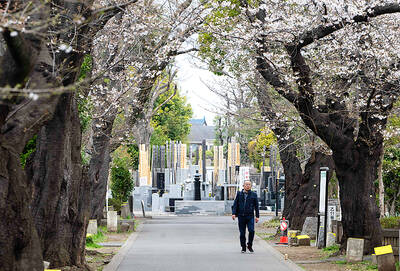
ROCKY RELATIONS: The figures on residents come as Chinese tourist numbers drop following Beijing’s warnings to avoid traveling to Japan The number of Chinese residents in Japan has continued to rise, even as ties between the two countries have become increasingly fractious, data released on Friday showed. As of the end of December last year, the number of Chinese residents had increased by 6.5 percent from the previous year to 930,428. Chinese people accounted for 22.6 percent of all foreign residents in Japan, making them by far the largest group, Japanese Ministry of Justice data showed. Beijing has criticized Tokyo in increasingly strident terms since Japanese Prime Minister Sanae Takaichi last year suggested that a military conflict around Taiwan could

A retired US colonel behind a privately financed rocket launch site in the Dominican Republic sees the project as a response to China’s dominance of the space race in Latin America. Florida-based Launch on Demand is slated to begin building a US$600 million facility in a remote region near the border with Haiti late this year. The project is designed to meet surging demand for the heavy-lift rockets needed to put clusters of satellites into orbit. It is also an answer to China’s growing presence in the region, said CEO Burton Catledge, a former commander of the US Air Force’s 45th Operations

Germany is considering Australia’s Ghost Bat robot fighter as it looks to select a combat drone to modernize its air force, German Minister of Defense Boris Pistorius said yesterday. Germany has said it wants to field hundreds of uncrewed fighter jets by 2029, and would make a decision soon as it considers a range of German, European and US projects developing so-called “collaborative combat aircraft.” Australia has said it will integrate the Ghost Bat, jointly developed by Boeing Australia and the Royal Australian Air Force, into its military after a successful weapons test last year. After inspecting the Ghost Bat in Queensland yesterday,
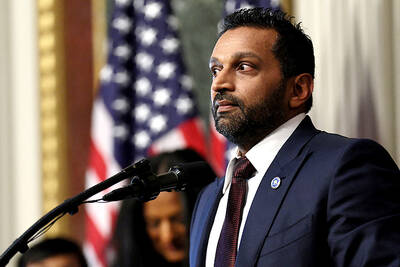
A pro-Iran hacking group claimed to breach FBI Director Kash Patel’s personal e-mail inbox and posted some of the contents online. The e-mails provided by the hacking group include travel details, correspondence with leasing agents in Washington and global entry, and loyalty account numbers. The e-mail address the hackers claim to have compromised has been previously tied to Patel’s personal details, and the leaked e-mails contain photos of Patel and others, in addition to correspondence with family members and colleagues. “The FBI is aware of malicious actors targeting Director Patel’s personal email information,” the agency said in a statement on


 RSS
RSS