


Roman Catholic bishops called on corrupt Catholic leaders in Africa on Friday to repent or resign for giving the continent and the Church a bad name.
Approximately 200 African bishops, along with dozens of other bishops and Africa experts, also accused multinational companies in Africa of “crimes against humanity” and urged Africans to beware of “surreptitious” attempts by international organizations to destroy traditional African values.
Their three-week synod, which ends formally today with a mass by Pope Benedict, covered a range of Africa’s problems, such as AIDS, corruption, poverty, development aspirations and crime.
But it had a very direct message for corrupt African leaders who were raised Catholics.
“Many Catholics in high office have fallen woefully short in their performance in office. The synod calls on such people to repent, or quit the public arena and stop causing havoc to the people and giving the Catholic Church a bad name,” the synod said.
The message did not name any leaders.
The international community has for years called on Zimbabwe President Robert Mugabe, who was raised a Catholic and educated by Jesuits, to step down, saying he had brought his once-prosperous country to its knees.
Another African leader who was raised a Catholic and has been accused of corruption is Angolan President Eduardo dos Santos. Both men deny any wrongdoing.
Rights groups and international agencies have accused Angola’s government of siphoning away billions in oil revenue and urged it to improve transparency.
Angola rivals Nigeria as Africa’s biggest oil producer, but about two-thirds of the population live on less than US$2 a day. It ranks 158th on Transparency International’s 180-nation list, in which the country perceived as most corrupt is in last place.
The synod bishops hit out forcefully at multinational companies, saying they were one of Africa’s greatest problems.
“Multinationals have to stop their criminal devastation of the environment in their greedy exploitation of natural resources,” the bishops said.
“It is short-sighted policy to foment wars in order to make fast gains from chaos, at the cost of human lives and blood. Is there no one out there able and willing to stop all these crimes against humanity?” they said.
The message said that whatever the faults of foreigners, the complicity of African leaders blinded by greed for power and money was a blight on entire populations and nations.
It condemned “the shameful and tragic collusion of the local leaders: politicians who betray and sell out their nations, dirty businesspeople who collude with rapacious multinationals, African arms dealers and traffickers who thrive on small arms that cause great havoc on human lives.”
In a section on AIDS, the bishops’ message repeated the Church position that the spread of the disease could not be stopped by the use of condoms alone.
Last March, on his way to his first trip to Africa, the pope caused an international storm by saying that the use of condoms could actually worsen the spread of AIDS.
The Church teaches that pre-marital abstinence and fidelity within heterosexual marriage are the best ways to prevent the spread of AIDS.
The bishops said the developed world had to treat Africa with respect and strive to remove “unjust structures piled heavily against her.”
It said African nations must “carefully scrutinize” programs offered by the international community to spot “surreptitious attempts to destroy and undermine the precious African values of family and human life.”

ACTIONABLE ADVICE: The majority of chatbots tested provided guidance on weapons, tactics and target selections, with Perplexity and Meta AI deemed to be the least safe From school shootings to synagogue bombings, leading artificial intelligence (AI) chatbots helped researchers plot violent attacks, according to a study published on Wednesday that highlighted the technology’s potential for real-world harm. Researchers from the nonprofit watchdog Center for Countering Digital Hate and CNN posed as 13-year-old boys in the US and Ireland to test 10 chatbots, including ChatGPT, Google Gemini, Perplexity, Deepseek and Meta AI. Eight of the chatbots assisted the make-believe attackers in more than half the responses, providing advice on “locations to target” and “weapons to use” in an attack, the study said. The chatbots had become a “powerful accelerant for
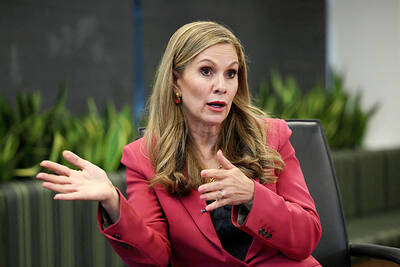
Australians were downloading virtual private networks (VPNs) in droves, while one of the world’s largest porn distributors said it was blocking users from its platforms as the country yesterday rolled out sweeping online age restriction. Australia in December became the first country to impose a nationwide ban on teenagers using social media. A separate law now requires artificial intelligence (AI)-powered chatbot services to keep certain content — including pornography, extreme violence and self-harm and eating disorder material — from minors or face fines of up to A$49.5 million (US$34.6 million). The country also joined Britain, France and dozens of US states requiring
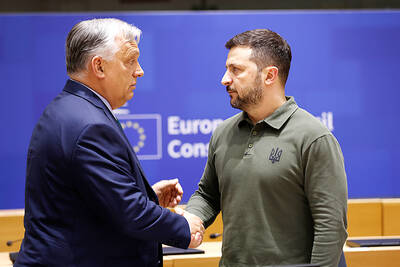
Hungarian authorities temporarily detained seven Ukrainian citizens and seized two armored cars carrying tens of millions of euros in cash across Hungary on suspicion of money laundering, officials said on Friday. The Ukrainians were released on Friday, following their detention on Thursday, but Hungarian officials held onto the cash, prompting Ukraine to accuse Hungary’s Russia-friendly government of illegally seizing the money. “We will not tolerate this state banditism,” Ukrainian Minister of Foreign Affairs Andrii Sybiha said. The seven detained Ukrainians were employees of the Ukrainian state-owned Oschadbank, who were traveling in the two armored cars that were carrying the money between Austria and
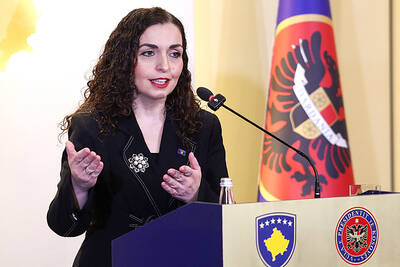
Kosovar President Vjosa Osmani on Friday after dissolving the Kosovar parliament said a snap election should be held as soon as possible to avoid another prolonged political crisis in the Balkan country at a time of global turmoil. Osmani said it is important for Kosovo to wrap up the upcoming election process and form functional institutions for political stability as the war rages in the Middle East. “Precisely because the geopolitical situation is that complex, it is important to finish this electoral process which is coming up,” she said. “It is very hard now to imagine what will happen next.” Kosovo, which declared


 RSS
RSS