


A Soyuz capsule carrying a US space tourist and two Russians bumped down safely in Kazakhstan yesterday, ending a string of mishaps on previous landings that have raised concerns about its safety.
“I feel great. I feel very good. Re-entry was perfectly smooth,” a smiling Richard Garriott, who paid US$35 million for his 12-day journey into space, said after a Russian recovery team extracted him from the capsule.
Charred black from its fiery re-entry into Earth’s atmosphere, the craft slowed its descent with a large parachute and fired special gunpowder engines to cushion its landing.

PHOTO: AP
“The team reported that they felt fine,” the mission control’s spokesman Valery Lyndin, adding that a helicopter accompanied the capsule as it landed.
Garriott and cosmonauts Sergei Volkov and Oleg Kononenko landed in Kazakhstan’s steppe at 7:34am before being extracted from the capsule.
It came to rest in a puff of dust in a field 80km north of the town of Arkalyk as planned.
A NASA Television live feed from a mission control center in Moscow described it as a flawless on-target landing.
Its success was a relief for Russian and US officials who have been worried about the landings after the capsule malfunctioned twice over the past year, subjecting crews to dangerous “ballistic” re-entries.
A ballistic landing is steeper than a normal one and subjects crews to massive gravitational forces. A South Korean astronaut said she feared death during such a landing in April.
“I don’t recall such a perfect landing as this one,” Anatoly Perminov, head of Russia’s space agency Roskosmos, told reporters in Moscow. “We did everything that was possible and more, and the landing was just ideal. The crew feel fine.”
After the touch down, recovery teams surrounded the capsule, opened the hatch and extracted the cosmonauts as the first rays of the morning sun lit up the barren steppes of Kazakhstan.
Garriott, a US video game magnate, came back from the International Space Station alongside Russian cosmonauts Sergei Volkov and Oleg Kononenko.
The American, son of NASA astronaut Owen Garriott, and Volkov, whose father Alexander was in space when the Soviet Union collapsed in 1991, are the first second-generation spacemen to fly together — a symbolic act at a time when US-Russia relations are particularly tense.
“This was a pinnacle experience and the ride up on Soyuz was phenomenal — what a beautiful machine,” said Garriott, as his father came over and shook his hand at the capsule.
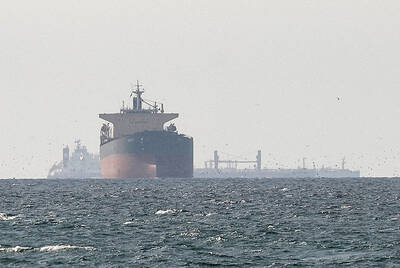
A ship that appears to be taking on the identity of a scrapped gas carrier exited the Strait of Hormuz on Friday, showing how strategies to get through the waterway are evolving as the Middle East war progresses. The vessel identifying as liquefied natural gas (LNG) carrier Jamal left the Strait on Friday morning, ship-tracking data show. However, the same tanker was also recorded as having beached at an Indian demolition yard in October last year, where it is being broken up, according to market participants and port agent’s reports. The ship claiming to be Jamal is likely a zombie vessel that
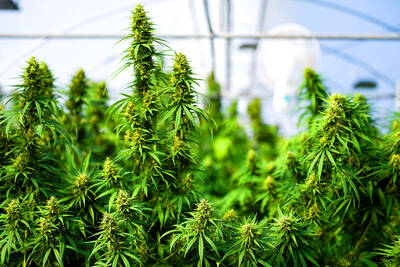
Cannabis-based medicines have shown little evidence of effectiveness for treating most mental health and substance-use disorders, according to a large review of past studies published in a major medical journal on Monday. Medical use of cannabinoids has been expanding, including in the US, Canada and Australia, where many patients report using cannabis products to manage conditions such as anxiety, post-traumatic stress disorder and sleep problems. Researchers reviewed data from 54 randomized clinical trials conducted between 1980 and May last year involving 2,477 participants for their analysis published in The Lancet. The studies assessed cannabinoids as a primary treatment for mental disorders or substance-use

NATIONWIDE BLACKOUT: US President Donald Trump cut off Venezuelan oil shipments to Cuba, strangling the Caribbean island’s already antiquated grid Cuba’s national electric grid collapsed on Monday, the nation’s grid operator said, leaving about 10 million people without power amid a US-imposed oil blockade that has crippled the already obsolete generation system. Grid operator UNE on social media said that it is investigating the causes of the blackout, the latest in a series of widespread outages that last for hours or days and that this weekend sparked a rare violent protest in the communist-run nation. Officials ruled out a major power plant failure, but had still not pinpointed the root cause of the grid collapse, suggesting a problem with transmission. Officials said that
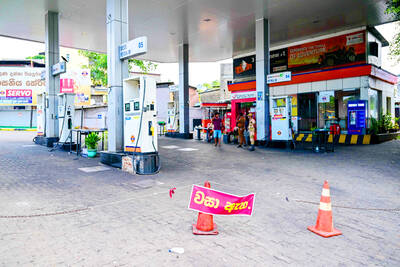
CONSERVING FUEL: State institutions are to operate only four days a week starting tomorrow, with the measures also applying to schools and universities Sri Lanka on Monday announced a shorter working week to conserve its scarce fuel reserves as it prepares for a prolonged war in the Middle East. The Strait of Hormuz, a key waterway through which about 20 percent of global exports pass in peacetime, has been effectively closed by Iran in retaliation over the US and Israeli war against it, now in its third week. Sri Lankan Commissioner-General of Essential Services Prabath Chandrakeerthi said state institutions would operate only four days a week starting tomorrow. The new austerity measures would also apply to schools and universities, and would remain in place indefinitely. “We are


 RSS
RSS