


DPA, Vienna
Austrian politician and populist Joerg Haider, 58, the man behind the resurgence of the country’s right wing parties, died in a car crash yesterday.
With his death, Austria’s right loses its most important figurehead, a man both reviled and admired by many Austrians.
The crash occurred near Klagenfurt in Carinthia province, where Haider was a popular governor.
Shortly before his death, he had made a successful comeback to the national political scene when his Alliance for the Future of Austria won 11 percent in parliamentary elections late last month.
Although Haider was trying to shed his image as a right-wing firebrand, he and his party won votes not only by railing against the governing centrist coalition but also with rethoric directed against immigrants and asylum seekers, often portraying them as criminals.
This summer, he proposed that all asylum seekers should be made to wear electronic tags on their ankles to be able to monitor their movements.
Haider was born in 1950 in Bad Goisern in Upper Austria. His parents were devoted members of Adolf Hitler’s National Socialist Party.
Haider’s political career started at university as the leader of the youth movement of the right-wing Freedom Party, a party formed after World War II by liberals and former Nazis.
Haider appealed to disaffected voters by building a young, fashionable image and employing extremist rethoric.
His first stint as Carinthia governor was cut short unexpectedly in 1991 when he had to step down over a revisionist comment.
During a debate on unemployment, he said: “Well, that didn’t happen in the Third Reich, because in the Third Reich they had a proper employment policy, something that the government in Vienna can’t accomplish.”<
Also See: Fear and loathing in European vote
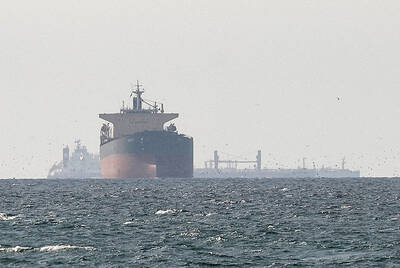
A ship that appears to be taking on the identity of a scrapped gas carrier exited the Strait of Hormuz on Friday, showing how strategies to get through the waterway are evolving as the Middle East war progresses. The vessel identifying as liquefied natural gas (LNG) carrier Jamal left the Strait on Friday morning, ship-tracking data show. However, the same tanker was also recorded as having beached at an Indian demolition yard in October last year, where it is being broken up, according to market participants and port agent’s reports. The ship claiming to be Jamal is likely a zombie vessel that

German Chancellor Friedrich Merz’s conservative Christian Democratic Union (CDU) yesterday faced a regional election battle in Rhineland-Palatinate, now held by the center-left Social Democratic Party (SPD). Merz’s CDU has enjoyed a narrow poll lead over the SPD — their coalition partners at the national level — who have ruled the mid-sized state for 35 years. Polling third is the far-right Alternative for Germany (AfD), which spells a greater threat to the two centrist parties in several state elections in September in the country’s ex-communist east. The picturesque state of Rhineland-Palatinate, bordering France, Belgium and Luxembourg and with a population of about 4 million,

Ugandan wildlife authorities have reintroduced rhinos into a remote protected area where they were once poached into extinction, an event seen by conservationists as a milestone in efforts to support the recovery of a species threatened by poaching. On Tuesday, two southern white rhinos from a private ranch in the East African country were reintroduced into Kidepo Valley National Park in the country’s northeast. Two more rhinos in metallic crates arrived on Thursday. There have been no rhinos in the park since 1983, the result of poaching. However, a private ranch in central Uganda — the Ziwa Rhino Sanctuary — has been

LAW CONSTRAINTS: The US has been pressing allies to send warships to open the Strait, but Tokyo’s military actions are limited under its postwar pacifist constitution Japan could consider deploying its military for minesweeping in the Strait of Hormuz if a ceasefire is reached in the war on Iran, Japanese Minister of Foreign Affairs Toshimitsu Motegi said yesterday. “If there were to be a complete ceasefire, hypothetically speaking, then things like minesweeping could come up,” Motegi said. “This is purely hypothetical, but if a ceasefire were established and naval mines were creating an obstacle, then I think that would be something to consider.” Japan’s military actions are limited under its postwar pacifist constitution, but 2015 security legislation allows Tokyo to use its Self-Defense Forces overseas if an attack,


 RSS
RSS