


As Sydney prepares for a visit by Pope Benedict XVI and hundreds of thousands of Catholics, the city’s brothels are readying themselves for an expected surge in demand for sex.
Any time Australia’s biggest city hosts a major event — from the 2003 Rugby World Cup to the Asia Pacific Economic Cooperation (APEC) summit last year — it is boomtime for the sex industry, insiders say.
And with 225,000 foreign and Australian pilgrims expected in Sydney for six-days of events celebrating the Catholic faith from July 15-20, they expect World Youth Day to be no different.
Sydney brothel Xclusive is putting on extra workers to provide sexual favors to lonely tourists and Sydneysiders during event.
“We will get a lot of tourists, pilgrims and we will still get the curious,” a spokeswoman for the Bondi Junction bordello said.
“The World Council of Churches, when they had their congress in Canberra back in the 1990s, that was the best business period ever,” she said. “Obviously we’re not promoting it at your traditional Catholic community and it’s unlikely we will get priests through. But there’ll be lots of tourists in town and there’ll be lots of people in town.”
Xclusive’s manager, a 30-something blonde who would only give her name as Catherine, said she was rostering extra girls and would probably take on another receptionist to handle the increased demand.
The purpose-built bordello, which has luxurious rooms complete with double showers, spas, custom-made beds and panic buttons for the sex workers, is expecting a 150 percent to 200 percent hike in business during World Youth Day.
Catherine believes the brothel’s proximity to some of the major events, including the pope’s final mass which is expected to draw up to 500,000 people to nearby Randwick Racecourse on July 20, could bring customers to her door.

When a hiker fell from a 55m waterfall in wild New Zealand bush, rescuers were forced to evacuate the badly hurt woman without her dog, which could not be found. After strangers raised thousands of dollars for a search, border collie Molly was flown to safety by a helicopter pilot who was determined to reunite the pet and the owner. A week earlier, an emergency rescue helicopter found the woman with bruises and lacerations after a fall at a rocky spot at the waterfall on the South Island’s West Coast. She was airlifted on March 24, but they were forced to
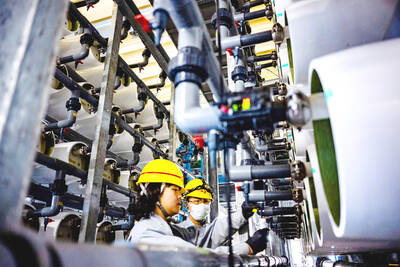
HIGH HOPES: The power source is expected to have a future, as it is not dependent on the weather or light, and could be useful for places with large desalination facilities A Japanese water plant is harnessing the natural process of osmosis to generate renewable energy that could one day become a common power source. The possibility of generating power from osmosis — when water molecules pass from a less salty solution to a more salty one — has long been known. However, actually generating energy from that has proved more complicated, in part due the difficulty of designing the membrane through which the molecules pass. Engineers in Fukuoka, Japan, and their private partners think they might have cracked it, and have opened what is only the world’s second osmotic power plant. It generates

Hundreds of Filipinos and tourists flocked to a sun-bleached field north of Manila yesterday, on Good Friday, to witness one of the country’s most blood-soaked displays of religious fervor, undeterred by rising fuel prices. Scores of bare-chested flagellants with covered faces walked barefoot through the dusty streets of Pampanga Province’s San Fernando as they flogged their backs with bamboo whips in the scorching heat. Agence France-Presse (AFP) journalists said they saw devotees deliberately puncturing their skin with glass shards attached to a small wooden paddle to ensure their bleeding during the ritual, a way to atone for sins and seek miracles from
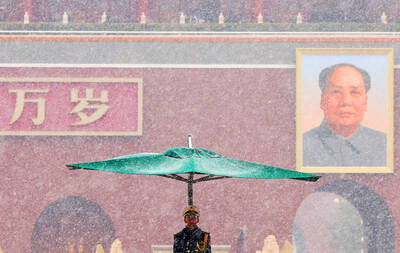
Chinese dissident artist Gao Zhen (高兟), famous for making provocative satirical sculptures of former Chinese leader Mao Zedong (毛澤東), was tried on Monday over accusations of “defaming national heroes and martyrs,” his wife and a rights group said. Gao, 69, who was detained in 2024 during a visit from the US, faces a maximum three-year prison sentence, said his wife, Zhao Yaliang (趙雅良), and Shane Yi, a researcher at the Chinese Human Rights Defenders group which operates outside the nation. The closed-door, one-day trial took place at Sanhe City People’s Court in Hebei Province neighboring the capital, Beijing, and ended without a


 RSS
RSS