


A Sri Lankan navy craft was destroyed in a blast off the island's north-eastern coast yesterday while searching out potential Tamil Tiger rebel activity, both sides said.
The rebel Liberation Tigers of Tamil Eelam (LTTE) said they sank the navy fast attack craft (FAC) by using three suicide bombers who also perished.
The Sri Lankan navy, however, reported that the vessel was destroyed in a blast from a sea mine.
Six sailors from the locally made Dvora-class FAC were rescued by another boat patrolling the waters off the Tamil Tiger stronghold of Mullaitivu district, navy spokesman D. K. P. Dassanayake said.
Ten more were missing after the pre-dawn blast.
"The officer in charge and five others from the FAC were rescued," Dassanayake said.
"One of them said the craft started taking in water after a huge explosion. They got into a life raft," he said.
"The FAC was hit by a sea mine," Dassanayake said.
The pro-rebel Tamilnet.com Web site reported that the navy craft was sunk in a suicide attack launched by three "Black Sea Tigers," or suicide bombers.
Tamilnet said that a sea battle ensued after the sinking, but Dassanayake denied there had been any confrontation with the Tigers.
The blast came hours after a military bus was hit by a landmine in the district of Mannar on Friday night.
That incident left at least two soldiers killed and six wounded, the military said.
The government claims that it has killed 2,242 rebels since January, compared with the loss of 131 of its own troops.
Clashes between suspected Tamil Tiger ships and the Sri Lankan navy have escalated in recent months amid heavy fighting in the island's embattled northern and eastern regions.
The LTTE relies on ships to transport black market weapons to the northern part of the island under its control.
The rebels have been fighting for a separate Tamil state since 1972. Thousands of people have been killed in a new wave of fighting since December 2005 when a Norwegian-brokered truce began to unravel.
Six rounds of direct peace talks and two further rounds aimed at saving the truce ended in October 2006, leaving the 2002 deal in tatters The truce was formally ended by the government in January.
The military has pushed out the LTTE from its last bastion in the east of the tropical island, a victory that has largely confined the rebels to their mini-state in the north.
Security forces have been trying to dismantle the de facto northern state of the Tigers, but the guerrillas have been offering stiff resistance.
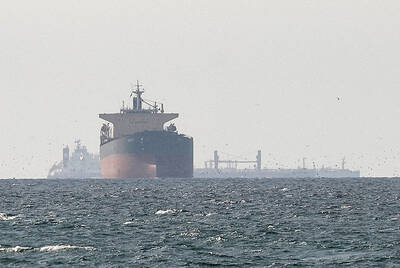
A ship that appears to be taking on the identity of a scrapped gas carrier exited the Strait of Hormuz on Friday, showing how strategies to get through the waterway are evolving as the Middle East war progresses. The vessel identifying as liquefied natural gas (LNG) carrier Jamal left the Strait on Friday morning, ship-tracking data show. However, the same tanker was also recorded as having beached at an Indian demolition yard in October last year, where it is being broken up, according to market participants and port agent’s reports. The ship claiming to be Jamal is likely a zombie vessel that
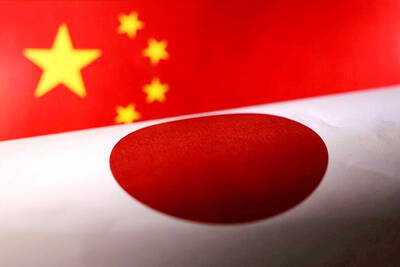
Japan is to downgrade its description of ties with China from “one of its most important” in an annual diplomatic report, according to a draft reviewed by Reuters, as relations with Beijing worsen. This year’s Diplomatic Bluebook, which Japanese Prime Minister Sanae Takaichi’s government is expected to approve next month, would instead describe China as an important neighbor and the relationship as “strategic” and “mutually beneficial.” The draft cites a series of confrontations with Beijing over the past year, including export controls on rare earths, radar lock-ons targeting Japanese military aircraft and increased pressure around Taiwan. The shift in tone underscores a deterioration

LAW CONSTRAINTS: The US has been pressing allies to send warships to open the Strait, but Tokyo’s military actions are limited under its postwar pacifist constitution Japan could consider deploying its military for minesweeping in the Strait of Hormuz if a ceasefire is reached in the war on Iran, Japanese Minister of Foreign Affairs Toshimitsu Motegi said yesterday. “If there were to be a complete ceasefire, hypothetically speaking, then things like minesweeping could come up,” Motegi said. “This is purely hypothetical, but if a ceasefire were established and naval mines were creating an obstacle, then I think that would be something to consider.” Japan’s military actions are limited under its postwar pacifist constitution, but 2015 security legislation allows Tokyo to use its Self-Defense Forces overseas if an attack,

German Chancellor Friedrich Merz’s conservative Christian Democratic Union (CDU) yesterday faced a regional election battle in Rhineland-Palatinate, now held by the center-left Social Democratic Party (SPD). Merz’s CDU has enjoyed a narrow poll lead over the SPD — their coalition partners at the national level — who have ruled the mid-sized state for 35 years. Polling third is the far-right Alternative for Germany (AfD), which spells a greater threat to the two centrist parties in several state elections in September in the country’s ex-communist east. The picturesque state of Rhineland-Palatinate, bordering France, Belgium and Luxembourg and with a population of about 4 million,


 RSS
RSS