

Thailand's new prime minister said yesterday that he will also become the defense minister in a soon-to-be unveiled Cabinet to deter the military from staging a coup against his government.
The Cabinet, to be announced in the coming days, is expected to be stocked with close advisers, friends and relatives of former prime minister Thaksin Shinawatra, who was toppled in a 2006 military coup.
The military, which relinquished power after guiding the country for more than a year, is displeased with the election victory of Prime Minister Samak Sundaravej, who has openly announced that he is Thaksin's proxy.
Samak said he would take the defense minister's job to allay military fears that he or others would interfere with the annual military reshuffle of senior officers. Under a law that came into effect on Saturday, the power to implement the reshuffles is removed from political leaders, including the prime minister and defense minister, and placed in the hands of seven military commissioners.
"When there is no outside interference there is no reason for them to stage a coup," said Samak, who was sworn in on Tuesday last week to become the country's first elected leader since the coup.
In the past, the annual changing of the guard proved an opportunity for political leaders to shore up their positions with military commanders while relegating potential opponents to unimportant positions.
Generals have periodically toppled governments since the country changed from absolute monarchy to a parliamentary system in 1932. The latest occurred on Sept. 19, 2006, when the military deposed Thaksin, who has been charged with corruption and abuse of power.
Thaksin, who was out of the country during the coup and has not returned since, now spends most of his time in London. He says he will return to Thailand this year to face the courts and clear his name.
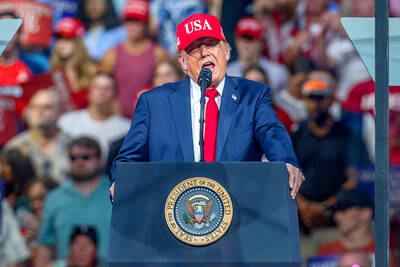
US President Donald Trump on Wednesday threatened to take action against the EU if it moves forward with European Commission President Ursula von der Leyen’s proposal to make Canada the bloc’s first associate member. “If they do that, if I think it’s at all a hostile act; I will put very serious tariffs or stop trading with Europe on many things,” Trump told reporters en route to an event in North Carolina, calling the proposal “laughable.” “If it’s a good intention, that’s fine. If it’s a bad intention, we’ll put very heavy tariffs on Europe,” he said. Von der Leyen made the proposal

The US military came close to boarding a Chinese vessel in the Middle East earlier this year based on a flawed intelligence report prepared with the help of artificial intelligence (AI), CNN said on Friday. US intelligence indicated the ship was carrying nuclear weapons-related components, leading US forces to prepare to intercept it, the broadcaster reported, citing four anonymous sources familiar with the incident. However, the operation was called off after officials determined that an AI chatbot used by an analyst had misidentified the material the ship was carrying. The report was “entirely false,” but “almost started a war,” CNN quoted one source
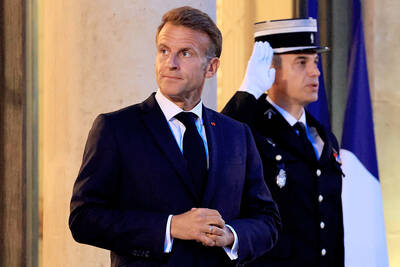
French President Emmanuel Macron today embarks on a rare and symbolic visit to a remote French territory in the North Atlantic, hosting Canadian Prime Minister Mark Carney at a time of growing tensions with Washington. The three-day visit to Saint Pierre and Miquelon, a three-island archipelago of less than 6,000 people just 25km off Newfoundland, would be the first by a French president in more than a decade. The trip to France’s only remaining possession in North America, a vestige of the huge territories Paris once controlled in what is now Canada and the US, carries immense symbolic resonance. Macron insists that US
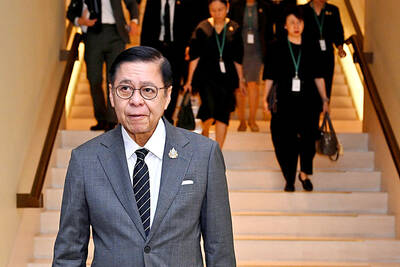
SEEKING AN AGREEMENT: The Cambodian foreign minister said Phnom Penh aimed to build trust through the mediation process, not further escalate tensions Thailand yesterday said that Cambodia was playing the victim in a dispute over maritime resources, as the Southeast Asian neighbors took their feud to international mediators a year after deadly clashes over their land border. Cambodia, which initiated the case before the Permanent Court of Arbitration (PCA) in Singapore, said it hoped the hearings would yield a peaceful resolution for both countries. In May, Thailand unilaterally pulled out of a bilateral framework agreement that aimed to resolve overlapping maritime border claims, but denied any link to their land dispute. Cambodia subsequently initiated a UN-backed conciliation process at the PCA, saying it hoped to


 RSS
RSS